Introduction
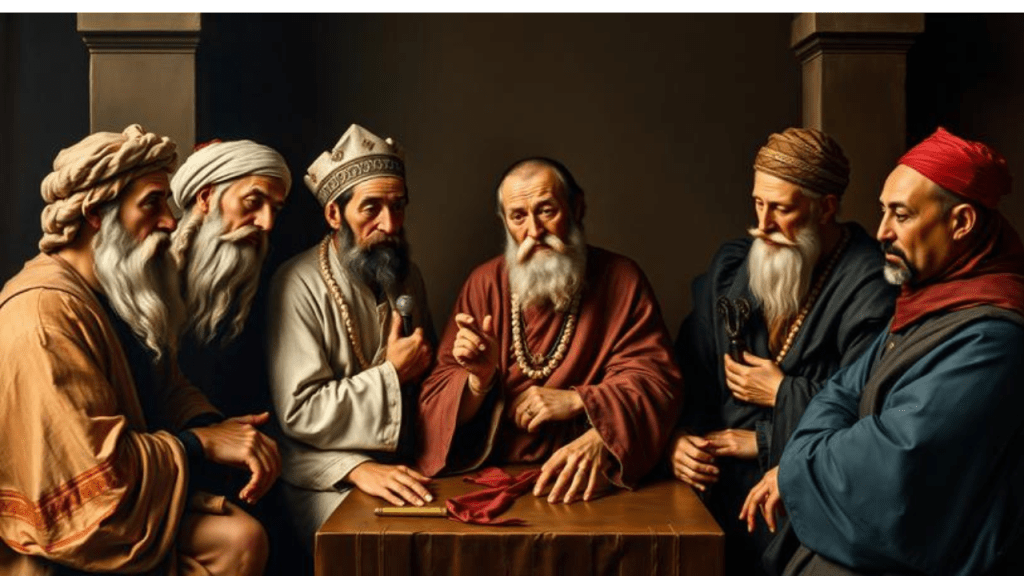
Since the beginning of human history, one question has always troubled human cognition and, in turn, human philosophy: Does free will exist? For millennia, scholars, thinkers, philosophers, and theologians have sought to answer the question in their own way, considering their time and place. In this blog, we discuss various theories regarding free will from twenty ancient philosophy schools across Greece, India, and China. We also discuss their basic ethics, metaphysics, and epistemology, which helped determine their stance on free will.
Chapter 1: Platonism
Platonism was the ancient Greek school, based on Plato’s teachings. They believed that moral goodness comes from aligning the soul with the good. They considered the soul to be eternal and indestructible, while the material world was considered to be continuously changing. For them, the ultimate virtue was knowledge, while the real evil was ignorance. According to them, free will depended on recollection of knowledge. The more the soul makes a decision based on knowledge and reason, the more freedom it has over its will. In short, free will increases with rational thinking. Although officially, the school ended, their idea of free will shaped early Christian theology, creating an amalgamation of idealism and moral realism.
Chapter 2: Aristotelianism
Aristotelians gave more priority to practical knowledge over reason and induction. For them, the substances were composites of form and matter, and causes explained changes. Thus, they believed that humans have complete free will, as they could make informed choices, assisted by rational thinking. Aristotelianism gave the foundation to modern Western ethics as well as many concepts within psychology and psychoanalysis.
Chapter 3: Stoicism
Stoicism was an hellenistic school, which considered living according to reason and nature as the highest virtue. According to them, everything unfolded necessarily, as the cosmos was governed by Logos (a kind of divine universal reason). The external events were already determined, but the inner ascent based on knowledge gained was free, thus giving assurance to a limited free will. Stoicism, centuries later, strongly influenced modern CBT and psychology.
Chapter 4: Epicureanism
The Epicureans were the descendants of the ancient Greek Atomist school. They considered that the world is made of atoms, roaming freely in space, thus denying an overlooking God. They believed pleasure (absence of pain) to be the highest virtue and the sensory experience to be the foundation of knowledge as free will. Since the Epicureans defined the world to be independent of any external forces, they advocated for complete free will, breaking strict determinism. Epicurean thoughts can be found within modern secular ethics and materialism, particularly in the Western world.
Chapter 5: Skepticism
The Skeptics were rationalists with no claim about either an ultimate reality or an overlooking power. They considered knowledge to be always contestable and preached living life pragmatically. The skeptic school believed in free will and avoided any theory regarding predestination. Skepticism shaped scientific reason and critical thinking, even centuries after the school formally ceased to exist.
Chapter 6: Cynicism
The Cynic school had a radical virtue that rejected any type of convention and promoted living according to nature in a minimalistic and anti-speculative way. They believed that truth is lived, not theorized, and intellectual systems corrupt authenticity. When it comes to free will, they avoided answering that directly and considered true freedom came from detachment from social and psychological constraints. Cynic values are today found in some form within anti-consumerism and moral minimalism.
Chapter 7: Neoplatonism
It was a school that rose at the end of the Hellenistic period and influenced the Roman Empire after Greece became a colony of Rome. They were the believer of a hierarchical world. The highest of the realities was the One, an ultimate reality beyond thought, followed by the Intellect or Nous, where thoughts and ideas thrived. The third level was that of the Soul or Psyche, which animated the world and acted as a bridge between the higher and the lower levels. The final bottommost level was the material world, a gross world filled with imperfections changing continuously. The school gave intuition priority over reasoning, and believed that the soul is free to turn inward or outward to the material or the intelligible realms. Neoplatonism greatly affected Western mysticism as well as medieval and early-modern philosophy.
Chapter 8: Sāṁkhya-Yoga
Sāṁkhya and Yoga were two of the oldest Indian philosophy schools. The twin schools were dualistic in nature, believing the world is made of Puruṣa (consciousness) and Prakṛti (nature). They considered liberation as a result of acquiring discrimination between consciousness and matter. To them, although psychological processes were determined, they believed in limited free will through the process of non-identification and detachment. The schools gave birth to meditation techniques for various Eastern traditions and also contributed to the modern mind-body dualism debates.
Chapter 9: Nyāya-Vaiśeṣika
They were the proponents of ancient realist pluralism. The Nyāya school used highly developed logic with great emphasis on inference and debate, while Vaiśeṣika believed the world is made up of smaller indivisible particles called Anu, thus both school rejecting a creator God. They believed that humans are moral agents capable of choice, and their karma (action) determines the karmaphala (outcomes). The schools, although nearly extinct today, became the foundation of logic and epistemology for the Indian religions.
Chapter 10: Mīmāṁsā
It was a non-theistic school that emphasizes dharma (righteous conduct) and rituals over everything else. The followers gave importance to language and testimony (Vedas) as the authoritative sources of knowledge. They believed in limited free will, as they debated that will is mostly determined by the moral and righteous act, thus limiting free will to a lower importance. Mīmāṁsā influenced the later Hindu rituals as well as the rule-based ethics system.
Chapter 11: Advaita Vedānta
The Indian non-dual philosophy school and tradition, Advaita Vedānta, believes that only Brahman (collective consciousness) is real, while the entire universe is merely a reflected/limited projection of it because of Māyā (cosmic illusion). For the Advaitins, avidyā (ignorance) causes bondage, resulting in the debate of whether free will exists or not. But acquiring self-knowledge (jñāna) makes one realise that everything is Brahman, so the question of free will becomes somewhat meaningless. The Advaita Vedantā school still exists today and strongly influences consciousness studies and non-dual philosophies all over the world.
Chapter 12: Theistic Vedānta
All the other Vedānta schools (Vedānta means that which ends or completes the Vedas, i.e., the Upaniṣads, which all the Vedantins follow) except Advaita Vedanta are theistic in nature, i.e., they believe in a personal God with qualities or attributes. Important schools like Viśiṣṭādvaita Vedanta and Dvaita Vedanta believed in a creator God, independent consciousness, and a very real world. Although the schools ranged from qualified non-dualism to complete dualism, all of them believe that real and moral free will exists within divine governance, and thus emphasize bhakti (devotion to God) over jñāna (self-knowledge). They are some of the dominant philosophical schools in India today and have heavily impacted Hindu cultural ethics and devotional theology.
Chapter 13: Theravāda Buddhism
They are the oldest branch of Buddhist philosophy, which emphasizes that reality is impermanent and conditioned. They believe that no enduring self exists, and true insight can be gained through mindfulness and direct experiential observation. They believe in a conditioned free will, which can be transformed through rigorous disciplinary practices. Theravāda is most famous today in Sri Lanka and Southeast Asia, and has greatly impacted mindfulness-based therapies, meditation, and cognitive psychology.
Chapter 14: Mahāyana Buddhism
Mahāyana or the Greater Vehicle Buddhists believe that emptiness (śūnyatā) denies the fundamental nature of all phenomena, and everything is relative. They emphasize interdependence and compassion as some of the highest virtues. Regarding free will, they believe that the freedom of someone increases as they get to understand the relativity of everything around, and also the importance of relational causality and interdependence. Mahāyana today exists and dominates the Himalayan regions as well as the East Asian countries, and contributes heavily to the ethics of care and interdependence.
Chapter 15: Jainism
Jains are the proponents of absolute non-violence. They believe in pluralistic realism, as souls are distinct and eternal. According to their epistemology, truth can have multiple interpretations, suggesting that different people perceive it in various ways. This principle is called anekāntavāda. Regarding free will, they have a strong emphasis on individual responsibility and self-control over complete freedom. Jainism today exists mostly in western India and is a true leader when it comes to ethics, environmentalism, and agency debates.
Chapter 16: Cārvāka
It was the Indian materialistic school that believed neither in any consciousness nor in any afterlife. They were the ultimate anti-ascetic, pleasure-oriented, pragmatists, who saw only perception as a valid knowledge. They believed in complete free will, which is unconstrained by any God, karma, responsibility, or anything. As they believed nothing exists after death, they advocated living life to the fullest. Although the original atheistic school went extinct, it gave rise to early secularism and rational critique of any kind of metaphysics.
Chapter 17: Confucianism
Confucianism is an Ancient Chinese school which gives emphasize or moral cultivation through roles, rituals, and virtue. It advocates deep respect for tradition and self-cultivation. According to the school, true freedom lies in self-discipline, and not in individual autonomy. Confucianism is completely absorbed within most of the East Asian cultures and acts as a guide for social ethics, proper education, and political philosophy.
Chapter 18: Daoism
The Daoists believe in effortless action (wu-wei) and harmony with nature. They consider Dao as the ultimate source or principle of the universe, which also maintains the natural order over everything. They emphasize intuition over analytical reasoning and believe that free will emerges from non-resistance to natural flow. Presently, Daoism is greatly present in China, Korea, Taiwan, and Vietnam as it continues teaching systematic thinking along with considering the ecological consequences.
Chapter 19: Legalism
Legalism was a Chinese philosophy that considered law and order as more ethically important than virtue. They had a pragmatic worldview and considered knowledge as a tool for power. Regarding free will, they had the belief that human nature should be shaped externally with law and punishment. Legalism significantly influenced the political realist and authoritarian governance model in China over the centuries.
Chapter 20: Mohism
Mohism was an important school in ancient China based on universal concern and social utility. It was naturalistic and anti-ritualistic. The Mohists considered that humans have a considerable amount of free will, as they can make decisions based on logical argument and reason. The school strongly impacted the scientific and logical development in the Sinosphere throughout the millennia.
Conclusion
Thus, we see that the question of free will was answered by different ancient philosophical schools differently. While the Epicureans and the Cārvākas believed in complete freedom, the Cynics and the Legalists advocated nearly no free will. Most schools tried answering not whether free will exists, but whether free will should be exercised in their own way. From Neoplatonists to Advaitins, from Daoists to Jains, all had their own conclusion. Hope you followed the individual perspectives of these schools regarding free will clearly.
That is all for today. Hope you enjoyed it. Please like, share, and subscribe to keep me motivated. And finally, thank you for reading the blog.
 The Indic Scholar
Leave a comment