Category: History

  • The Feminine Intellect: The Women Who Shaped Science, Spirituality, and Literature in the Premodern World

    The Feminine Intellect: The Women Who Shaped Science, Spirituality, and Literature in the Premodern World

    Introduction

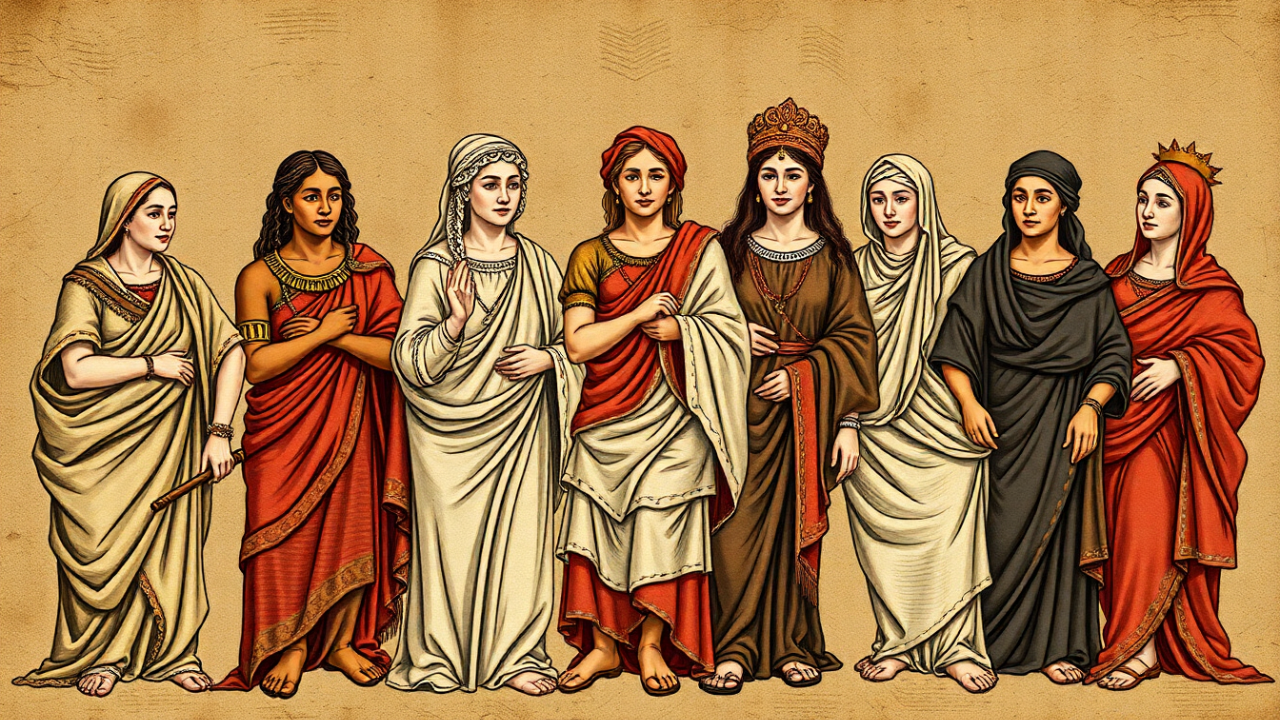
    Whenever we think of women in History, we first think of the witch burnings, the female infanticides, the widow burnings, women as sex slaves, and women behind curtains. That was not always the case, not at least in the Ancient, Classical, and Early Medieval Ages. In this blog, we discuss the women who shaped the early intellectual thoughts, whether in science, spirituality, or literature. Many of them faced huge hindrances in their career, but still, with their intuitive ideas and thoughts, became immortal in the history of mankind. Some of the earliest names mentioned lack some historical evidence and may be legendary, although most of them are historically established.

    Chapter 1 – Scientists, Mathematicians & Inventors

    1. Tapputi Belatekallim – She was one of history’s first chemists, perfumers, and alchemists. Hailing from 1200 BCE, Babylon, she is said to have performed one of history’s earliest distillations when she separated various solvents from water several times. She wrote the first recorded treatise on perfume making, as discovered on a cuneiform clay tablet.
    2. Merit Ptah – She was the chief physician of the royal court of ancient Egypt at around 2700 BCE, and is recognized as the first female doctor of human history. In her tomb, as inscribed by her son, she was stated as the chief physician, acting as a professor of medicine and supervising several male physicians. There are some arguments in modern times that identify her as a pure legendary character, although many still consider her historical.
    3. Aglaonike – Also known as Aglaonice, she was a Greek (Thessalian) astronomer from the 2nd century BCE. She was known to accurately predict lunar eclipses, which led her to be branded as a witch by the general public. A crater on the planet Venus is named after her.
    4. Hypatia of Alexandria – She was a Neo-Platonic philosopher, astronomer, and mathematician from Alexandria, Egypt, in the 4th century CE. She was a prominent professor and researcher in Alexandria, who taught many scholars who came to study from all over the then-known world. She is known to have written commentaries on Diophantus’s thirteen-volume Arithmetica. She also constructed astrolabs and hydrometers, which show her skills as an early engineer. She was murdered by a Christian mob in 415 CE amid religious and political conflicts.
    5. Maria Hebraea / Mary the Jewess – Also known as Mary the Prophetess or Mary the Copt, she was an alchemist and an inventor from Hellenistic Egypt. She is credited with having invented various chemical apparatus and is considered the first true alchemist of the Western world. She had been beautifully described by the 300 CE alchemist Zosimos of Panopolis and several other Greco-alchemist authors. Some of her inventions include the  Tribikos (an apparatus for distillation), Kerotakis ( used in heating substances and collecting vapors for alchemy), and Bain-marie (used to limit the maximum temperature of an apparatus to the boiling temperature of a separate liquid).
    6. Trotula of Salerno – She was an 11th-century Italian medical practitioner who became a pioneer in women’s health. Her famous work, De passionibus mulierum curandorum (On the Diseases of Women), discussed pregnancy, childbirth, cosmetics, and gynecology with remarkable empathy and precision. Later, male physicians tried to obscure her authorship by branding her as a legend or a myth, but several manuscripts from the medieval ages prove her authenticity.
    7. Hildegard of Bingen – She was a medieval German scientist, herbalist, and composer, making her a polymath. She wrote theological, botanical, and musical works and is considered to be the founder of scientific natural history in Germany. In 2012, she was named a doctor of the church, one of only four women to be named so. She is also considered a patron saint for musicians and composers.

    Chapter 2 – Philosophers, Theologians & Mystics

    1. Gargi Vachaknavi – She was an Indian Vedic Philosopher of around 1000 BCE. She was said to be a great philosophical debater. In the sixth and the eighth Brahmana of the Brihadaranyaka Upanishad, she is said to have participated in a great philosophical debate organized by King Janaka of Videha, where she challenged and debated the philosopher and sage Yajnavalkya on the issues of the atman (consciousness) and life. She is considered one of the great philosophers of ancient India.
    2. Maitreyi – A contemporary of Gargi Vachaknavi, she was the wife of sage Yajnavalkya. She was herself a great philosopher who explored concepts like consciousness and immortality. She is said to be one of the earliest proponents of Advaita Vedanta, or the Indian philosophical school of non-dual panentheism.
    3. Diotima of Mantinea – She was a mentor to the great Greek philosopher Socrates, and her dialogues with him are said to be the origin of the concept of Platonic Love. She is said to have guided Socrates through an ascent of physical attraction to the contemplation of beauty itself, emphasizing spiritual love.
    4. Rabi’a al-Adawiyya – Also known as Rabia Basri, she was an 8th-century mystic sufi from Basra, in modern-day Iraq. She is considered one of the most important female characters in Islam. She was an ascetic who believed in self-denial and complete devotion to Allah. According to Sufi traditions, she was the first one to set up the doctrine of divine love known as ishq. She is considered one of the Qalandars, the most spiritual Sufis.
    5. Akka Mahadevi – She was a 12th-century mystic from the region of modern-day Karnataka, India. Married to a king against her will, she renounced her husband and wandered naked, singing hymns for her true love, “Lord Shiva or Mahadeva.” She wrote around 430 vachanas (mystical poems) and two short writings called Mantrogopya and Yogangatrividh, for which she is considered one of the pioneers of Kannada literature.
    6. Lalleshwari / Lal Ded – She was a 14th-century Hindu philosopher and mystic from Kashmir, India. She is an important figure in the Kashmiri Shaivism school of Hindu Philosophy. She was the creator of mystic poetry called vakhs. Sources say that after years of harsh treatment from her husband and mother-in-law, she left home after twelve years of marriage and dedicated her life to the devotion of Lord Shiva, composing philosophical poems around him. She is one of the most influential persons in Kashmiri literature.
    7. Julian of Norwich – She was a 14th-century English Christian mystic and anchoress, known for her revelations of divine love to God, after receiving sixteen divine visions during an illness in 1373. She lived in Saint Julian’s Church in Norwich, England, where she preached her spiritual wisdom connected to God.
    8. Christine de Pizan – She was a French philosopher and one of the first professional writers, around the 14th-15th century. She was an advocate for women’s upliftment and preached gender equality in every sphere of life. She was a court writer of King Charles VI of France. Her famous works include “The Book of the City of the Ladies” and “The Treasure of the City of the Ladies,” both containing philosophical, social, and political analysis.

    Chapter 3 – Poets, Writers & Musicians

    1. Enheduana – She was an Akkadian poet and high priestess around 2300 BCE, known as the world’s first author by name. She was the daughter of King Sargon of Akkad. She was the high priestess of Ur when she authored hymns to the Goddess Inanna. Her works melded Sumerian and Akkadian deities, thereby melding the culture of the Empire.
    2. Sappho – A Greek lyric poet of the 7th century BCE, her works inspired love and desire, especially between two female lovers, thus contributing to the origin of the words “Sapphic” and “Lesbian” (She was from the island of Lesbos).
    3. Andal – Also known as Godhai, Nachiyar, and Godha Devi, she was a 9th-century Tamil poet from India. She is considered by some as an avatar of the Goddess Bhumi. Her works contain devotion to Lord Krishna, the eighth avatar of Lord Vishnu. Her most famous works include Tiruppavai and Nachiyar Tirumoli, which are some of the most famous devotional works that are still recited by the Tamil devotees in the winter festival season of Margali.
    4. Mirabai – She was a 16th-century “Bhakti” saint who wrote devotional hymns for Lord Krishna. She was a Rajput princess, the only child of Ratan Singh, the younger brother of the king of Merta. In 1516, she was married to the crown prince of Mewar at the age of 18. She became a widow five years later, when the prince died in a battle. She was ill-treated and later persecuted by his brother-in-law, who became the crown prince. She left for Merta but found unacceptable behavior from her own family. Then she sat for a pilgrimage in Dwarka, the holy city of Krishna, where she composed poems and hymns which made her immortal. Later, when her in-laws came to bring her back, she mysteriously disappeared.
    5. Hrosvitha of Gandersheim – She was a German playwright of the 10th century, who is known for blending classical drama with Christian ethics. She spent most of her life as a nun in the Benedictine convent in Gandersheim. Writing in Latin at a time when women’s intellectual works were rare, she reimagined the comedies of the Roman writer Terence into moral dramas celebrating faith, courage, and female virtue. Her plays gave an early glimpse of feminine strength expressed through art rather than rebellion. She also composed legends and historical poems, which later became famous all over Europe.

    Conclusion

    So in this blog, we saw how twenty women from the pre-modern world shaped science, philosophy, and literature. Obviously, there are thousands of such examples, which are beyond the scope of this blog. Anyway, that is all for this blog. This blog was written to remember and celebrate the feminine of the past. Hope you all enjoyed the blog. Please like and share if you find this helpful. Thank you.

    Suggested Readings


    Disclosure: This post contains affiliate links. As an Amazon Associate, I earn from qualifying purchases. I only recommend books I truly value.


  • Philosopher Kings: 13 Great Rulers Who Shaped Culture and Ideas in History

    Philosopher Kings: 13 Great Rulers Who Shaped Culture and Ideas in History

    Introduction

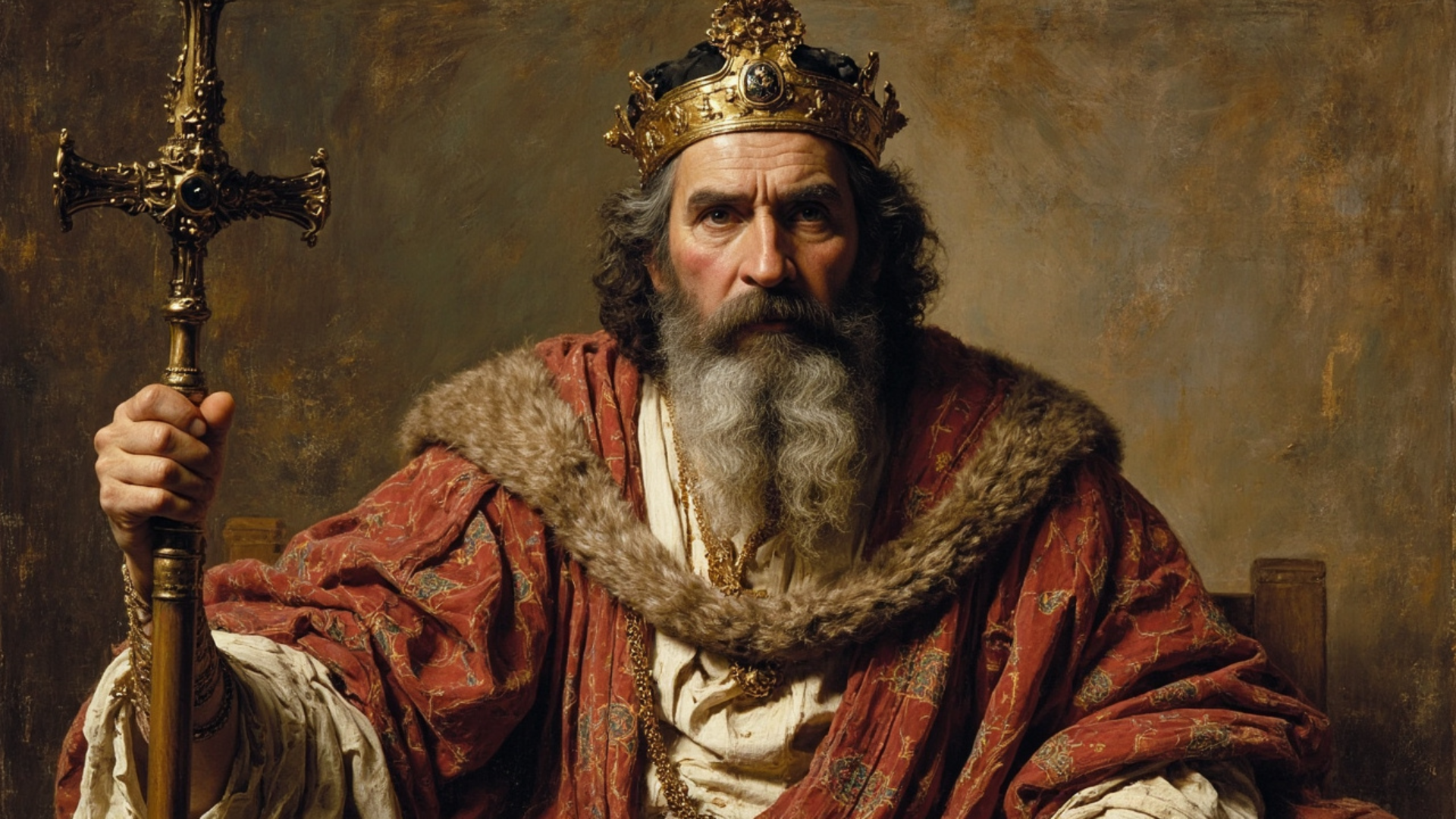
    In history, we often talk about the greatest conquerors and world builders when it comes to kings and emperors. But there is another specific quality of famous leaders that often gets overlooked– their spiritual and cultural contribution. From Cyrus the Great to Kanishka and from Charlemagne to Krishnadevaraya, these kings had contributed to either developing their own philosophical understanding, spreading indigenous culture, or immortalizing spiritual teachings. In this blog, the contributions of such  13 great “philosopher kings” have been discussed. Although most of them were known as powerful emperors, their primary cause of attaining immortality was their spiritual and cultural understandings.

    1. Cyrus the Great (600 – 530 BCE)

    Cyrus II or Cyrus the Great was the founder of the Achaemenid Empire, who built a large empire across Persia, Mesopotamia, and the Levant. Apart from being a military virtue, he is also considered a role model of an ideal king who ruled over his subjects with compassion and generosity. The Babylonians considered him a liberator in opposition to the previous rulers and dynasties. He was also the one who was responsible for building the second Jewish temple in the holy city of Jerusalem. He is considered to have practised the religion of Zoroastrianism, but didn’t impose it on his subjects like many later religious rulers of powerful empires. He was so secular that he had a mention in the early Abrahamic faiths, especially in the Jewish tradition, though he didn’t belong to the Abrahamic cultures at all. His legacy was so “great” that the later Persian rulers idealised him and often tried to establish themselves as his descendants.

    2. Pericles (495 – 429 BCE)

    Pericles was an Athenian statesman and general who played an important role in Athens’ participation in the Peloponnesian Wars, especially in its initial stage. But apart from politics, he was responsible for promoting arts, education, and literature within Athens, resulting in it being called the intellectual centre of the ancient Greek world. He was also one of the earliest proponents of secularism or the idea of “separation between church and state,” long before even the birth of Christianity itself. He is also given credit by modern historians for building great monuments, including the famous Acropolis, a citadel formed on the rocky portions of Athens, containing magnificent architectural and historic buildings (mostly in ruins today), giving the city a majestic view.

    3. Ashoka the Great (304 – 232 BCE)

    Ashoka the Great was the third and the last significant emperor of the Maurya Empire. Apart from being a great general, especially in the Gandhara uprisings and the war of Kalinga, he was also responsible for spreading Dharmic ideas, especially Buddhism, to various civilizations, including Sri Lanka, South East Asia, and to the Indo-Greeks around the regions of Gandhara and Bactria. He constructed pillars all across his empire from modern-day Afghanistan to Bengal, in which the various acts and teachings of Dharma were sculptured. He was also a patron of art and constructed beautiful capitals on top of the pillars. The most famous of his constructions is the Lion Capital situated in Sarnath, Varanasi, which contains a sculpture of four majestic Asiatic lions looking in four different directions, with a depiction of the Dharma Chakra (roughly and not quite accurately translates to the Cycle of Righteousness) on the platform below the lions. The capital is now considered the National Emblem of India.

    4. Emperor Wu of Han (156 – 87 BCE)

    Emperor Wu of Han was the 7th emperor of the Han Dynasty. During his reign, the Empire expanded to its largest geographical extent. He also developed a centralised state embedded with Legalist and Confucian values. Though his personal religion or spirituality was some sort of traditional Chinese shamanism, he was a great preacher of Confucianism, thereby institutionalizing it within his government and also spreading the philosophy across the extent of his vast empire. He was also a patron of literature, especially poetry. He himself wrote poems and patronized numerous court poets. It was during his reign that Chinese poetry saw a sort of Golden age.

    5. Kanishka the Great (78 – 151 CE)

    Kanishka the Great was a Kushan Emperor who ruled over the vast territory from the  Ferghana Valley in Central Asia to the Gangetic Plains of India. He belonged to the Kushan tribes, who were one of the easternmost Indo-European subgroups that came from the Tarim Basin region of modern-day Xinjiang, China. In spite of being a foreign power that conquered northern India, the Kushans in turn adopted the local culture and religion, instead of imposing their own belief systems on the locals. Kanishka, in turn, was a great patron of Indian Culture. It was under him that the Hindu calendar of Saka was established. In controlling the important Silk Road cities in Central Asia, Kanishka spread Buddhism to civilizations, including the Roman Empire and China. Although the Romans never truly adopted the religion, it was due to Kanishka that Buddhism spread to China, and from China to Japan and Korea. It was also under him that the region of Kashmir became one of the most culturally progressive regions of India.

    6. Marcus Aurelius (121 – 180 CE)

    Marcus Aurelius Antoninus was a Roman Emperor who is also known as a Stoic Philosopher. He was the last of the Five Good Emperors and also the last emperor of the Pax Romana. He was a learned orator in both Greek and Latin. He was a proponent of the Second Sophistic Renaissance in Greece. He was so fluent in Greek that his famous work on Stoicism, Meditations, was entirely written in Greek. His Meditations is one of the most important texts to survive the collapse of the Greco-Roman World. It contains his personal experiences and understanding of the Stoic philosophy, which he wrote as an early form of personal diary, and which is now studied among most modern philosophical academia.

    7. Julian the Apostate (331 – 363 CE)

    Julian the Apostate was the Roman Emperor from 361 to 363 CE. He was a nephew of Emperor Constantine the Great, and took the throne after succeeding his cousin Emperor Constantius II. Before becoming emperor, he was Caesar in the western region of the Roman Empire and fought the German tribes and kept them in check. But his most historic contribution to Roman society was his reversal of the state religion from Christianity to the Pagan Roman Religion. Despite being the last Pagan emperor of Rome, his office consisted of pagan and Christian officials equally, creating a liberal and secular administration.

    8. Prince Shotoku (574 – 622 CE)

    Prince Shotoko, also known as Prince Umayado or Prince Kamitsumiya, was a Japanese politician who lived in the Asuka Period. He was a Buddhist and helped in spreading the teachings of the Buddha across the islands of Japan. It is also said he met Bodhidharma, the Indian monk who was responsible for introducing martial arts to China. Inspired by the religion of Buddhism, he constructed temples and shrines in various regions of Japan, including the famous Shitenno-ji in Settsu Province  (modern Osaka). His letters to Emperor Yang of Sui contain the earliest surviving reference to Japan being called the Land of the Rising Sun. Today, a number of modern institutes bear his name, including the Shotoku Gakuen University.

    9. Charlemagne (748 – 814 CE)

    Emperor Charlemagne of the Carolingian Empire was a visionary ruler, famous for reviving learning and culture in Western Europe, instead of just war and campaigns.  Often called the Father of Europe, he gathered scholars from across Europe, revived Latin learning, standardized the Carolingian script, and preserved many classical texts that were on the brink of extinction. He promoted a certain blend of Christian humanism and the Greco-Roman Philosophy all across Central and Western Europe. Under him, monasteries became centres of knowledge, and education spread beyond the clergy.

    10. al-Mam’un (786 – 833 CE)

    Abu al-Abbas Abd Allah ibn Harun al-Mam’un was an Abbasid Caliph in the early 9th century CE. Under his rule, Baghdad progressed to become the intellectual centre of the whole world. He promoted the translation of the Greco-Roman texts and manuscripts, and also assisted in publishing Al-Khwarizmi’s mathematical masterpiece called “Algebra”. He was also a believer in the Islamic rational theology of Mu’tazilism. He also employed astronomers, cartographers, engineers, architects, and scientists. Under him, the famous “House of Wisdom” of Baghdad rose to its highest peak. After his death, the Islamic philosophers and scientists were slowly replaced by the orthodox scholars and theologians and a growing new group known as Sufis, marking the beginning of the end of the Islamic Golden Age.

    11. Alfred the Great (847 – 899 CE)

    Alfred the Great was the King of the Western Saxons from 871 to 886, and King of the entire Anglo-Saxons from 886 to 899 CE. After becoming king, he spent years defending and quashing Viking Invasions from the north. He encouraged education all across England and established schools for both nobles and commoners to study in Old English and Latin. He was also personally very educated and translated various classical and religious texts into Old English, like Boethius’ Consolation of Philosophy.

    12. Frederick II (1194 – 1250 CE)

    Frederick II was the king of Sicily, the king of Germany, the king of Italy, and later the Holy Roman Emperor. Also known as Stupor Mundi or the Wonder of the World, he was a true scholar king. Fluent in several languages, he surrounded himself with philosophers, scientists, and poets, earning a reputation as a Renaissance man before the Renaissance. He established the University of Naples, corresponded with Arab Scholars, and even wrote a scientific treatise himself.

    13. Krishnadevaraya (1471 – 1529 CE)

    Krishnadevaraya was an emperor of the Vijayanagar Empire, which spread across South India from the 14th century to the 16th century CE. Under his rule, the Empire became the dominating regional power, defeating the Sultans of Bijapur, Golconda, the Bahmani Sultanate, and even the Gajapati Emperors from Odisha. In spite of his campaigns, he was a great promoter of art and architecture. During his reign, he promoted Telugu, Kannada, Tamil, and Sanskrit literature to a new level. He himself composed many famous works, including Amuktamalyada in Telugu and Madalasa Charita, Satyavadu Parinaya, and  Rasamanjari in Sanskrit. He also promoted Hinduism in all corners of his empire while respecting other religions like Islam and Christianity, and maintained a secular ambience in his administrative reforms.

    Conclusion

    Thus, it has been observed that throughout history, many leaders have come who not only conquered and expanded empires, but also promoted cultures, wisdom, religion, and spirituality, which made their name immortal within the golden pages of the book of history. That is all for this blog. Hope you all liked it. Do like, comment, share, and subscribe. Thank you all.

    Suggested Readings

    Disclosure: This post contains affiliate links. As an Amazon Associate, I earn from qualifying purchases. I only recommend books I truly value.


  • 5 Historic Cities That Never Lost Their Influence: Timeless Centers of Power

    5 Historic Cities That Never Lost Their Influence: Timeless Centers of Power

    Introduction

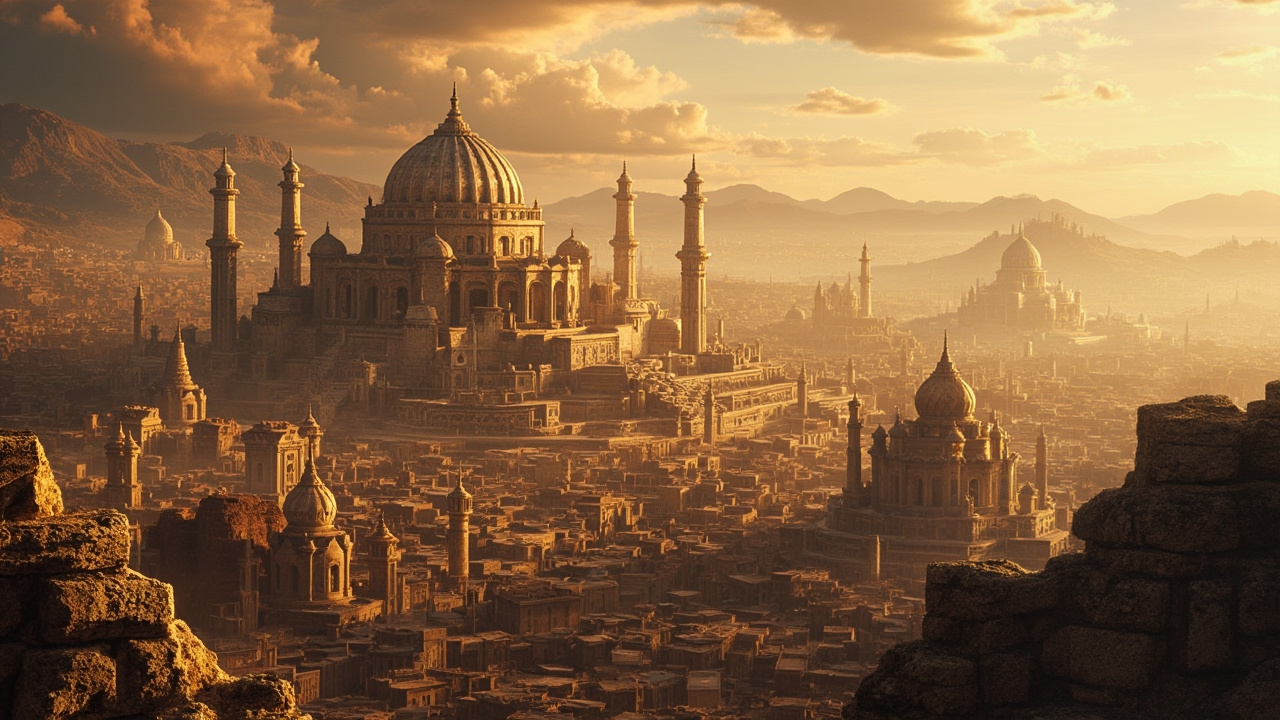
    Man is a social animal. He has left the jungles and started living in artificial settlements called villages, towns, and cities for more than 12000 years. From the ancient towns of Jericho in modern-day Palestine, in 9000 BCE, and  Plovdiv in Bulgaria, in 6000 BCE, to the modern cities of Dubai in the UAE and Canberra in Australia, human beings have always looked up to some political, cultural, or economic capitals of the world to consider their own standards of living. Between Jericho and Dubai, many cities came, became important socializing centres, and slowly lost their importance in the sands of time, if not totally destroyed. In this blog, we discuss five ancient cities that have been continuously inhabited for more than 3000 years and have still never lost their importance. Communities, Empires, and even Civilizations had fallen around them, but they still kept standing. I have already included those cities that have always had either political or cultural, or educational influences on that region continuously for at least 3000 years.

    1. Luxor/Thebes (Egypt) – 3200 BCE

    Also known by the Ancient Egyptians as Waset, the city of Thebes, Egypt, is one of the oldest continuously living cities of the world. It is located along the River Nile, almost 800 km away from the Mediterranean Sea. It began as the capital of Upper Egypt in 3200 BCE, although the royal residence remained in the city of Memphis. Thebes remained the political capital of Upper Egypt till 2100 BCE, when the political power was moved to Itjtawy by the Twelfth Dynasty. Thebes continued to be the religious capital of Egypt. Thebes got its new height under the New Kingdom of Egypt around 1600 BCE, when it was made the capital of a unified Egypt. It continued to flourish till 1100 BCE, when it became a cultural and economic hub due to its business through the Red Sea. Although Thebes lost its grandeur under the reign of Pharaoh Akhenaten (1351-1334 BCE), who abandoned the city, his son Pharaoh Tutankhamun restored Thebes’ glory by building temples and monuments (Although he made Memphis his capital). Later, Thebes became more like the religious capital of Egypt under the high priests of Amun, before the Nubians took control over it. In 667 BCE, the city came under the control of King Ashurbanipal of the Neo-Assyrian Empire when he invaded Egypt. He sacked and destroyed Thebes, after which Thebes never regained its political importance, although continuing to be a deeply religious and cultural centre. The city later came under the Achaemenid Empire and the Macedonian Empire in the late 6th century BCE and the late 4th century BCE, respectively. After the death of Alexander the Great, Egypt came under the control of the Ptolemaic Dynasty, and later the Roman Empire. Although Thebes lost most of its significance after the invasion by Ashurbanipal. But during the 7th century CE, after the Arab conquest of Egypt, a new settlement began to grow around Thebes called al-Uqsur or the palaces. Soon, al-Aqsur became an enlarged city and took Thebes within itself. In a way, it can be said that Thebes evolved into al-Aqsur. al-Aqsur began to grow rapidly as a cultural center, and today thrives as a prosperous city and the guardian of Egypt’s past in the name of Luxor.

    2. Damascus (Syria) – 3000 BCE

    The city of Damascus is presently the capital of the country of Syria, but it has a history that goes back beyond 5000 years. Although the earliest settlements found in Damascus date back to around 7000 BCE, Damascus as a city began to develop around 3000 BCE. The city was originally known as Dimashka and was ruled by many dynasties, including the Egyptians and the Hittites. During the 1100 BCE, the city came under the rule of the Arameans, a Semitic clan, and the city was called Dimashqu. The city was conquered by the Neo-Assyrian King Tiglath-Pileser III in the 8th century BCE, and later by the Neo-Babylonian King Nebuchadnezzar II in the 6th century BCE. Damascus later came under Macedonian rule by Alexander the Great and under Roman rule by Pompey.  The city first began to prosper under the Roman Empire and became a metropolis in the 2nd century BCE. Due to its link with the Silk Roads, the city began to flourish at its fullest and became a cultural and intellectual hub for the Romans in the east. The city was then conquered by the Rashidun Caliphate in the early 7th century CE under the second Caliph Umar. Damascus progressed to further heights when it became the capital city of the Umayyad Caliphate in the  mid-7th century CE. Damascus continued to be the capital of the Islamic World for more than 100 years, until Baghdad was made the capital in the 8th century by the Abbasid Caliphate. The city then came under the control of the Seljuk Turks in the 12th century BCE and later by the Ottoman Empire till the First World War in the early 20th century. The city of Damascus passed through many hands from the Egyptians to the Ottomans for the last five thousand years, but always continued to exist as an important city or province in spite of conquests and disasters.

    3. Varanasi (India) – 1500 BCE

    Varanasi, also known as Benaras or Kashi, is a city situated on the banks of the river Ganga in northern India. The city is considered one of the holiest places of Hindu tradition, whose history goes back thousands of years. Its name comes from the two tributaries of the Ganga, the ‘Varuna’ and the ‘Asi’. Its earliest evidence goes back to at least 1500 BCE during the Vedic Period, as a prosperous town. Around 900 BCE, Varanasi rose to be the capital of the Mahajanapada(great state) of Kashi. From 900 BCE to the late 500 BCE, it continued to be a regional capital until it was conquered by the Magadhan Dynasty. The city continued to flourish under the Mauryas, the Shungas, the Guptas, the Vardhanas, the Palas, and the Sena Dynasties, from 400 BCE to 1100 CE, until India was invaded by Mahmud of Ghazni, when Varanasi was destroyed for the first time. After the destruction, the city was again reborn and continued to grow as the cultural and religious capital of India. Chandradeva of the Gahadvala dynasty made Varanasi his secondary capital, and the city emerged as a political power for a brief period after about 1600 years. The city lost its political influence again after 150 years, when Northern India came under the Islamic rule for the first time in the early 13th century. The city was then raided and looted, and later rebuilt multiple times by various dynasties from the 13th to the 18th century CE. The city now stands as the settlement with the largest Hindu temples in the world (more than 1000) and is considered one of the seven holiest places in Hinduism.

    4. Athens (Greece) – 1400 BCE

    Athens is the capital and the largest city of the nation of Greece and the cradle of Western Civilization. The oldest known settlement in the city of Athens dates back to 1400 BCE, when it was a part of the Mycenaean Civilization. After the Bronze Age collapse of the old world (except China and India) around 1200 BCE, the city continued to live unlike other cities. By the 6th century BCE, Athens became a Naval power and played an important role in the Greco-Persian wars of the 5th century BCE. They also became a democracy, one of the earliest known in the world. Athens also saw the emergence of great Greek geniuses like the playwrights  Aeschylus and Sophocles, the historian Herodotus, the physician Hippocrates, and the philosopher Socrates. Rome later came under Roman rule in the 2nd century BCE and under Byzantine rule from the 4th century CE to the 13th century CE. The city was then ruled by the Duchy of Athens for around 200 years and later by the Ottoman Empire from the 15th century to the 19th century. Today, the city is the capital of a nation with political importance. It also has a great cultural influence over Southeast Europe and on Western philosophy in general.

    5. Xi’an/Chang’an (China) – 1100 BCE

    The city of Chang’an, known today as Xi’an, was one of the earliest known cities of China, whose history goes back to the 12th-10th century BCE. The city gained its political importance during the Zhou period around the 10th century BCE. The city came under the rule of the Qin dynasty in the late 4th century BCE. After the Qin rule, Chang’an became the main capital of the Western Han dynasty from the 3rd century BCE to the 1st century CE. But during the rule of the Eastern Han dynasty, the capital was changed to Luoyang, thus  Chang’an lost its political significance. The city still possessed its cultural significance till the 6th century CE when it again became a capital under the Sui Dynasty, renamed as Daxing. The Golden era of Chang’an came from the 7th century to the early 10th century CE under the Tang Dynasty, when it was the economic, cultural, and political capital of  East Asia. After the collapse of the Tang in the 10th century, the capital was shifted permanently, but the city of Xi’an continued to grow. Today, Xi’an acts as the capital of the province of Shaanxi and is the most populous city in northwestern China.

    Conclusion

    These five cities have lived for at least five millennia and still continue to grow as important political, cultural, and economic centres. These cities can be easily termed as the “Immortal Cities” as they stood through the ages without getting lost in the sands of time. That’s all for this blog. Please like, comment, and share if you like this post. Thanks for reading it.

    Suggested Readings

    Disclosure: This post contains affiliate links. As an Amazon Associate, I earn from qualifying purchases. I only recommend books I truly value.


  • 7 Times Humanity Burned Its Knowledge: From Takshashila to Cordoba

    7 Times Humanity Burned Its Knowledge: From Takshashila to Cordoba

    Imagine if all the knowledge and information stored in your personal computer were destroyed, if every piece of information on Google were deleted, and all research articles were burned. Our future will never know about Newton, Darwin, and Einstein, or Alexander, Genghis, and Napoleon, or even Gates, Jobs, and Musk. This isn’t a fantasy. It has already happened many times in human history.

    Introduction

    In the ages before Search Engines and Websites, information was stored mainly in the form of books or manuscripts. Knowledge was written in pages and stored for centuries. But there came times when this knowledge was destroyed through the destruction of the libraries or universities where it was preserved. Much information was lost through these sinful acts, due to which many facts of the ancient world are still a mystery to us. This blog talks about seven such instances where an important center of knowledge was raided, pillaged, and destroyed.

    1.  Takshashila (5th century BCE to 5th century CE)

    The University of Takshashila was situated in the Mahajanapada (Great State) of Gandhara (modern northwestern Pakistan and eastern Afghanistan), and acted as the centre for higher studies for the people of India from the 5th century BCE to the 5th century CE. It started as a source of Vedic knowledge, but later incorporated Buddhist teachings into it. It also taught subjects including mathematics, medicine, philosophy, astronomy, politics, literature, and military science. It combined religious and secular studies around monasteries and later attracted students from all across Asia through trade routes. Another name for it was  Chu-cha-shi-lo, according to Chinese accounts. According to legends, the entire city was built by Taksha, the son of Bharata, who was the younger brother of Rama, the hero of the Ramayana, from which it got its name. It also had famous teachers like Panini(~5th century BCE), who wrote the Astadhyayi – a book containing a detailed system of the composition and usage of Classical Sanskrit Grammar. Another important teacher was Chanakya(4th century BCE), who wrote the famous book on statecraft Arthashastra, which is still studied in business and political schools. It was Chanakya who is said to have mentored Chandragupta Maurya in the Gandhara region itself to build the first and greatest Indian empire, the Maurya Empire. Important students of Takshashila include emperor Chandragupta Maurya himself and Charaka(~1st century BCE), the Indian Physician known for his medical book Charaka Samhita, which is one of the foundational texts on Ayurveda (Indian Alternative medicine). The university along with the entire region came under patronage of many empires such as the Achaemenids(5th-4th century BCE), Greeks(4th century BCE), Mauryas(4th-2nd century BCE), Indo-Greeks(2nd century BCE), Scythians(2nd-1st century BCE), Parthians(1st century BCE -1st century CE), Kushans(1st-5th century CE) and finally getting destroyed under the White Huns(5th century CE). The Hunnic king Mihirakula is said to have sacked and destroyed the university completely due to his anti-Buddhist stance, killing monks, scholars, and destroying libraries.

    2. Library of Alexandria (3rd century BCE to 4th century CE)

    The Library of Alexandria was established by the Ptolemaic Dynasty of Egypt(305-30 BCE)in Alexandria, Egypt, around the 3rd century BCE. It was proposed by Ptolemy I Soter, the founder of the dynasty, and the generals of Alexander the Great. It is generally considered that it was later completed by his son, Ptolemy II Philadelphus. It was one of the largest and most significant libraries of the ancient world. The library was part of the Mouseion of Alexandria, an institute of higher learning in the ancient world. It is stated that the library contained around 500,000 books. Many important intellectuals of the Hellenistic world worked in this library including Apollonius of Rhodes(3rd century BCE) who wrote the epic poem Argonautica(the legend of Jason and the Argonauts and their adventure for the Golden Fleece), Eratosthenes of Cyrene(3rd century BCE) who calculate the circumference of the earth with quite precision, Hero of Alexandria(2nd century CE) who first recorded steam engine etc. Other prominent figures associated with the library include the famous mathematician Euclid (3rd century BCE), also known as the father of Geometry, Archimedes of Syracuse (3rd century BCE), the world-famous engineer and inventor. The Library flourished under the Ptolemaic rule till the 1st century BCE, after which it was patronized by the Romans. The library is said to be destroyed three times- first by the Roman general Julius Caesar(1st century BCE) during his conquest of Egypt in 48 BCE, 2nd time by the christian archbishopTheophilus(4th century CE) during his attack on the library to wipe out the pagan worshippers, and the 3rd time by the Arab Muslims under the Caliph Umar(7th century CE), although the third destruction is now considered to be a fabricated story by most historians.

    3. Gundeshapur (3rd to 7th century CE)

    Gundeshapur was an intellectual centre in ancient Persia established by the Sasanian Emperor Shapur I(240-270 CE). It boasted of having the world’s first teaching hospital and also an academy where scholars from Greece, Rome, India, and China came to study. The Academy of Gondishapur taught medicine, mathematics, astronomy, philosophy, and theology. Under Emperor Khosrow I(6th century CE), it flourished to a great height and became the solitary Medical Capital of the World. Famous students from the academy included Borzuya(6th century CE), also known for translating the Indian fable collection called Panchatantra from Sanskrit to Pahlavi, and Nafi ibn al-Harith(7th century CE), an Arab who studied in Gondishapur to become an important physician in the early Islamic period. The academy and the city were destroyed during the Islamic conquest of Persia(mid 7th century CE), and most of its medical knowledge was lost, althougha few reached Baghdad through the raiders.

    4. Imperial Library of Constantinople (4th to 13th century CE)

    The Imperial Library of Constantinople was constructed around 357 CE  under the patronage of the Roman Emperor Constantius II to preserve early Judeo-Christian scriptures by copying deteriorating papyrus scrolls onto parchment. It also preserved works of Aristotle, Plato, Homer, etc., that might have been lost forever. The library preserved around 120,000 books before being destroyed by a fire in 475 CE, after which it was rebuilt. Agathon the Reader was thefirst librarian of Constantinople, who was also the reporter of the Third Council of Constantinople. After the fall of Constantinople in 1204, the library was destroyed by the Franks and Venetians during the Fourth Crusade. Ironically, it was the same Christians who destroyed the library that was constructed to protect their own ancient knowledge.

    5. Nalanda (5th to 12th century CE)

    Nalanda Mahavihara(Greater Monastery) was an ancient university situated in Magadha(present-day Bihar, India). It was constructed by the Gupta Emperor Kumaragupta I around the early 5th century CE. It flourished as a Buddhist monastery, particularly of the Mahayana branch. Important students included Buddhist scholars like Dharmapala, Nagarjuna, Vasubandhu, and even the Chinese scholar Xuanzang. Apart from Buddhist studies, the university also gave education in vedas, grammar, medicine, logic, mathematics, astronomy, etc. The famous Indian astronomer Aryabhata(late 5th century CE), known for his book Aryabhatiya, in which he covers arithmetics, algebra, trigonometry, quadratic equations, a table of sines, and most famously the place value system with zero, is also supposed to have studied there. The university was under patronage by the Emperors of the Guptas, the Pushyabhutis, and the Palas. The university was destroyed during the late 12th century CE. Traditionally, the cause of destruction is cited as arson orchestrated by the Turko-Afghan military general Muhammad Bakhtiyar Khalji, who served the Ghurid Emperor Muhammad of Ghor when invading India around the same time. It is said that the libraries in the university burned for months. With the fire, much ethnic Indian knowledge was destroyed.

    6. House of Wisdom, Baghdad (8th to 13th century CE)

    The House of Wisdom or Bayt al-Hikmah in Arabic was the Grand Library of Baghdad during the Islamic Golden Age between the 8th and 13th century CE. It was a public library and renowned centre of learning under the Abbasid Caliphate, founded by its fifth Caliph, Harun al-Rashid(786 to 809 CE). It contained knowledge from all over the known world- from Greek Classics to Indian Mathematics. It was an important centre for philosophy, medicine, mathematics, astronomy, and optics. Its splendour was immortalized in The Thousand and One Nights(A collection of Middle Eastern stories containing famous characters like Aladdin, Ali Baba, and Sinbad the Sailor). Important scholars associated with the House of Wisdom included the zoologist Al-Jahiz(8th-9th century CE) who wrote the books like Kitab al-Hayawan(Book of the Animal) and Kitab al-Bukhala(Book of the Misers), the polymath al-Kindi(9th century CE) who wrote on subjects from astronomy to optics to cryptography, al-Ghazali(11th-12th century CE) the famous political philosopher and theologist. It acted as the centre of Islamic knowledge for more than four centuries until it was destroyed byHulagu Khan of the Mongol Empire during the Siege of Baghdad in 1258 CE.

    7. Cordoba Library (9th to 11th century CE)

    The Library at Cordoba (Spain) was an intellectual centre set up by the Umayyad Caliphate of Cordoba around the early 10th century CE. It also became the first large library of Western Europe. It became a centre of multicultural learning where subjects like law, history, literature, medicine, and mathematics were studied. Ancient Greek texts were translated into Hebrew, Latin, and Arabic. Important people to have studied there included the polymath Abbas ibn Firnas(9th century CE), who designed reading stones using glasses (early spectacles) and also designed the al-Maqata, a water clock which was an early form of a metronome. It also helped in bringing the Golden Age of Jewish Culture in Cordoba. But during the civil wars around 1009 CE, the mobs burned down the library to ashes, destroying centuries of learning, sliding Europe deeper into the Dark Ages.

    Reflection and Conclusion

    Today, due to digital archives and the invention of search engines and AIs, we have become unaware of the importance of preserving knowledge. Due to books, libraries, and universities being burned down and destroyed in the past, we may never recover the invaluable knowledge that is lost forever. So it is the responsibility of each of us to preserve the knowledge available to us so that the same destruction of Nalanda or Baghdad does not repeat itself.

    That’s all for this blog. Obviously, there are many more libraries and universities in China, India, Persia, Mesoamerica, and many others that I didn’t mention due to the blog becoming too lengthy. The idea of the blog was to spread awareness about the value of information and the need for preserving it. Thank you all. If you like this blog, please like and share, and do comment on what you think about knowledge restoration and preservation.

    Suggested Readings

    Disclosure: This post contains affiliate links. As an Amazon Associate, I earn from qualifying purchases. I only recommend books I truly value.


  • History’s Deadliest Pandemics: How Germs Destroyed Civilizations

    History’s Deadliest Pandemics: How Germs Destroyed Civilizations

    Introduction

    A pandemic can be defined as an event when a disease affects a large region, country, or even the whole world. In the history of mankind, pandemics have occurred again and again after years, centuries, or millennia to create havoc in life, society, and civilizations. This blog talks about 8 such big pandemics that destroyed civilizations, if not altered the entire world. It also shows how pandemics such as Justinian’s Plague and the Black Death are the true invisible conquerors before which even the emperors and their empire bow down.

    Chapter 1: The Plague of Athens (430-426 BCE)

    The plague erupted in the second year of the Peloponnesian War, 430 BCE, in Athens through the city’s port of Piraeus. The illness spread throughout Greece and other parts of the Eastern Mediterranean until 426 BCE. The plague killed around 250,000 to 300,000 people, which was around one-third of the entire population of that region. The origin of the disease is considered to be the sub saharan region of Ethiopia. The disease also spread to parts of Persia and Egypt. Thucydides, in theHistory of the Peloponnesian War, described the plague in great detail. According to him, the patients preferred to be naked rather than to be wearing any clothes that touched their skin; some even submerged themselves in cold water. They were also observed to have an uncontrollable thirst that can not be satisfied even after consuming a large quantity of liquids. They also suffered from ulcers and severe diarrhea, which resulted in their deaths. The survivors had disfigurement in their genitals, fingers, and toes, blindness, and even memory loss. It took nearly 15 years for the population to completely recover. The Plague killed Pericles, the leader of the Delian League (led by Athens), and shifted the balance to the Spartan side, playing an indirect role in the victory of the Peloponnesians. This was the first recorded disease to completely change the politics of a region.

    Chapter 2: Antonine Plague (165-180 CE)

    Also known as the Plague of Galen, this plague arrived at the height of the Roman Empire under Marcus Aurelius. It was a smallpox-like disease causing deaths of more than 10,000,000 people. The plague is thought to have arrived with the travelers and soldiers returning from the Near East. Its symptoms include fever, diarrhea, vomiting, thirstiness, swollen throat, and coughing. Also, the diarrhea appeared to be blackish, which suggested gastrointestinal bleeding. There were also rashes throughout the body, distinguished by red and black eruptions. Those who survived developed immunity to the disease. This epidemic was a starting point for the beginning of the decline of the Roman Empire in the west as suggested by many historians.

    Chapter 3: Justinian Plague (541-750 CE)

    It occurred during the reign of the Byzantine Emperor Justinian I. The plague arrived at the Mediterranean from its outskirts and continued to torment and kill people for nearly 220 years. The plague originated in China and Northeast India, was carried to the African territories of the Byzantine Empire through trade routes, from where it spread to the heart of the empire, Constantinople. The plague was transmitted through black rats, mostly found in China and India, that travelled to Europe through ships carrying rations for the empire. The rats affected the food grains who in turn devastated the Eastern Roman Empire. It was a type of Bubonic plague (discussed in the next chapter) that wiped out more than 50,000,000 people, or half the empire. The symptoms include delusions, nightmares, fever,s and swelling in regions like the groin, armpits, and behind the ears. Even the emperor caught the fever, but he somehow survived. This pandemic weakened the empire to a great extent, but completely destroyed areas like Egypt and Libya, and ultimately indirectly opened space for the spread of the religion of Islam.

    Chapter 4: The Black Death (1347-1351)

    The Black Death was a Bubonic Plague that killed almost one-third of the entire population of Europe – about 20,000,000 to 50,000,000 people. The disease originated in Central Asia and was brought to Europe by Mongol warriors and traders. The disease was caused by a bacterium, Yersinia pestis, carried by rodents like rats and rabbits, and also parasites like lice. It was called the Black Death because it turned the skin black, and symptoms included fevers, joint pains, nausea, and vomiting. The effect of the plague was so high that it took Europe more than 200 years to recover both socially and economically. The plague also affected China, India, and the Middle East through the Silk Road. In turn, the plague also reached Africa, thus affecting most of the Old World. The Black Death can also be called the first recorded Global Pandemic. This disease caused the indirect collapse of many dynasties and kingdoms across the Old World.

    Chapter 5: Smallpox in the Americas (16th Century – 18th Century)

    Smallpox arrived in America in 1520 via a slave accompanying Spanish troops, a few decades after Columbus discovered America. Its symptoms include fever, headache, back pain, and an eruption in the skin, leaving the skin with pockmarks or pox. It spread like wildfire and annihilated the Aztec Civilization in Mexico, the Inca Civilization in Peru, and also the whole Caribbean Islands. The disease killed nearly half of the native populations in the Americas and remained for more than a century, with frequent deadly outbreaks, with the highest being the Great Smallpox Epidemic of the 1770s, where millions of people died. This plague is a classic example of how a common disease at a certain place (old world in this case) destroys an entire continent (new world in this case).

    Chapter 6: Cholera Pandemics (19th Century – Present)

    Cholera is an infection in the small intestine caused by a bacterium called Vibrio cholarae.  It causes symptoms like diarrhea, vomiting, muscle cramps, dehydration, and electrolyte imbalance. It also causes sunken eyes and crepey skin in many cases. It spreads mainly through unsafe water and food and is still present in today’s world. This Cholera caused 6 to 7 pandemics in the 19th to 20th century, causing heavy damage in the near past. The first pandemic (1917-1824) began in Jessore, India. It quickly spread to areas like Indonesia, the Philippines, and finally to Europe through Turkey. Hundreds of millions of people died in the first cholera pandemic. The second pandemic(1826-37) happened when the disease reached Russia and caused havoc in Russia, Hungary, and Germany. It also reached Britain, France, and America, claiming millions of lives. The third pandemic (1846-1860) is considered the most deadly of the cholera pandemics as it devastated the entire Russian Empire, Iran, British India, China, African nations of Ethiopia and Uganda, and also the nations of the USA and other parts of North America. The fourth(1863 -1875) and fifth(1881-1896) are considered the least deadly, killing only a few million people around the world compared to previous ones. The sixth pandemic(1899-1923) was lethal to mainly India and Egypt, killing about 10,000,000 people in total. There is still an ongoing seventh pandemic(1961-present) in the regions of South East Asia, Sub-Saharan Africa, and the Middle East. The World Health Organization(WHO) defines it as a current pandemic as of March 2022. In 2017 Who announced a global strategy aimed at ending the pandemic by reducing its death toll by 90% by 2030.

    Chapter 7: Spanish Flu (1918-1920)

    Also known as the Great Influenza Epidemic was a deadly global pandemic caused by the H1N1 subtype of Influenza A Virus. This occurred right after the First World War, causing the death of 25,000,000 to 50,000,000 people. It occurred in four waves between 1918 and 1920. This wave heavily affected the polity of Europe, which further affected the world order, especially in Germany and Russia. Other affected regions include British India, British Caribbean, and New Zealand. The symptoms of this disease include sore throat, headache, and fever, and also blackened skin and nose bleeds in some cases. After the pandemic, the flu continues to be known as “Seasonal Flu”.

    Chapter 8: Covid – 19 (2019-Present)

    Coronavirus Disease 2019 or COVID-19 is a disease spread by Coronavirus SARS-C0V-2. The disease began in December 2019 in China and quickly spread all over the world by March 2020, causing a global pandemic. The symptoms of this disease include fever, fatigue, cough, breathing difficulties, loss of smell, and loss of taste. As of August 2025, the Covid-19 has caused 7,000,000 confirmed deaths and about 33,000,000 estimated deaths. Most affected countries include Italy, France, the Netherlands, Portugal, Spain, Lithuania, England, Australia, and New Zealand. As of the present time, it has five variants, namely Alpha, Beta, Delta, Gamma, and Omicron, detected first in the United Kingdom, South Africa, India, Brazil, and Botswana, respectively. Vaccines have been developed by India, the USA, Russia, and other countries to counter the disease. The pandemic has slowed down significantly, but caused a significant change in society. The pandemic, followed by lockdowns, accelerated the digital growth all over the world and also the transfer of the workplace from office to home at a significant rate. It indirectly boosted the reliance of human beings on the internet for both education and entertainment. The disease still continues to grow, although now in a much more controlled state.

    Conclusion

    From the blog, we can understand how germs, diseases, and pandemics affected human lives in a civilizational manner, whether by collapsing an empire or by changing the structure of a society. Technologies improve from time to time, but the vulnerability remains. History teaches us that Empires and Countries don’t just fall to swords and guns- they cough, they fall ill, and they collapse. That’s all from this blog, please like and share if you like it. Also, comment on what you feel about the idea of pandemics affecting human culture.

    Suggested Readings

    Disclosure: This post contains affiliate links. As an Amazon Associate, I earn from qualifying purchases. I only recommend books I truly value.


  • 18 Battles That Changed the World: How Technology Shaped History

    18 Battles That Changed the World: How Technology Shaped History

    Introduction

    Technology has been an ally of human society since the days humans learned to create fire. From wheels to artificial intelligence, technology has been a boon to human life, well, in most cases. But there are instances where science and technology have been used by individuals or organizations to create havoc, which impacted societies in a negative manner. One such case is the use of technology in wars and battles for victories and conquests. This blog tries to explain 18 historic battles where a major technology was used for the first time on a large scale, which also impacted the world order and left a big legacy behind. From the Bronze Age to the world wars, these battles are always remembered and studied for their use of technology and impact.

    1. Battle of Megiddo – 1457 BCE

    The Battle of Megiddo was fought between the Egyptian Empire under Thutmose III and a large coalition of Canaanite vassal states around 1457 BCE. The battle is known for the use of large-scale chariot warfare, which was implemented by Thutmose through a difficult route for a surprise attack. This led to the Egyptian victory, which further resulted in the expansion of Egyptian territory in the Levant. This use of rapid chariot attacks on a large scale, involving the element of surprise, was later followed for centuries in the Middle East and the Mediterranean.

    2. Battle of Kadesh – 1274 BCE

    The Battle of Kadesh happened between the New Kingdom of Egypt and the Hittite Empire in 1274 BCE. The leaders of the groups were Pharaoh Ramesses II and King Muwatalli II. Ramesses II led 20,000 men in four divisions and was initially ambushed by Hittites but made a tactical maneuver to push the enemy out of Kadesh, although later the Hittites reclaimed the territory and both parties declared success. It was the first war where chariots were used in a more tactical manner rather than an out-and-out raid. This war laid the foundation of vehicle warfare involving tactical maneuvering and intelligence ambush, which is evolving even today.

    3. Battle of Marathon – 490 BCE

    This battle took place when the Achaemenid Empire under Darius I invaded Greece. It was fought between the Persians and the Athenians, supported by the people of Plataea. The Greeks, under their commander Miltiades, although severely outnumbered, used superior armor and long spears to create a Phalanx infantry formation, defeating the Persians, killing nearly 6400 of them while losing only 192 Greeks. This victory proved that heavy, organized foot soldiers could topple superior numbers, laying the foundation of Greek and Roman military formation techniques.

    4. Battle of Gaugamela – 331 BCE

    The Battle of Gaugamela was the final clash between Alexander the Great of Macedonia and Darius III of Persia. In this battle, the Macedonians were heavily outnumbered, but Alexander designed a plan where he combined Siege Engines with his infantry and cavalry and defeated the Persians. Instead of attacking straight, the Greeks attacked diagonally in a flexible manner. Alexander even withdrew slightly from his side, making a bait for Darius to attack. Then Alexander unleashed his reserve cavalry and infantry, creating a devastating blow through different directions and thereby destroying the Persians. Darius fled the ground, and the Greeks took control of Persia and its remaining satrapies. This battle used the technology of “flexibility”, a “combination of siege machines, cavalry, and infantry at a single precise point”, and the use of “hidden reserve forces”. This battle is one of the most decisive and important battles in the history of mankind, whether for political reasons or military upgradation.

    5. Battle of the Teutoburg Forest – 9 CE

    This battle is very important as it showed the importance of territorial knowledge in warfare. It was formed between the Roman Empire and an alliance of Germanic Tribes. The Germanic alliance ambushed three Roman legions and their auxiliaries. The alliance used knowledge of the geography of the terrain and implemented a guerrilla-based ambush in a dense forest area. The legions were completely decimated, and this resulted in the halting of Roman expansion into Germania. This battle showed how a perfect combination of territorial knowledge and guerrilla tactics can cause a fatal blow to a much superior and much more advanced force.

    6. Battle of Yarmouk – 636 CE

    This battle is an important event for the expansion of the early Islamic Caliphate. It was fought between the Rashidun Caliphate under Khalid ibn al-Walid and the Byzantine Empire near the Yarmouk River. Unlike the heavy cavalry of the Byzantines, the Arabs used light, fast cavalry and hit-and-run tactics in the enemy’s flank. The Arabs encircled their enemies and harassed the heavy army by concentrating on weaker zones. The Rashidun Caliphate won the battle through fast and mobile tactics and, as a result, took control over the Levant regions of Syria, Jordan, and Palestine from the Byzantines.

    7. Battle of Hastings – 1066 CE

    The Battle of Hastings was fought between the Duchy of Normandy and the Kingdom of England. The Normans invaded England under William, the Duke of Normandy. They defeated the Anglo-Saxon army led by King Harold II using an integrated use of cavalry, archers, infantry, and tactical maneuvers. Here, combined arms of heavy cavalry were used, unlike the use of combined light infantry in Yarmouk. The knights used heavy armored horses and defense to destroy the Anglo-Saxon Army, and William was crowned as the king of England later that year. The difference between the combined arms used in Gaugamela, Yarmouk, and Hastings was that in Gaugamela a flexible formation with reserved forces was used, in Yarmouk a light and fast hit-and-run tactics were used, and in Hastings a heavy armored structured demolition strategy was used.

    8. Battle of Manzikert – 1071 CE

    It was an important event in world history where the Byzantine Empire was defeated by the Great Seljuk Empire in Armenia, which led to the beginning of Turkic rule in Anatolia. The Turks used mounted archery on horseback and used a similar strategy to Yarmouk, but improved it with deception and long-range weapons. The large Byzantine Army was surprised with this quick hit-and-runs and got destroyed by the hands of the long range mounted archers.

    9. Battle of Ain Jalut – 1260 CE

    This battle is known for the first significant defeat of the Mongols. The Mamluk Sultanate used early gunpowder weapons to stop the Ilkhanate faction of the Mongol Empire and halt their advancement in the Islamic heartland. It was one of the earliest mentioned uses of gunpowder in a decisive battle. This battle marked the later development of artillery and mobile firearms, which soon replaced the use of archery in the future, thus creating a huge impact on modern warfare.

    10. Battle of Pavia – 1525 CE

    The Battle of Pavia was fought between the Kingdom of France under Francis I and the Habsburg Empire of Charles V. This battle involved the use of handheld arquebuses and field artillery, which marked the end of armored knights in history. The European battle doctrine shifted after this battle, which slowly led to the decline of medieval armor. This also shifted the power balance in Europe as the Habsburg Empire defeated the French convincingly.

    11. Spanish Armada – 1588 CE

    The Spanish Armada was a fleet of 132 ships assembled by King Philip II of Spain to invade England. The fleet had 17000 soldiers and 7000 mariners who aimed to join forces with an army in the Netherlands before invading England. England under Elizabeth I defeated this large armada using a smaller fleet with maneuverable ships and naval artillery to completely destroy the armada. This battle marked a significant change in strategic naval warfare. After that, naval warfare would favor firepower and agility, not just humongous fleet size.

    12. Battle of Blemheim – 1704 CE

    This was an important battle in the War of Spanish Succession, where the Grand Alliance led by John Churchill, 1st Duke of Marlborough, alongside Prince Eugene of Savoy, ensured the safety of Vienna by defeating the Franco-Bavarian army under King Louis XIV of France. This battle marked the use of advanced artillery in a strategic and controlled manner, unlike in Ain Jalut and  Pavia, where the technology was more of a surprise element and projectile based un-controllable firearms. This led to the development of precision firearms like assault rifles and sniper rifles in the future.

    13. Battle of Antietam – 1862 CE

    Also known as the Battle of Sharpsburg, the battle took place between the United States (Union) and the Confederate States. The battle involved Rifled muskets and ironclad ships, making battles deadlier and navies stronger. It marked Robert E. Lee’s first invasion of the North during the American Civil War. Although the battle was a tactical stalemate, with no clear winner, Lee’s Confederate forces were compelled to retreat back to the Potomac River, halting their advance and preventing European recognition of southern independence. The industrialization of war started after this battle.

    14. Battle of Tsushima – 1905 CE

    It was the final battle in the Russo-Japanese War where the Japanese Fleet, led by Admiral Togo Heihachiro, gave a crushing defeat to the Russian Baltic Fleet. Both sides used modern steel warships heavily armored with turrets for long-range artillery, capable of sustained, accurate fire. The artillery could engage enemies over 10 kilometers away with great precision. Also for fleet coordination, real-time radio signals were used by the Japanese fleet to maneuver as a single, cohesive force. This was the first major battle where wireless communication gave a decisive edge, leading to Japanese victory. Geopolitically, this caused a huge impact on the 1905 revolution in Russia.

    15. Battle of Midway- 1942 CE

    The Battle of Midway was a major naval battle in the Pacific Theatre of World War II between the United States of America and Japan. In this battle, the USA used massive aircraft carriers carrying fighter planes to demolish the Japanese forces. This battle led to aircraft careers becoming the ultimate weapons in future warfare. This also marked a decisive victory for the allies which in turn affected the war in a strategic manner.

    16. Battle of Inchon – 1950 CE

    It was an important battle in the Korean War of 1950. The United Nations Forces under General Douglas MacArthur used an amphibious landing in a heavily fortified port under North Korean control. The battle used amphibious battle techniques and naval gunfire support along with air reconnaissance, enabling the UN forces to cut North Korean supply lines and thus causing their defeat. This battle became a model for future amphibious operations.

    17. Six-Day War – 1967 CE

    The battle was fought between the nation of Israel and the nations of Egypt, Syria, Jordan, Iraq, and Lebanon. In this battle, Israel launched a preemptive strike to gain air superiority. Israeli aircraft used precision bombing to destroy enemy airfields on the ground. They also used guided missiles with radar integration to locate, track, and destroy aircraft effectively without causing any collateral damage. This led to Israel gaining air superiority in the area and gaining territories like the Sinai Peninsula, the West Bank, the Golan Heights, and the Gaza Strip. This battle is an important example of the effective use of advanced electronics and communications in air battles to gain air superiority.

    18. Battle of Fallujah – 2004 CE

    This is an important battle in the Iraq War where the United States of America used large-scale drones, sensors, and precision weapons in an integrated manner to gather intelligence, detect explosive devices ahead of infantry, and target insurgent strongholds with minimal collateral damage. This battle is an important event that marked the advanced use of robotics and drone technology for military surveillance and annihilation of enemies. This battle also marked the way for 21st-century warfare to follow.

    Conclusion

    Technology has been an integral part of wars and battles, and many times the superior technology determined the outcomes. From fast chariots to siege engines, from guerrilla tactics to hit-and-run, from armored knights to advanced firearms, from wireless communications to advanced robotics, the way of warfare has evolved along with technology and will, unfortunately, continue to evolve with bio weapons, AI, and cyber warfare. This blog tries to highlight important events in this destructive evolution. Obviously, there are many more battles, but we could only include 18 till now. Maybe I will include others in a future blog. Do comment on how you feel and give feedback, both positives and negatives.

    Suggested Readings


    Disclosure: This post contains affiliate links. As an Amazon Associate, I earn from qualifying purchases. I only recommend books I truly value.


  • Armenia and Georgia: Crossroads of Empires and Battlegrounds of History

    Armenia and Georgia: Crossroads of Empires and Battlegrounds of History

    Introduction: The Twin Crusaders

    Armenia and Georgia are two countries located in the Caucasus region, between the Black Sea and the Caspian Sea. Armenia is a landlocked country surrounded by Turkiye to the west, Georgia to the north, Azerbaijan to the east, and Iran and the Azerbaijani enclave of Nakhchivan to the south. On the other hand, Georgia borders Russia to the north and northeast, Turkiye and Armenia to the south, Azerbaijan to the southeast, and the Black Sea to the west. Both nations have histories of nearly 3000 years, when they stood at the crossroads of gigantic empires, civilizations, and continents. This blog describes how these two nations survived through a long timeline, being the neighbours of some of the major powers and even the superpowers of the ancient, medieval, and modern world. This blog tries to give tribute to the two warrior nations that stood among giants for millennia.

    Chapter 1: Rise of Early Kingdoms- Urartu, Colchis, and Iberia

    The continuous history of Armenia can be traced back to the kingdom of Urartu around the 9th century BCE. It means a high place in Assyrian. Urartu started as an independent kingdom but became a vassal of the Neo-Assyrian Empire in the 7th century BCE. The kingdom was finally destroyed by either the Scythians or the Medians around the early 6th century BCE. Then the Achaemenid Emperor Kurush, also known as Cyrus the Great, established the Orontid Dynasty in Armenian land as the Satrapy of Armenia. During that time, Armenia witnessed many Zoroastrian influences, with many practicing the religion there. The dynasty was replaced by the Artaxiad dynasty ( named after its king Artaxius I) under the Seleucid Emperor Antiochus III. Emperor Tigranes II (95 to 56 BCE), also called Tigranes the Great, was the greatest ruler of the dynasty. Under his rule, Armenia became the Armenian Empire, stretching up to Western Anatolia, Syria andWestern Persia. The empire later collapsed and came under Roman and Parthian rule interchangeably. It was replaced by the Arsacid Dynasty in 12 CE and became a vassal of the Parthians. After the Parthians, the Sasanians became their indirect masters. It was in 301 CE when Armenia became the first official christian state in the world due to efforts by Saint Gregory the Illuminator. It was also during the Arsacid rule that the Armenian alphabet developed. One big event during that time was the Battle of Avarayr in 451 CE, when 6000 Armenians led by Saint Vardan Mamikonian fought against the Sasanian imposition of zoroastrianism in their kingdom. Although the Sasanian Empire won, and Saint Mamikonian was killed, the empire stopped imposing its religion. Thus, in the Ancient era, Armenia evolved from Urartu and survived through the superpowers like the Achaemenids, Romans, and Sasanians, and continued their journey to the medieval age.

    The story of Georgia is even older than that of Armenia. The first genuine kingdom of Georgia was in its western part, as the kingdom of Colchis around the 12th century BCE. The kingdom was mentioned in the Greek myth of Jason and the Agronauts where Jason and his partners came to Colchis for the Golden Fleece. It was conquered by the Achaemenids around 550 BCE and only became independent again after the conquests of Alexander the Great around 330 BCE. Around the 4th century BCE, a second Georgian kingdom rose on the eastern side, known as the kingdom of Iberia, also known as Kartli. King Pharnavaz I of thePharnavazid dynasty was the one responsible for the unification of Iberia. It came under Roman influence around the 1st century BCE to counter Armenia, which was a subordinate of the Parthians. Around the same time, Colchis was conquered by the Black Sea Empire of Pontus before falling under Roman rule. In the 2nd century CE, Colchis transformed into the kingdom of Lazica, which had a semi autonomy under Rome. Around the 4th century CE, Iberia converted to Christianity under Saint Nina by setting up the Georgian Orthodox Church, and she is celebrated as the enlightener of Georgia today. During those times, Iberia shifted alliances between the Sasanian and the Roman Empires. Thu,s the kingdoms of eastern and western Georgia struggled and survived the same way as Armenia among the continental giants.

    Chapter 2: The Bagratids and Bagrationis- Kingdoms Reborn

    In the Middle Ages, Armenia became an important centre on the Silk Road. After the collapse of the Sasanian Empire, Armenia was conquered by the Rashidun and Umayyad Caliphates in the mid 7th century. In 884 CE, the Bagratid Dynasty restored Armenia as a sovereign state, and King Ashot I the Great was recognized as the king of Armenia by both the Caliph and the Byzantine Emperor. King Gagik I built the Ani Cathedral in the Armenian capital, thus creating an important centre for Armenian culture. The kingdom was invaded by the Great Seljuk Empire, and Ani was sacked. Around the mid 11th century, many Armenians migrated to southern Anatolia, thus forming the Armenian Cilician kingdom in 1080. King Levon I strengthened Cilicia and participated alongside Richard the Lionheart in the conquest of Cyprus during the Crusades in 1191. The kingdom was later raided by the Mongols and Mamluks until its end in 1375. After that, Eastern Armenia came under Persian Safavid rule and Western Armenia came underOttoman Rule.

    In the early parts of the medieval ages, Iberia was under Arab rule, but Lazica and Iberia teamed up and defeated the Arab Caliphates in the 8th century. In 770, the principality ofAbasgia united with the kingdom of Lazica through marriage alliances and formed the kingdom of Abkhazia. Meanwhile, Iberia was raided by Arabs and its capital, Tbilisi, was sacked. In the 9th century, Iberia was rebuilt by the Bagrationi Dynasty, and under King Bagrat III, the kingdoms of Abkhazia and Iberia united to form the kingdom of Georgia in the early 11th century. King Davit IV Aghmashenebeli, popularly known as David IV the Builder, made Georgia a large kingdom by regaining territories from the Seljuk Turks. Georgia saw its Golden Age under Queen Tamar between 1184 and 1213 when it became anEmpire. Georgia became a cultural and economic hub. The empire collapsed after her death and was raided and conquered by the Mongols. Later, Tamerlane invaded Georgia in the 14th century, causing devastating damage, leading to heavy loss of life, culture, and economy. Georgia, like Armenia, was split into two between the Safavids and Ottomans.

    Thus, both Armenia and Georgia faced the same road, from being conquered by Arabs, to becoming sovereign, to being looted by Turks, to being divided between Safavids and Ottomans in the medieval age.

    Chapter 3: Soviet Rule and Independence

    Eastern Armenia continued to be a Persian vassal till the Qajar Dynasty of Iran, when it became part of the Russian Empire in the early 19th century. Western Armenia continued to be under Ottoman rule till World War I when the infamous Armenian Genocide was performed by the Young Turk government. More than 1.5 million Armenians were killed. Armenia became a Soviet Constituent Republic between 1922 and 1991. Armenia became independent as the Republic of Armenia in 1991. Conflicts continue even today with Azerbaijan over Nagorno-Karabakh, a region in Azerbaijan with a predominantly Armenian population. It declared self-independence, which is not recognized internationally.

    Georgia became a protectorate of the Russian Empire through the Treaty of Georgievsk in 1783, signed between the Empire and the king of Kartli-Karkheti (Eastern Georgia) for protection against the Persians and the Ottomans. Georgia became a part of the Russian Empire completely in 1801. Brief independence occurred after World War I asthe Democratic Republic of Georgia from 1918 to 1921, when it became a Soviet Constituent Republic. After the dissolution of the USSR in 1991, civil war took place between two Georgian factions, and finally, Georgia became an independent country in 1993. The Georgian Orthodox Church regained its national identity in the early 2000s.

    Conclusion: Legacies of the Two Nations

    The histories of Armenia and Georgia are very inspirational, which depict two heroes’ journeys who struggled for existence, collapsed, and reincarnated in various new forms when empires and superpowers around them came and went. The sagas from Urartu, Colchi,s and Iberia to modern Armenia and Georgia within such a crucial geopolitical location in the middle of the old world are something to be learned and remembered. This blog tries to uphold the legacies that these two ancient civilizations created over the millennia. Feel free to comment on what you think about the stories of these two fascinating nations.

    Suggested Readings

    Disclosure: This post contains affiliate links. As an Amazon Associate, I earn from qualifying purchases. I only recommend books I truly value.


  • Silk and Spices: Global Trade Routes Before Columbus

    Silk and Spices: Global Trade Routes Before Columbus

    Introduction

    It is known to everyone that Christopher Columbus discovered the continent of America on October 14, 1492. This led to a new age of exploration, and new routes were discovered for trade, commerce, and colonization. This post deals with global trade and economics before Columbus. How civilizations like China, India, Africa, Arabia, and Europe traded materials, knowledge, and technology among each other.

    The Silk Road: The Route Connecting The Far East with The Mediterranean

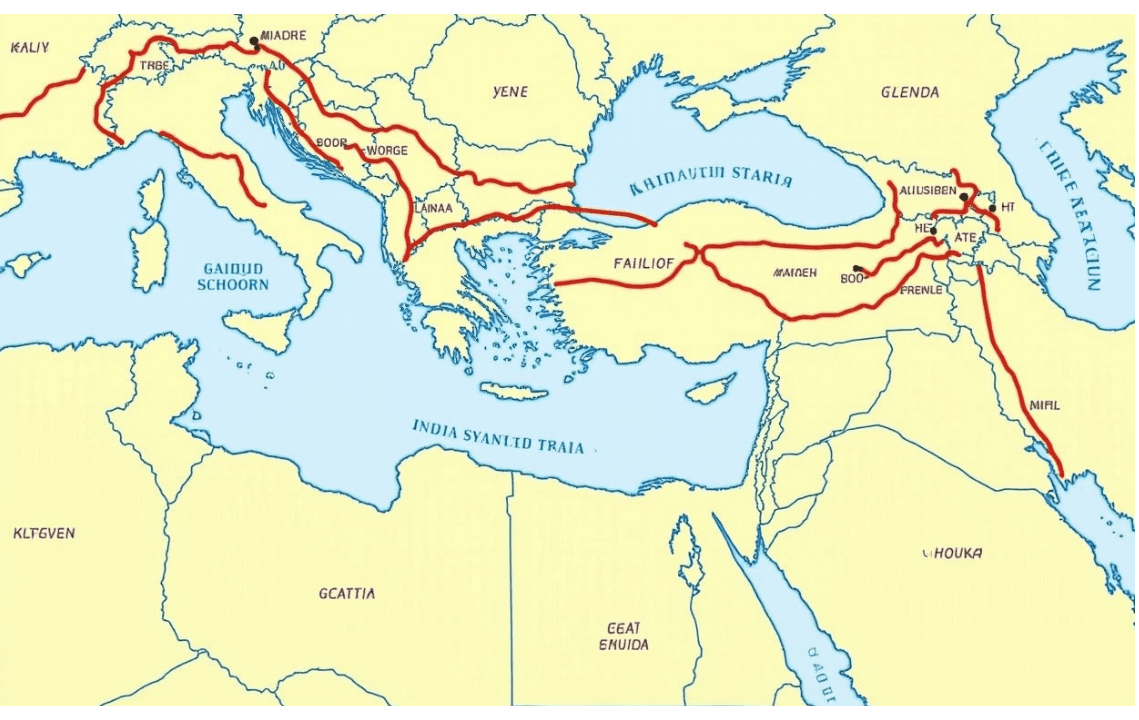
    The cultivation of silk first started in China around 3600 BCE, with the earliest known examples from 2700 BCE. This silk was imported to various countries like India and Persia, and even to Greece and Rome during later times. The Silk Road was officially opened by the Han Dynasty of China in 130 BCE. It soon became under the control of the Parthians, who supervised the trades and assimilation occurring on the Central Asian Roads. Silk later became very popular in Rome around 100 BCE to 100 CE, when Rome bought silk, tea, and dyes from China and sold horses, saddles, grapevines, honey, dogs, etc. to them. The road later extended to Rome conquered. Under Emperor Julian, the Byzantine Empire developed a prosperous silk industry around 6th century CE, which contributed a major portion to the Byzantine economy. The road also had a very negative impact on the empire. It was the Silk Road that helped in spreading the Bubonic Plague, which decimated Constantinople in 542 CE. Silk Road was also used by India, Persia, and Arabia to trade with both the east and the west. Thus, the Silk Road became the thread that connected great civilizations, namely China, India, Persia, Arabia, Anatolia, Egypt, and Europe, where they traded not only goods but also exchanged religions like Manichaeism, Buddhism, Eastern Christianity, etc., knowledge like Chinese Engineering, Indian Mathematics and Spirituality, Greek Astronomy and Philosophy, etc., and many more.

    Indian Ocean Trade: The Ocean of Cultural Exchange

    The Indian Ocean was an important route that connected India, South-East Asia, Arabia, East Africa, and even Europe. The Europeans traded through the Indian Ocean mainly via the Red Sea Corridor and the Strait of Hormuz. The Romans traded spices, especially black pepper from India, for their gold. “The Periplus of the Erythraean Sea” was a text by a Greek-speaking unknown Egyptian author in the 1st century CE, which gives details about the Indian-Roman Trade. According to the text, important ports in India included Barbaricum in the Indus River, Maziris(Cranganur) in the southwestern Malabar Coast, the island of Sri Lanka, etc. The biggest trading partners were the kingdoms of Chola, Chera, and Pandya of southern India. The kingdoms of South East Asia traded through the Strait of Malacca, which is an important choke point till today. The Indian Ocean trade was heavily influenced by the Monsoon winds that helped travelers to distant lands much faster. This Monsoon was exploited by the merchants of South East Asia, India, East Africa, and Egypt. Important exports from India included spices like black pepper, cloves, nutmeg, and mace to the West, and the Hindu and Buddhist religions, and also the Sanskrit language to the East. The Swahili Coast was an important location in East Africa, which was famous for doing business with the rest of the world. Famous port cities included Mombasa, Gedi, Pate, Zanzibar, Kilwa, etc., which were always full of foreign merchants from Europe, Arabia, and India.

    The Trans-Saharan Trade: The Dusty Roads to Gold

    The Sahara Desert also saw merchants travelling through it in caravans connecting Northern & Western Africa with Europe. The camel caravans were controlled by the Berbers who acted as a medium between Africa & Mediterrenian. The Empires that took part in these trades included the Ghana Empire (6th to 13th century CE), Mali Empire(1240-1645), and Songhai Empire(1460-1591). The things exported from Africa included ivory and slaves, but most importantly, Gold Dust. The capital of the Mali Empire, Timbuktu, was known for having huge sources of gold dust, which the Europeans traded for salt, thus creating a gold and salt trading system. The emperor ofthe Mali empire, Mansa Musa, who is also considered the richest man of all time, also encouraged this trade. Thus, Africa and Europe shared an economic relationship involving items like gold, salt, ivory, copper, horses, glassware, and slaves through the vast desert of the Sahara.

    European & Mediterranean trade: From Carthage to Venice

    The earliest known European trading superpowers were the Phoenicians between 1500 and 322 BCE. Centred around Carthage. At their greatest extent, they occupied parts of Northern Africa, the Levant, the Iberian Peninsula, and even parts of Italy. They traded throughout the Mediterranean Sea with civilizations like Greece, Rome, and Egypt. They also traded with distant lands like Persia and Iran through the Levant and the Red Sea Corridor.

    After the Punic Wars, the mercantile power was transferred to the Romans, who expanded their trading through the Silk Road and the Indian Ocean. Caesarea Maritima was an important port city located on the eastern coast of the Mediterranean Sea, established around 22-10 BCE by Rome’s client king Herod the Great. Rome traded China’s silk, India’s spices, Africa’s ivory and gold with its wine, olive oil, fine pottery, gold coins, bronze work, etc.

    After the fall of Rome, the Venetians were the last Pre-Columbian European Merchants who maintained business with the rest of Afro-Eurasia.

    Interconnections, Global Economy, and Impact

    The global businesses duringthe early days were based on a barter system, which later developed into currency systems. China, India, Persia, the Levant, and Rome were the five important trading regions. Along with Goods & Services, indigenous thoughts and belief systems like Buddhism, Zoroastrianism, Manichaeism, Hinduism, Taoism, Confucianism, Stoicism, Skepticism, Eastern Orthodox Christianity, and even Sufism were exchanged. India and China became the world’s biggest economies for about a millennium.

    But along with all the positives, it also gave rise to epidemics and pandemics like Antonine Plague (166 CE), Justinian’s Plague (541-542 CE), the Black Death (14th century CE), etc., and later, after the Columbian exchange, diseases like Syphilis, Malaria, and Yellow Fever also spread.

    Conclusion

    Thus, from this blog post, we get an idea of how various Pre-Columbian civilizations exchanged materials, services, knowledge, belief systems, and even diseases. The ancient society, like today, worked in coordination in economic and geopolitical interests.

    Suggested Readings

    Disclosure: This post contains affiliate links. As an Amazon Associate, I earn from qualifying purchases. I only recommend books I truly value.