Tag: ancient-india

  • The Evolution of Hinduism: From Ancient India to Modern Practices

    The Evolution of Hinduism: From Ancient India to Modern Practices

    Introduction: Understanding the Journey of Hinduism

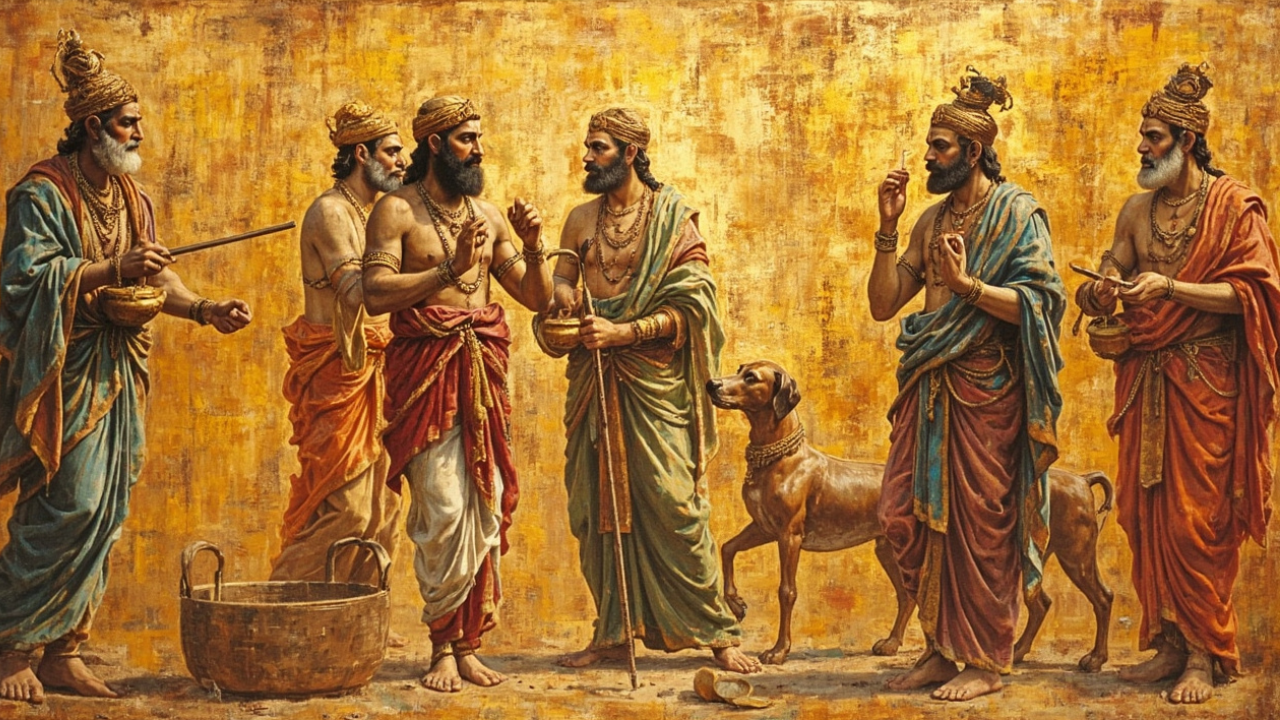
    Hinduism, also known as Sanatana Dharma, is the oldest religion in the world. It is mainly followed in the countries of India and Nepal, but also has a high presence in countries like Sri Lanka, Mauritius, Bhutan, Fiji, Bangladesh, Guyana, and Trinidad & Tobago. Hinduism can trace its roots back at least 5000 years, right from the Indus Valley Civilization. The religion has evolved over the past five millennia and still continues to change and evolve. This blog gives a brief study of the evolution of Hinduism from the Harappan culture to the 21st century.

    Roots in the Indus Valley Civilization (c.3000-1800 BCE)

    The earliest trace of the religion can be found in the Indus Valley. Although the Indus script has not been deciphered as of yet, archaeological findings show worship of natural spirits known as Yakshas, which later formed part of the Hindu legends. Also, sites for ritualistic bathing and an early form of meditation have been found, which would later evolve into Yoga. Also, the Pashupati seat found in the Mohenjo-Daro excavation sites gives an impression of the earliest form of Lord Shiva, the Hindu God of Destruction. Also, the holy symbols like the Swastika have been found, which is dated to be around 5500 years old. The Indus Valley religion naturally developed into the Vedic religion, later around 2000-1500 BCE. 

    The Vedic Age and the Rise of the Early Rituals (c. 1800-1200 BCE)

    The Vedic era began around 2000-1800 BCE, when a branch of the Proto-Indo-Iranian tribe migrated to India and assimilated with the people of the Indus Valley Civilization, thereby creating a synchronized religion formed by the amalgamation of both cultures. Thus, the new religion had the characteristics of both sides- like the nature worship and the fire sacrifices of the Proto-Indo-Iranians and the concepts of altar making and meditation from the Harrappan culture. Finally, with the formation of the new religion, one of the earliest texts of mankind, the Rig Veda, was compiled around 1500 BCE in Vedic Sanskrit. The text talks about the nature, the Gods representing the nature, their stories, the hymns about those gods, the rituals, and many more. It also has two of the earliest known philosophical concepts, known in the form of the Nasadiya Sukta and the Purusha Sukta. The Nasaadiya Sukta questions the existence of man, the nature, the universe, and even the existence of Gods. It’s one of the world’s first agnostic scriptures, which questions everything around itself. The Purusha Sukta gives the base of Hindu Cosmology by stating how the universe is a form of an eternal being, showing the pinnacle of early human imagination. Around 1300 to 1000 BCE, the other three Vedas, namely the Yajur, the Sama, and the Atharva, were compiled. The Yajur Veda is a manual for the rituals mentioned in the Rig Veda. It describes the process or system through which the rituals should be done. The Sama Veda is the book containing songs in praise of the deities. It is the only Veda that is sung and not read, and forms the basis of Indian Classical Music today. The Atharva Veda is about the esoteric practices dealing with domestic spells related to giving boons and removing curses. It also states some of the earliest tricks and magics known to mankind.

    The Upanishadic Shift: From Ritual to Philosophy (c. 1200-500 BCE)

    Around the latter half of the Vedic Period, the sages and scholars began to question the rituals and sacrifices, and began to think about the individual self, its relationship with its surroundings, and the cosmic reality. From these Philosophical thoughts rose the core texts of Hindu Philosophy – the Upanishads. The Upanishads form the fourth section of each of the Vedas, the other three being the Samhitas, the Brahmanas, and the Aranyakas- all dealing with some aspects of the ritualistic worship. The Upanishads, on the other hand, were formed as a critical commentary on the previous portions. Traditionally, it is considered that there are 108 Upanishads, although academically, the number may be higher. Out of these, 10 to 13 Upanishads are considered to be the Principal Upanishads, which were the earliest ones and dealt with concepts like soul, subtle body, sense organs, stages of reality, etc. Unlike the previous three parts, which became insignificant over time, the Upanishads maintain their significance even today.

    Epic Age: Ramayana, Mahabharata, and the Bhagavad Gita (c. 800-300 BCE)

    Around the first millennium BCE, two epic poems were written in the form of the Ramayana and the Mahabharata. Although the original stories are considered to have passed on from a much earlier time, their present form is considered to have been finalized after the Persian, Greek, and Scythian contacts with India, as some parts of the epics mention them. The language also varies highly, with some parts having a more Vedic Sanskrit flavour, while the rest have a Classical  Sanskrit texture. These suggest that the original stories may have been from the later part of the Vedic Era, but slowly evolved as they passed from mouth to mouth over the centuries, and were finally written on manuscripts around 500-300 BCE. The Bhagavad Gita is a small portion with 700 verses within the epic of the Mahabharata, with 96,000 verses. The scripture is considered the holiest scripture of Hinduism, right after the Vedas. In the Bhagavad Gita, Prince Arjuna is given wisdom from the Upanishads by his charioteer, Lord Krishna, the 8th avatar of Lord Vishnu. The text contains knowledge such as how to work without attachment or detachment, how to devote completely to the creator, how to differentiate between right and wrong, and much more.

    Philosophical and Puranic Hinduism (c.500 BCE -1300 CE)

    After the latter half of the first millennium BCE, the precedence within the Hindu Pantheon began to shift. Earlier Vedic deities like Indira, Varuna, Yama, and Kubera, representing aspects like Rain, Water, Death, and Wealth, were superseded by the Gods like Brahma, Vishnu, Shiva, and Shakti, who represented deeper philosophical concepts like creation and matter, preservation and space, destruction and time, and protection and energy. So, stories began to form around 300 BCE till 1000 CE, called the Puranas, which formed the basis of the Hindu Mythology. During that time, large temples were constructed dedicated to the above-mentioned deities. Apart from mythological structure, this age also created a structure for Indian Philosophy. The Indian Philosophy got divided into 6 Astika Schools (Orthodox) and 3 Nastika Schools (Heterodox). The orthodox schools of Sankhya, Yoga, Nyaya, Vaisheshika, Mimamsa, and Vedanta accepted the Vedas as the highest spiritual authority, while the heterodox schools of Jainism, Buddhism, and Charvaka rejected the Vedas. Around 7-8th century CE, when Buddhism was becoming the prevalent religion in India, the Hindu Renaissance emerged with the arrival of great Hindu Philosophers like Adi Shankaracharya (8th century CE), Ramanujacharya (11th century CE), and Madhvacharya (13th century CE), who battled the Buddhists with words in debates, and led to the re-emergence of the Hindu Population in India.

    Hinduism under Medieval India: Challenges and Movements (c. 1100-1800 CE)

    India came under foreign Islamic rule at the beginning of the 13th century. This resulted in the persecution of Hindus and their beliefs, which were considered pagan and sinful by the rulers. The Hindu locals also resisted and evolved their religion in accordance with time. This led to changes in the theology of both religions. A new group of Saints came up from both religions, leading to movements called the Bhakti and the Sufi Movements. Both movements got influenced by each other and exchanged thoughts, and propagated that God is one. Important Bhakti saints include Sant Jnaneshwar (13th century), Sant Kabir Das (15th century), Mira Bai (16th century), Guru Nanak (16th century, the founder of Sikhism), Chaitanya Mahaprabhu (16th century), and Goswami Tulsidas (16th century). Important Sufi Saints include Khwaja Moinuddin Chisti (12th Century), Nizamuddin Auliya (13th century), and Amir Khusro(13th century).

    Colonial Encounters to Modern Times (c.1700-present)

    The Europeans first came to India via sea at the end of the 15th century, but the surge in the arrivals of Europeans came in the 1700s. After the Battle of Plassey in 1757 and the Battle of Buxar in 1764, the British East India Company consolidated its colonial rule over India. By 1848, most of India was under the Company rule. After the First War of Independence in 1857, the British Crown took direct power over India from the company and ruled till 15th August, 1947. So, within this span of nearly 200 years, the evolution of Hinduism took a unique turn. There were two major directions that the evolution divided- the reformists and the revivalists. The reformists embedded logical foreign concepts and rejected the social evils that were beginning to manifest within Hinduism. Thus, they incorporated universal thoughts within the dharmic structure. Examples include Brahma Samaj(1828) by Raja Ram Mohan Roy. The revivalists took an opposite turn; they rejected the impurities within the social structure and formed a custom that was analogous to Vedic times, without social evils. Examples include Arya Samaj(1875) by Swami Dayanand Saraswati. Both movements challenged the growing social evils in the culture, which weren’t present in ancient times, like the rigid caste system and burning of widows, which became prominent after 500 CE and 1500 CE. Both movements encouraged education for all irrespective of caste and gender, although in their own different ways, the former encouraged the European system of education, while the latter wanted the Ancient Vedic system of education. Among these movements and the resistances, many spiritually enlightened people took birth in India, like Ramakrishna Paramahamsa (b.1836), Swami Vivekananda (b.1863), Ramana Maharshi(1879), Paramahamsa Yogananda (b.1893), and many more. They taught their spiritual wisdom to the common folk and also spread the knowledge of Hinduism to the outside world. After India gained independence in 1947, a new wave of spiritual leaders emerged who spread the religious teachings to the common folks of independent India. Some of the greatest contributors to Hinduism after independence include Srila Prabhupada (b.1896), Swami Chinmayananda (b.1916), and Mahesh Yogi(b.1918). Thus, Hinduism, through a span of five millennia, evolved from the Indus Valley to the modern stage.

    Conclusion: A living, Evolving Religion

    Hinduism, as the oldest living religion, still survives because it never took a solid, rigid form; it has always flowed like a liquid and taken the form of the container where it is kept, whether it was the Buddhist scholars, Islamic rulers, Christian colonizers, or modern Atheist protesters, Hinduism has always changed its form based on the situation, without forming any rigid doctrine, and still continues to grow as a living and breathing religion. That’s all for this blog. Please like, comment, and share if you find this interesting.

    Suggested Readings


    Disclosure: This post contains affiliate links. As an Amazon Associate, I earn from qualifying purchases. I only recommend books I truly value.


  • Lilavati and the Legacy of Indian Mathematics: From Zero to Infinity

    Lilavati and the Legacy of Indian Mathematics: From Zero to Infinity

    Introduction

    Mathematics has always been an integral part of Indian culture. From the cities of the Indus Valley Civilization like Mohenjo-Daro to the Vedic Sulbasutras to the Golden Age of Indian Mathematics (500 – 1200 CE) to the Kerala School of Mathematics, Indian culture has always given huge importance to fields of mathematics, whether arithmetic, geometry, algebra, or even trigonometry. In this blog, we will discuss India’s various contributions to mathematics, particularly in the Vedic, the Classical Age & also the later periods. The blog has intentionally been made free from equations and formulae in order to make it easier to read.

    Now, let’s address the title of this blog. Who or What was Lilatvati? Well, Lilavati is a treatise on mathematics by Indian mathematicianBhaskara II around the early 12th Century CE. The legend behind the name is that Lilavati was the name of the daughter of Bhaskara II. He studied his daughter’s horoscope that she would remain both childless and unmarried. Despite his efforts, he failed to get his daughter married, and so dedicated his book to her so that her name remains immortal through time. Even in the book, many mathematical problems are addressed to her, also claiming her to be an intelligent young woman. For example, “Oh Lilavati, intelligent girl, if you understand addition and subtraction, tell me the sum of the amounts 2, 5, 32, 193, 18, 10, and 100, as well as those when subtracted from 10000”. So, I am dedicating this blog to all the intelligent women who contributed to the field of mathematics, even if in a very minuscule manner.

    Chapter 1: Ancient Indian Mathematics- The Harrappan & The Vedic Periods

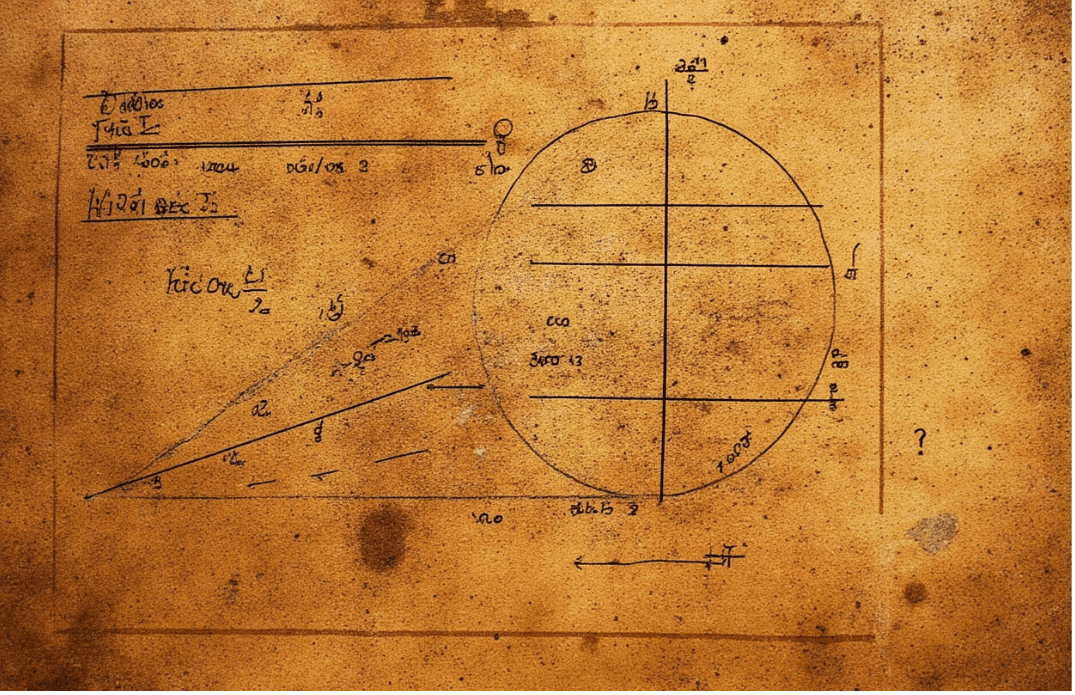
    The earliest concept of mathematics in India can be traced to the Harappan or the Indus Valley Culture around 3000 BCE. Weights and Scales of various measures are found in the ruins of this Pre-Vedic Civilization. If we consider 27.584 grams of weight as a standard unit of weight, plumb bob weighing around 0.05, 0.1, 0.2, 0.5, 2, 5, 10, 20, 50, 100, 200 & 500 units were discovered from the ruins. Scales of different lengths were discovered in sites like Harappa, Mohenjodaro andLothal. The Mohenjodaro Scale has a length of 66.2 mm with nine carefully sawn, equally spaced parallel lines of 6.7056 mm each. One of the lines is marked by a hollow circle, and the sixth line from the circle is indicated by a large circular dot. The distance between the two markers is 1.32 inches(335mm), also known as the “Indus Inch”. Another important discovery is the Harappan Brick,s which had a ratio of 4:2:1 in terms of length, breadth & thickness.

    Next came the vedic age which is suggested to be roughly around 1800-800 BCE as accepted by most scholars, gets its name from the four vedas– the Rig Veda (contains hymns & prayers during rituals), the Yajur Veda (contains rules & guidance for sacrifices), the Sama Veda (have melodies in praises to the gods) & the Atharva Veda (is a collection of magical spells). Each Veda has four parts- Samhitas, Brahmanas, Aranyakas & Upanishads. A Brahmana named Satapatha Brahmana (Brahmana with a hundred paths) has one of the earliest references to mathematics in the world. The Satapatha Brahmana (~1200BCE) contains technical details of altar constructions. Details of isosceles trapezoidal altars; a circular, semi-circular, and a square altar -all three of equal areas are mentioned. Another text called Vedanga Jyotisha gave procedures for calculating time & positions of the sun & the moon in accordance with various nakshatras (zodiac signs).

    Some of the important scriptures depicting Indian Vedic Mathematics are theSulbasutras. The Sulbasutras used instructions for two types of rituals- personal & communal. Three of the most mathematically significant Sulbasutras are those recorded by Baudhayana, Apastamba & Katyayana. The earliest of them is considered to be the Baudhayana Sulbasutra (~800 BCE), followed by the Apastamba Sulbasutra (~600 BCE) and lastly the Katyayana Sulbasutra (~200 BCE). The Baudhayana Sulbasutra states Pythagoras Theorem with an approximation procedure for obtaining the square root of 2, correct to 5 decimal places. The actual statement of the Pythagorean theorem, in terms of the sides and diagonals of squares and rectangles, is found in both the Baudhayana and the Apastamba Sulbasutras. The Sulbasutras primarily use geometric instructions for altar construction of various shapes- squares, rectangles, circles & trapeziums. Some examples include- how to turn a pair of equal or unequal squares into a third square, how to turn a rectangle into a square without changing the area, the process of squaring a circle, or circling a square. An extraordinary achievement of Vedic mathematics was the procedure of finding square roots with a high degree of approximation, like that of 2.

    The earliest types of numerals found in India are Kharosthi numerals of around 400 BCE, Brahmi numerals of around 300 BCE, and later Gwalior numerals around 850 CE. The earliest form of a symbol for zero is found in the Gwalior script of around 876 CE. In fact, the word zero comes from the Arabic al-sifr. Sifr, in turn, is a transliteration from the Sanskrit Shunya, which means void or empty. The symbol for Shunya first began as a dot or a Bindu found in India, Cambodia & Sumatra, which later became a circle.

    The rise of Jainism & Buddhism in India around 700 BCE also impacted mathematics as the use of it slowly shifted from religious to personal purposes of philosophy & inquisition. Both theJaina and the Bauddha traditions also developed their own schools.

    The mathematics was soon integrated for astronomical works called Siddhantas. These Siddhantas contained not only an explanation of the methods involved but also a discussion of the technical instruments available then for measuring time and angles, which soon led to the Golden Age of Indian Mathematics.

    Chapter 2: Classical Indian Mathematics- The Golden Age

    The Golden Age of India, which is generally considered between 500 and 1200 CE, saw the birth of a number of “Great Indian Mathematician-Astronomers”. Some of them and their contributions are mentioned below:-

    1.  Aryabhata I (b.476 CE)– Best known for his work Aryabhatiya, Aryabhata I was the pioneer of the Golden Age of Indian Mathematics. His work contains details of an alphabet-numeral system of notation, rules for arithmetical operations, and methods of solving simple and quadratic equations and indeterminate equations of the first degree. The book pays some attention to trigonometry and introduces the sine and versine (i.e., 1 – cosine) functions—a notable innovation on earlier work both in and outside India. He also calculated 3.1416 as a close approximation to the ratio of the circumference of a circle to its diameter. India’s first satellite, launched in 1975, was also named after him.
    2.  Brahmagupta (b.598 CE)Brahmagupta was from Ujjain, which is in the modern state of  Madhya Pradesh. He is known for his work, Brahma Sphuta-Siddhanta. It is an astronomical text with many chapters in mathematics. Brahmagupta called the twelfth chapter Ganita (Arithmetical Calculation). Although it includes a discussion of mathematical series and a few geometric topics. The eighteenth chapter, Kuttaka (literally Pulverizer, but also translated as Algebra), contains solutions of indeterminate equations of the first and second degree, which later directly influenced the evolution of algebra in the Islamic World. His other important work is Khanda Khadyaka, which gives further developments in trigonometry, including a method of obtaining the sines of intermediate angles from a given table of sines.
    3. Sridhara (fl.800 CE)Sridhara was from Bengal. His most important work is the Trisatika, which is one of the greatest works on arithmetic before Bhaskaracharya’s Lilavati. In it, he deals with elementary operations, including extracting square and cube roots and fractions. Eight rules are given for operations involving zero. His methods of summation of different arithmetic and geometric series were to become standard references in later works.
    4. Mahavira (fl.850 CE)– He was a Jain and thus was familiar with Jaina Mathematics. His works include Ganita-sara-sangraha, which deals with arithmetic operations and a number of examples to illustrate the rules.
    5. Bhaskara II (b.1114 CE)Bhaskaracharya( or Bhaskara the teacher) was from the Sahyadri region of modern Maharashtra. His most famous work isLilavati which contains a profound understanding of arithmetic, permutations & combinations, rules to work with zero. His other work, Bijaganita, contains problems on determining unknown quantities and solving simple & quadratic equations.

    Classical India was greatly affected by both the import & export of foreign cultures. Indian mathematics was influenced by Greece & China and, in turn, influenced cultures like Persia, Arabia, and even China & Greece. India was a powerhouse when it came to arithmetic, geometry, and especially algebra and trigonometry. 

    Chapter 3: Legacy & Influences

    During the later medieval period, after the Islamic Conquests in India, much of the mathematical tradition declined. But it managed to survive through regional schools. The most famous of those schools was the Kerala School of Astronomy and Mathematics between the 14th and 16th centuries CE. Their most important members were the Madhava, its founder, Paramesvara, Damodara, Nilakantha, Jyesthadeva, Achyuta Pisaroti, Citrabhanu & Sankara Variyar & their most important contribution was the series expansion for trigonometric functions of sine, cosine & arctangent, including an infinite series for pi by Madhava. Their works were completed two centuries before the invention of calculus in Europe, which is now considered the first example of a power series other than the geometric series.

    The school later inspired S.Ramanujan(1887-1920), who made great contributions to mathematical analysis, number theory, infinite series & continued fractions. There is a book and a movie after him named The Man Who Knew Infinity.

    Other important legacies of Indian Mathematics include the inspiration to Al-Khwarizmi, who studied Brahmagupta’s Brahma Sphuta-Siddhanta and wrote Al-Jabr, from which the word algebra comes, and the Fibonacci sequence, which originally is credited to an Indian poet & mathematician, Pingala, in 200 BCE. There are also other contributions that are beyond the scope of this blog.

    Conclusion

    India has a huge contribution in the field of mathematics, which many modern scholars highly neglect. On the other hand, the extraordinary claim of India being the sole ancient hub of knowledge is also false. In truth, India was one of the major contributors in mathematics & science, which shared its knowledge with Greece, China, Persia, Egypt & others in a bidirectional manner. Hope you liked this blog. If you find this interesting, please share and subscribe. Also, comment on any suggestions, queries, or criticisms. I will be happy to answer them.

    Suggested Readings-

    1. Indian Mathematics- Internet Encyclopedia of Philosophy
    2. MacTutor History of Mathematics- Online Archive
    3. The Crest of the Peacock: Non-European Roots of Mathematics- George Gheverghese Joseph

    Disclosure: This post contains affiliate links. As an Amazon Associate, I earn from qualifying purchases. I only recommend books I truly value.