Introduction
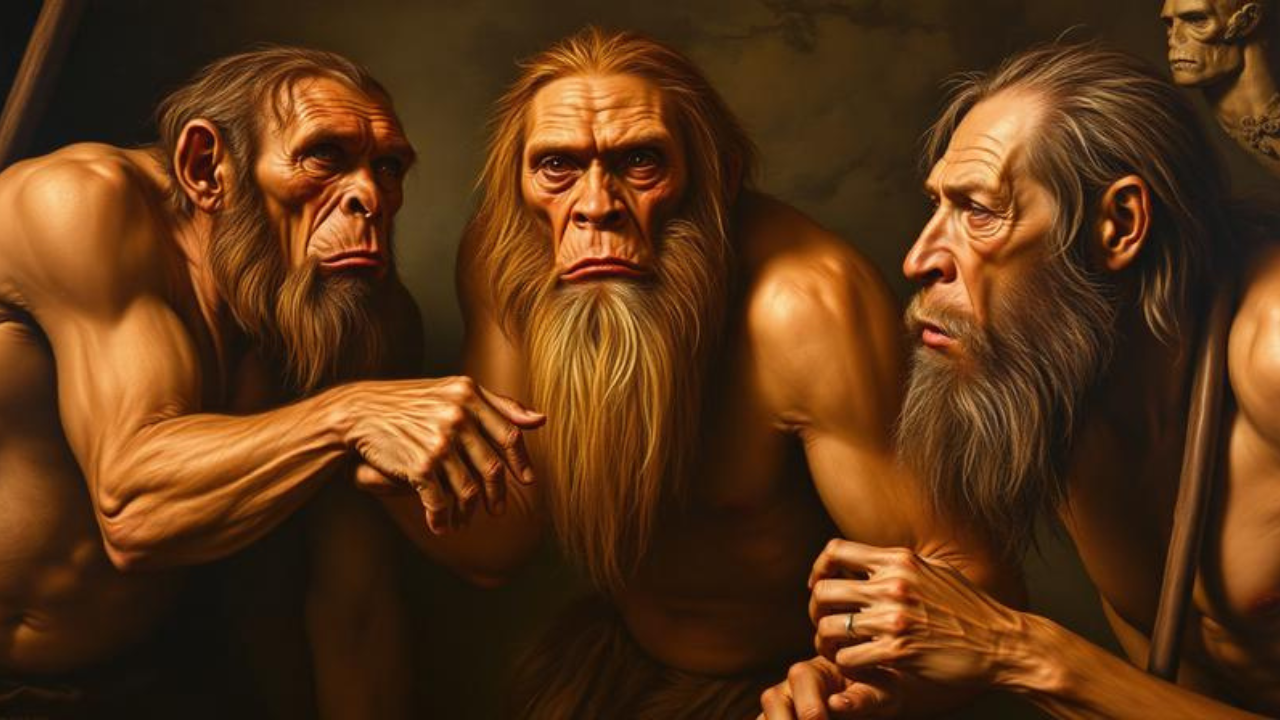
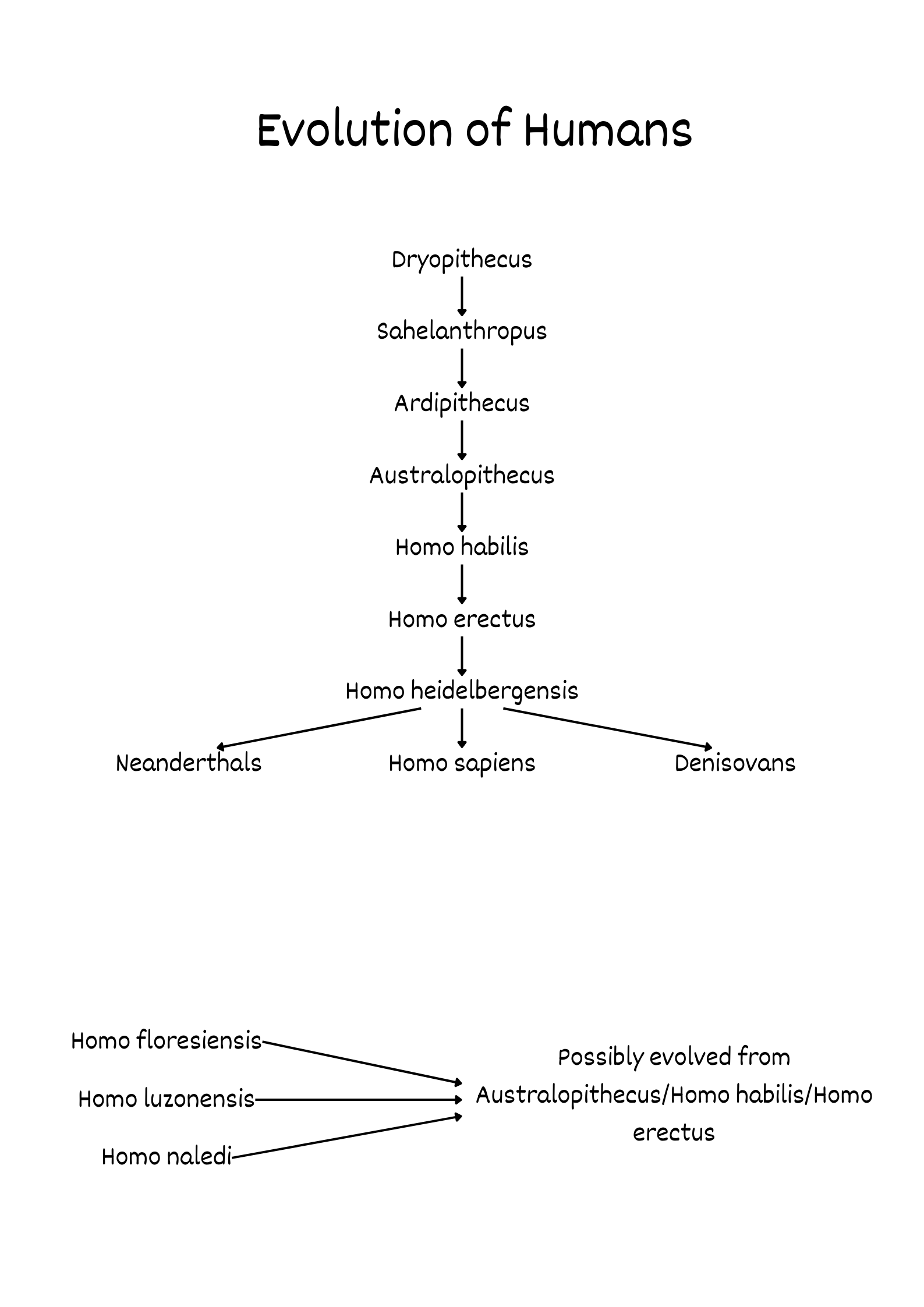
When we think of human beings, the picture that comes to mind is that of the species Homo sapiens, or modern humans. For the past 50,000 years, Homo sapiens has been the only human species living on this planet. But that was not always the case. We had many human cousins belonging to other species who perished over time. In this blog, we discuss all our mysterious cousins, uncles, and aunties who inhabited the planet long before we became the dominant and only human species. This blog also tries to highlight the common understanding that humans came from monkeys is actually a misnomer. We categorize the other humans into three chapters, namely the pre-humans (those who were not truly humans but formed the roots of human evolution), the early humans (the humans that existed before sapiens and with whom we share our genetic materials), and finally the other humans (the other human species that once lived alongside Homo sapiens but disappeared with in the sands of time and may have exchanged genetic materials through inter species mating). And don’t worry, the blog won’t be too technical and can be enjoyed by anyone who has a little bit of interest and curiosity in science and evolution. So, let’s begin.
Chapter 1: Pre-Humans
- Dryopithecus – Dryopithecus was a genus of ancient great apes from 12 to 5 million years ago. They were the earliest known common ancestor to humans and other apes. Their fossils have been found all over the wide region of Afro-Eurasia. Several species of Dryopithecus existed, including Dryopithecus fontani and Dryopithecus carinthiacus. They existed in various sizes, including small, medium, and even large gorilla-like sizes. Although they were our ancestors, they lacked most of the features of human beings and living apes. Their canine teeth were larger than those of modern and early humans, but not as strongly developed as those of the modern apes. Their limbs were longer than modern humans’ but not that excessively long, and their skulls lacked ridges like those found in modern apes.
- Sahelanthropus –Sahelanthropus was a genus of ancient ape that existed between 7 and 5 million years ago, predominantly in Africa. Most likely, they were the first members of Hominini (a taxonomic tribe that includes both modern humans and chimpanzees), although some research suggests that they belonged to Gorillini (a tribe that includes modern gorillas). According to the common norm, they arrived right before the human-chimp split. Their canines were shorter than Dryopithecus, and their faces were also relatively flatter. There is a debate about whether they were the first bipedals (using two legs for walking) or not, although most researchers suggest that the Ardipithecus were the first bipedals.
- Ardipithecus – They lived on Earth between 6 and 4.5 million years ago. They were the first bipedals and the first half-tree, half-ground walkers, as the apes began to slowly climb down from the trees. Their upper pelvis was adapted for bipedal walking, while their lower pelvis was still adapted to climbing trees. They had two species – Ardipithecus ramidus and Ardipithecus kabadda. Traditionally, they are considered to be the first ancestors of humans after the split between humans and chimpanzees, although some studies show that they share features with chimpanzees and bonobos. They, however, didn’t have the knuckle-walking style like chimpanzees and bonobos, thus indicating the ancestors of humans never walked with knuckles on the ground like other modern apes.
- Australopithecus – They were pre-humans who lived between 4.5 and 2.5 million years ago. The genus name means “southern ape,” as their fossils were first discovered in South Africa. They had a very half-human, half-ape appearance, thus showing the penultimate stages before diverging to a pure human genus. Their brain were smaller like apes but had smaller canine teeth, were fully bipedal (two-legged when walking). They had many species and subspecies, including Australopithecus afarensis, Australopithecus africanus, and Australopithecus sediba, of which the second one is most closely related to modern humans. The genus slowly evolved into three new genera – Homo, Paranthropus, and Keynanthropus, before the original genus went extinct.
Chapter 2: Early Humans
- Homo habilis – They were the earliest representatives of the Homo genus, who lived between 2.5 and 1 million years ago. Literally meaning, Handyman, the Homo habilis were our first ancestors who were the first species on the planet to make simple stone tools for hunting and butchering. The species had human-like feet, arms, and a smaller body compared to the Australopiths. Although smaller in body, they had a larger brain, which suggests one of the earliest examples of cognitive expansion. They were also able to completely plan and coordinate a team hunt. It is also believed by academia that they were the first species to understand cause and effect clearly.
- Homo erectus – Also known as “the upright man,” they existed between 2 million and 120 thousand years ago. Their fossils are found throughout Afro-Eurasia. They initially existed in Africa, but later migrated out of Africa and colonized parts of Europe and Asia. As the name suggests, Homo erectus were the first humans to stand upright with a straight backbone. They were also the first humans to discover fire roughly around 1 million years ago. They also improved the stone tools used by the H. habilis. Their tools could be used for digging, vegetable processing, and could be tied with wooden shafts to form javelins and spears.
- Homo heidelbergensis – They existed between 700 thousand and 300 thousand years ago. Their brains were larger than both H. habilis and H. erectus. They evolved from Homo ergaster or African Homo erectus. They began developing social intelligence and later developed some forms of archaic languages for communication, which later became one of the greatest human inventions. Their facial features also resembled those of modern humans, like a sharp nose and narrower chins. They also developed stone axes and long-range spears, which made hunting quite easier. It was the Homo heidelbergensis that first developed the division of roles based on physical and social capabilities. Later, the African group evolved into Homo sapiens, the European group into Neanderthals, and the Asian group into Denisovans.
Chapter 3: Other Humans
- Neanderthals – The Neanderthals were archaic humans who lived in Europe, West and Central Asia from 400 thousand to 40 thousand years ago, until completely replaced by Homo sapiens. They had a long and low skull, much larger than that of modern humans. Physically, they were shorter but very muscular with strong shoulders, barrel chest, thick bones, and a powerful grip. They were also users of sharp multipurpose tools for hunting, with which they hunted large animals like mammoths, woolly rhinos, and bison. Those humans used to live in caves and wear tailored clothing. They were also very social animals, as numerous cave paintings, shell beads, and feathers for decoration were found in their burial sites. Research shows that non-African humans today carry 1-2 % Neanderthal genes.
- Denisovans – The Denisovans were archaic humans who lived in East and Southeast Asia, as well as in Melanesia and Australia, between 400 thousand and 50 thousand years ago. Nothing much is known about their physical features, as we don’t have many fossils to clearly study them. Although the fossils are few, the sites give us much information about them. They were expert in making stone and bone ornaments and artifacts, which had been discovered in those sites. They were also good hunters, as sharp and polished stone and bone weapons were discovered. The Denisovan DNA gave the Tibetans the EPAS1 gene, allowing low oxygen survival, high-altitude endurance, and better blood oxygen regulation to survive on the Tibetan plateau and the Himalayan ranges. Today, Melanesians and Aboriginal Australians have around 5% Denisovan genes, while East Asians have around 1% Denisovan genes. They, like Neanderthals, were later replaced by Homo sapiens through elimination and absorption.
- Homo floresiensis – They were the archaic humans who lived on the island of Flores in Indonesia between 100 thousand and 50 thousand years ago. Also known as Hobbits, they were short, having a height of around just 1 meter (~ 3 feet 3 inches) and weighing around 25 kg. They used stone tools and blades for hunting and butchering. The reason behind their small height, given by academia, is the lack of big predators as well as prey animals. Thus, due to limited resources, they exhibited insular dwarfism, which is even found in many modern species like the Pygmy elephants, the Dwarf hippos, and the Miniature Deer.
- Homo luzonensis – They were the archaic humans living between 100 thousand and 50 thousand years ago, and whose fossils were found in Luzon, Philippines. Not much is known except that they had curved toe bones, showing they were frequent tree-climbing humans, as well as having a smaller height of around 1.3 meters (~4 feet). Much more is yet to be discovered, as the first fossil was only found in 2019, making it one of the newest human species to be identified.
- Homo naledi – They existed between 300 thousand and 100 thousand years ago, and their fossils were discovered in the Rising Star Cave, South Africa, in 2013. They had small, rounded faces and dentition (teeth) almost similar to modern humans. They showed a few ape-like features, like shoulders angled upwards and ribcages tapered towards the top. No tools had been discovered yet, thus suggesting evolution could be non-linear.
Comparison Chart
Conclusion
Thus, from the blog, we see that human evolution is not as linear as we think. There was a time when five or more human species together coexisted on Earth. This blog also tries to explain the important events in human evolution, like becoming bipedal, using tools, discovering fire, and wearing tailored dress. I hope the blog is neither too technical nor too simple and bland.
That’s all for this blog. Do write to me what you think about human evolution. Also, like and share if you find the piece interesting. And also, please subscribe to my newsletters if you want to get notified for future updates and blogs. Finally, thank you a lot for reading this piece.
Suggested Readings
Disclosure: This post contains affiliate links. As an Amazon Associate, I earn from qualifying purchases. I only recommend books I truly value.