Tag: psychology

  • The Logic Breakers: 10 Paradoxes That Defy Common Sense and Science

    The Logic Breakers: 10 Paradoxes That Defy Common Sense and Science

    Introduction

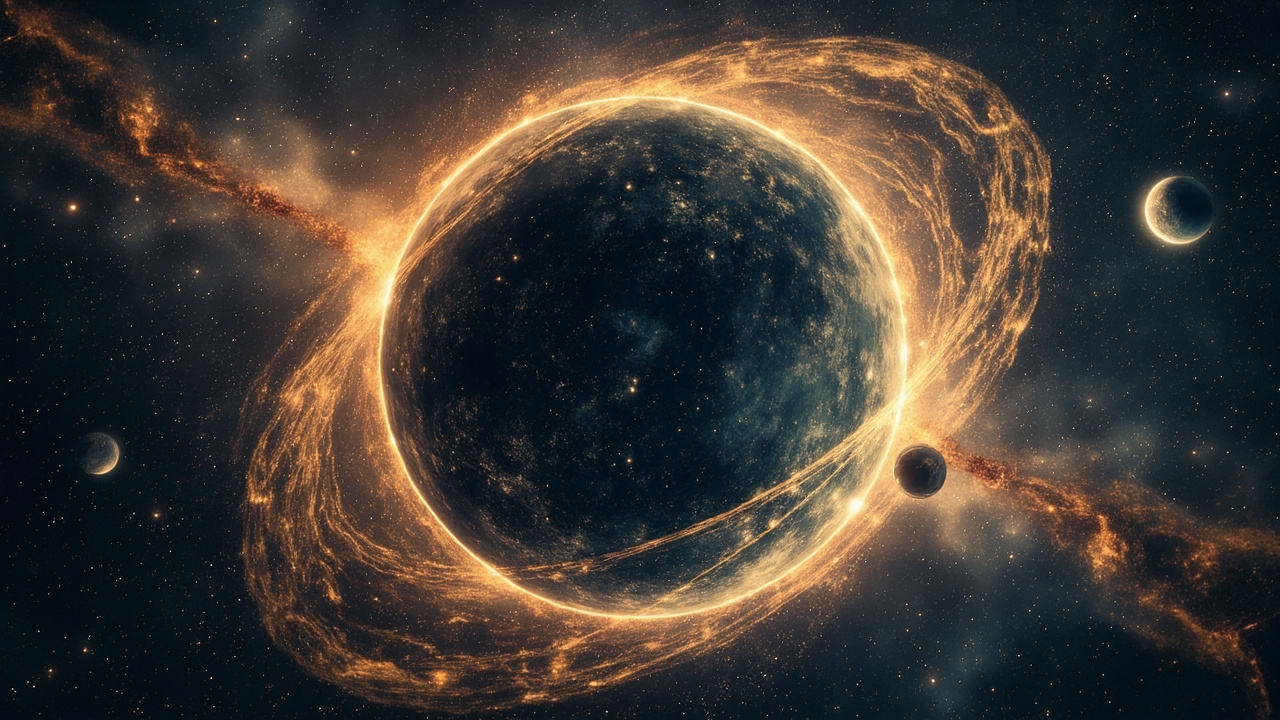
    Have you ever stumbled upon a puzzle that makes your brain do somersaults? A problem so strange that it feels like the universe is messing with you? Welcome to the world of paradoxes, where logic twists, science shivers, and common sense takes a back seat. From time-travel conundrums to quantum quirks, these ten paradoxes challenge everything we think we know about reality. Strap in, because your mind is about to be stretched in ways you didn’t think possible.

    The Ship of Theseus

    The Ship of Theseus is an Ancient Paradox regarding the change of identity across time. Plutarch first mentioned it in the 1st century BCE. In Greek Mythology, the legendary hero Theseus rescued the Athenians from King Minos by slaying the monster Minotaur and escaping on a ship to Delos. The Athenians celebrated it by taking the ship to Delos. Over time, the damaged and rotten parts of the ships were replaced by new parts. Later, Athenians raised a question that, if every part of the ship were replaced, it would still be the original ship. Also, if it was not the original ship anymore, when did it cease to exist? In Contemporary Philosophy and Cognitive Science, the thought experiment is used to study identity across time and has been applied by various philosophers to study various cases.

    The Grandfather Paradox

    It is a type of temporal paradox that arises along with the concept of time-travel in theoretical physics and philosophy. The paradox arises hypothetically if a man travels through time to his past and kills his grandfather because he gave birth to the time traveler’s parent. As a result, the time traveler won’t be born, which will further result in his grandfather not being killed, which will further lead to his birth, creating a cyclical loop without any definitive result. The Grandfather paradox has been studied by theoretical physicists over time and is also used by many Science Fiction authors and directors in their novels and films.

    The Bootstrap Paradox

    It is another temporal paradox associated with time travel and an unending loop. Suppose a time traveler travels through time hundreds of years into the past and gives a copy of “The Time Machine” to a young H. G. Wells, who later publishes it under his name. Centuries later, the same book inspires the scientists to build an actual time machine, which results in time travel, thereby creating a loop with no starting point. The paradox happens when a person from the past uses a technology or idea of the future, which in turn becomes the cause of its existence in the future. This is another interesting trope used in various fictions by authors and directors in the last century.

    The Sorites Paradox

    Also known as the Paradox of the Heap (Sorites is the Greek word for Heap), it is an ancient problem that states that if removing one grain of sand doesn’t stop it from being a heap, when exactly does it stop being one? It is a paradox related to the identity of an object and questions about the time when it will lose its identity. Some resolutions had been proposed, including denying the existence of the heap and setting a fixed boundary to be called a heap.

    The Twin Paradox

    This paradox arises from the treatment of time in Special Relativity. It arrived due to the concept of Time Dilation, according to which, if a person or a thing travels at a speed significantly closer to the speed of light, their relative time from a different frame of reference slows down. So if one of two identical twin sisters travels to space at a speed near the speed of light and returns to earth after one year, she will find that she has aged significantly less than her twin who stayed on earth. But in relativity, what one observer sees for the second observer, the second observer sees the same for the first one, as time is relative. So, the space-going sister must see the time on Earth moving more slowly, resulting in a contradiction or paradox. The solution to this paradox can be found in general relativity through acceleration. The situation is not symmetrical because the traveling twin changes frame of reference – first while accelerating to space and second while decelerating to Earth. During the turnaround, the traveling twin experiences a shift in simultaneity, which counts as the “present time” on Earth suddenly jumps forward from her point of view. Thus, when they reunite, the sister who stayed on Earth is older. So, this paradox is theoretically solved and thus technically no longer a true “paradox”.

    The Observer Effect

    This paradox arises in quantum mechanics, where observing something sometimes changes its state, suggesting that reality itself depends on perception. In the quantum world, particles like electrons don’t have definite positions or velocities until they are measured, i.e., they act as probability clouds or waves of probabilities. When we observe or measure one, the wave collapses into a single state, meaning our act of observation determines which version of reality becomes real. For example, in the Double-Slit Experiment, when electrons aren’t observed, they behave like waves and interfere, creating a pattern. But when we set up detectors to watch which slit they go through, they act like particles instead, and the interference disappears. Thus, the observer effect shows us that in the quantum world, knowledge and reality are deeply entangled; we cannot study something without becoming part of its story.

    The Fermi Paradox

    It is the contradiction between the high likelihood of the emergence of extraterrestrial lifeforms and the lack of evidence for it. It is named after the physicist Enrico Fermi, who informally asked the question, “Where is everybody?” during a conversation at Los Alamos in 1950 with colleagues Emil Konopinsky, Edward Teller, and Herbert York. It was later popularized by the superstar physicist Carl Sagan in the 1960s. There have been various attempts to resolve the Fermi Paradox by searching for any sign of intelligence in outer space, with no positive results to date.

    The Paradox of Tolerance

    It is a philosophical problem in decision-making, which suggests that a society that tolerates everything, including tolerance, eventually destroys its own tolerance. It was proposed by philosopher Karl Popper in “ The Open Society and Its Enemies” in 1945. In this work, he proposed that a tolerant society should be intolerant of people who promote intolerance. This is a social paradox that raises the question of true tolerance. It has been questioned and debated by many philosophers, sociologists, and anthropologists since its coinage without achieving a true solution.

    The Barber Paradox

    It is a classic logical paradox that says if a barber is a person who shaves all men who don’t shave themselves, then who shaves the barber? Any answer to it is a contradiction, as a barber cannot shave himself, as he shaves those who don’t shave themselves. Thus, if he shaves himself, he ceases to be a barber. Also, if a barber ceases to shave himself, he will fall in the category of people who don’t shave themselves, and he ceases to be a barber.

    The Omnipotence Paradox

    This paradox goes like this: “Can an all-powerful being create a rock so heavy that even it cannot lift it?” If the being can’t create it, then it’s not all-powerful, and if it can, but then can’t lift it, it’s also not all-powerful. Either way, absolute powers seem self-contradictory. The paradox exposes a limit to language and logic, not necessarily in divinity. It shows that some statements, like a “square circle,” are logically meaningless, not things that can exist even in principle. So the more precise form of the argument is: Omnipotence does not mean the ability to do the logically impossible. Some philosophers reinterpret omnipotence as coherence-based, meaning a being is omnipotent within the boundary of consistent logic. Others (especially in theology and metaphysics) say the paradox simply shows limits to human logic when applied to infinite concepts.

    Conclusion

    Thus, we see that paradoxes are puzzles without a clearcut solutions. They appear in Logic, Philosophy, Physics, Psychology, and Theology, resulting in unending struggles and discussions that sometimes result in the discovery of new ideas and theories, which help in the progression of human civilization. That is all for this blog. Please like, comment, share, and subscribe if you enjoyed it. Thank You.

    Suggested Readings


    Disclosure: This post contains affiliate links. As an Amazon Associate, I earn from qualifying purchases. I only recommend books I truly value.


  • Why Smart People Believe Dumb Things: 35 Fallacies and Cognitive Biases That Shape Our Thinking

    Why Smart People Believe Dumb Things: 35 Fallacies and Cognitive Biases That Shape Our Thinking

    Introduction

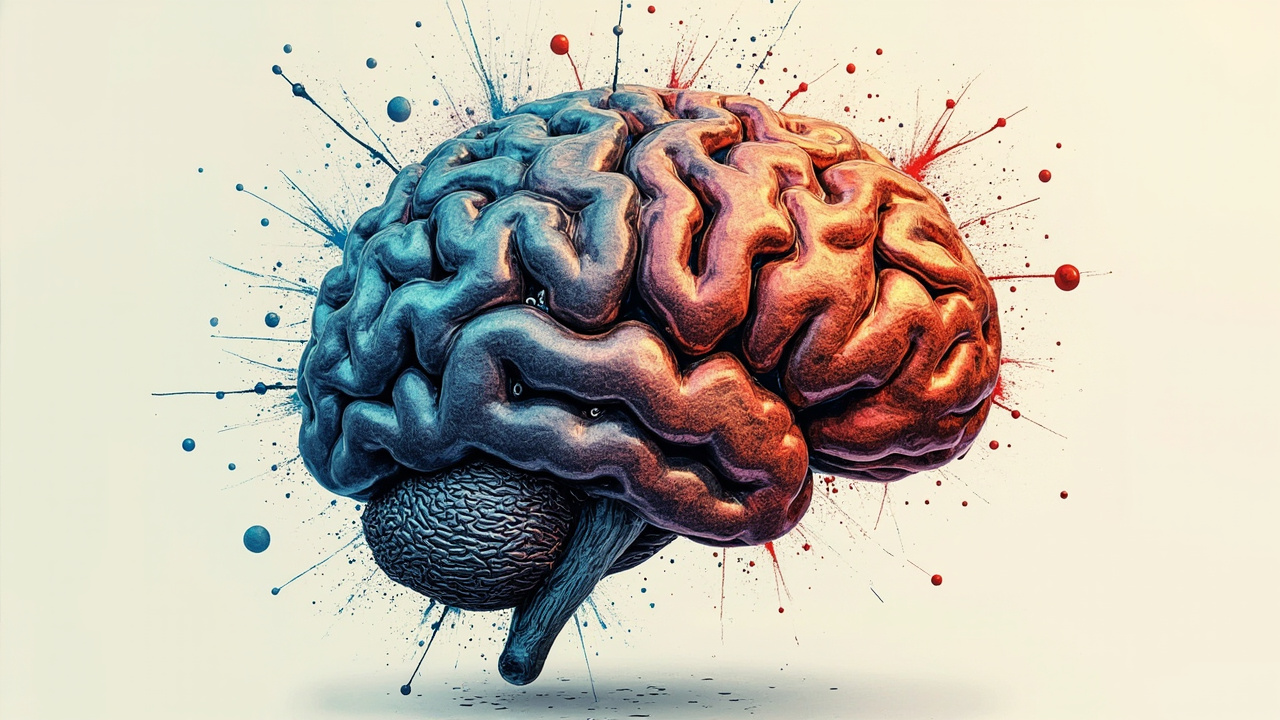
    Ever wondered why a well-educated, rational person sometimes makes the most illogical and baffling decisions? Why, despite being smart, do they fall into conspiracy theories and bad investments? The answer lies in some hidden glitches of the mind. They take shortcuts, rely on habits, and are constantly influenced by emotions, culture, and beliefs. These shortcuts are known as cognitive biases, and the common errors in reasoning are called logical fallacies, both of which can trick even the smartest brains into believing senseless and irrational ideas and concepts. In this post, we discuss the 35 most common fallacies and biases that shape how we think, decide, and sometimes misjudge the world around us.

    Logical Fallacies (Errors in Reasoning)

    1. Ad Hominem Fallacy- This is the error of attacking the person arguing instead of the argument itself. The fallacy includes the attempt to refute or win an argument by diminishing the intelligence, morals, education, and qualifications of the person in opposition. The major difficulty of identifying an Ad Hominem is to understand whether the personal attack is relevant or not. This fallacy is used by dictators and authoritarians to disintegrate the value of intelligence and motive of the opposing group.
    2. Strawman Fallacy- It is the act of misrepresenting someone’s argument to make it easier to attack. In a Strawman, the person making the argument turns the arguments of their opponent into a laughable parody, thus winning the argument without refuting or even challenging the actual argument. This is a dangerous tool that is used in media, politics, and even domestic arguments.
    3. False Dilemma- This fallacy happens when only two options or solutions are presented when more exist. It mainly happens like this, “……you either have to choose this or that.” Also known as a false dichotomy, where the opponent is led to a dichotomy of choice or preference despite having many more easier choices.
    4. Slippery Slope- It is the argument to claim that one small step will lead to an outstanding outcome. It is rarely included as a logical fallacy because the outcome is mostly action-based. But still, it is very common and is often seen among people who claim extraordinary achievements can be achieved through ordinary efforts and resources.
    5. Circular Reasoning- It is the fallacy of using a conclusion as part of the argument’s premise. It is an argument where A is because of B, and B is because of A. It is also the act of repeating the same argument in different ways by concluding from different directions. This fallacy is very common in people who have a strong tendency to lie in every situation.
    6. Hasty Generalization- It happens when a conclusion is drawn from limited data. In a hasty generalization, the error is in jumping to an outcome without clearly analyzing and interpreting a sizable amount of data to achieve a logical outcome.
    7. Post Hoc Ergo Propter Hoc- It is the act of assuming that because one event followed another, the latter is likely to be the cause of the former. Here, if the event A is followed by the event B, the person making the fallacy argues that A is likely to be the cause of B.
    8. Appeal to Authority- It is the fallacy of believing something is true because an authority says so. Here, the person, in order to win an argument, proclaims that his reasoning is true because it is backed up by some sources of higher authorities, which may or may not know about the topic in question itself. It is a very common fallacy that is commonly seen in political debates and even in academic arguments.
    9. Appeal to Emotion- When a person tries to win an argument by manipulating emotions instead of logical reasoning, the act is known as Appeal to Emotion. Commonly seen in orthodox religious arguments, the debater makes a mistake of using emotion as the primary tool instead of logic or reasoning in an argument. It is also used as a popular weapon by people who specialize in playing the victim in every situation.
    10. Bandwagon Fallacy- It is believing something is true because many people believe it. The person argues that the event or the thing is real, ethical, or logical, as most people follow it. Here, the person making the fallacy joins the bandwagon of the contemporary practice and defends it without presenting any logical argument in favor of it. Most common among normal citizens in political arguments, where they just use the fallacy to defend their political ideology, as their friends and families follow it, without themselves doing their own logic and reasoning.
    11. Red Herring- It is the art of diverting attention from the topic of argument to an irrelevant topic. Red Herring is a smelly fish whose odor can distract even a bloodhound. So the fallacy is named after the fish, as it is used as a method of distraction when unable to present logic, season, fact, or evidence.
    12. No True Scotsman- In this fallacy, the person making a mistake redefines terms in order to protect a generalization. It is a kind of rescue act in which the person reinterprets the event or term in question to escape a refutation of the generalization.
    13. Tu Queue- This mistake occurs when one dismisses criticism by pointing out hypocrisy. It is the act of denying some act as faulty because the opposition has also performed it. It generally involves the phrase, “Preach what you practice,” as a defense mechanism against the argument. The opposition may be hypocritical, but that does not degrade the values of their arguments.
    14. False Equivalence- It is a common fallacy where two different and unlike things are treated as if they are the same. Here, the person evaluates two completely different events, things, or ideas as the ‘different sides of the same coin,’ thereby dismissing the opponent’s argument without using any proper logic or reasoning as a tool.
    15. Begging the Question- It is the act of assuming the opponents’ arguments and intentions even before they are presented. Related to Circular Reasoning, it is a form of dismissing or at least delaying the debate by creating an assumed reason and logic of the opponent. It often leads to a delay of the discussion, with it rarely coming to a definite, logical, and reasonable conclusion.

    Cognitive Biases (Mental Shortcuts That Distort Thinking)

    1. Confirmation Bias- It is the tendency to seek information that supports existing beliefs. Confirmation Bias often happens when we want certain ideas to be true. It results in dismissing facts, arguments, and ideas that go against the common belief. Here, people generally pick and choose information that goes along with their idea or agenda.
    2. Anchoring Bias- This bias happens when we rely on or anchor to the first piece of information to achieve a certain conclusion. As the process continues and new information is gathered, we try to interpret the newer information based on the information we anchored earlier. This results in a skewed or biased conclusion, which heavily depends on the initial information.
    3. Availability Heuristics- It is the bias of overestimating the importance of easily recalled examples. It results from overdependence on the most readily available data. It can also be seen when diagnosing health symptoms using artificial intelligence, where the horrible results are shown mostly because they can be easily recalled.
    4. Dunning-Kruger Effect- It is the typical symptom in which the less someone knows, the more confident they are. Though rarely classified as a cognitive bias, this leads to people overestimating their level of competence in an area where, in reality, they sometimes can have competence of next to none.
    5. Survivorship Bias- It is the bias of focusing on one’s successes while ignoring all the failures. It is a shortcut where the success of a subgroup within a larger group completely masks the failure of the entire group. The bias results in the negligence of failures, which could have been corrected in the beginning, but slowly and steadily, this eventually leads to the downfall of the project or the group.
    6. Negativity Bias- It is the bias of giving more weight to negative experiences. It generally happens when there is already a collection of positive experiences of the same magnitude, but we only focus on the negative experiences while making any decision. This is one of the most common biases that can be seen in everyday life.
    7. Self-Serving Bias- It is the bias in which we give the reason for success to ourselves while blaming the reason for failures on external factors. This is common in most of us, as our natural tendency is to praise our talents and skills and blame our losses to bad luck or influences by others.
    8. Sunk Cost Fallacy- It happens when someone continues a behavior or investment (time, money, or effort) because they have already spent resources on it, even if continuing is irrational or even harmful. It is considered a bias and not a fallacy because it is a mental shortcut that leads one to make decisions based on past investment rather than current or future benefits, similar to other biases.
    9. Halo Effect- It is the tendency to let one positive trait influence perception over other traits. For example, in movies, we generally have an attractive lead, which feeds our assumption that an attractive individual should be good at heart. Many of us assume a not-so-good-looking person to be unfit for playing the lead role in an event.
    10. Ingroup Bias- This is a bias in which we favor people who belong to our own group. It is a type of favoritism that leads us to silly decisions like giving responsibility to an unqualified person only because we fall in the same group, like having the same mother tongue or following the same sports team. We connect to even small similarities, and that clouds our decision-making capabilities because of the Ingroup Bias.
    11. Optimism Bias- It is the tendency to engage in wishful thinking and believe that nothing wrong will happen, even though there are possibilities of negative outcomes. This can lead to poor decision-making without a proper backup if certain unwanted outcomes arise.
    12. Overconfidence Bias- It is the act of overestimating one’s own knowledge or ability. This blurs ones judgement of themselves with respect to various capabilities in different fields.
    13. Status Quo Bias- This tendency leads to a preference for things to remain the same forever. This bias stops people from changing their present status, whether in their personal lives, publicly, or at professional levels. This is seen in many older people, who refuse to change according to the evolution of society, as they prefer to live according to the time of their youth, which has probably passed decades earlier.
    14. Framing Effect- It is the bias of reacting under the influence of how the information is presented to us. The same information can be interpreted in a different way depending on how it is presented. A classic example is whether a glass of water is presented as half-filled or half-empty.
    15. Recency Bias- It is the act of giving more importance to recent events. Sometimes, while making a decision, we only give importance to the recent past and totally neglect the age-old history. This results in some form of silly decisions, which may fail heavily in the far future.
    16. Hindsight Bias- It is the tendency of believing the past events were predictable after they actually happened. After knowing the outcomes, our thinking gets blurred by the idea that the past events were predictable, as we can now see the causes after the effects had already happened.
    17.  Fundamental Attribution Error- It is the tendency to overestimate personal traits and underestimate situations in judging others. In other words,s we believe that personal traits are more important than various situations in determining outcomes. Examples of this include if A and B are at the same distance from point O and if A reaches O earlier than B, we assume A is faster, totally neglecting the transportation cost, terrain, and traffic.
    18. Illusory Correlation- It is the tendency to see connections between two events, although none exist in reality. It is closely linked to memory and perception, as people can find patterns within various events in their memory that were totally unrelated.
    19. Authority Bias- It is the tendency to trust an authority, although they might be wrong. This further leads to Appeal to Authority, which was discussed earlier. Certain examples include trusting a doctor in medical diagnosis and a lawyer in legal matters blindly without a second opinion, although both of them might be wrong.
    20. Cognitive Dissonance- It is the discomfort from holding conflicting beliefs or behaviors. It is a psychological discomfort that we try to reduce by ignoring that both the beliefs contradict and oppose each other. In order to find resemblance in two conflicting views, we tend to distort their true meaning according to our liking.

    Conclusion

    Our minds are powerful, but they are not perfect. Fallacies and biases are invisible strings that tug at our logic, nudging us toward choices that feel right that aren’t always true. The more we learn to spot them in our thoughts, debates, and everyday decisions, the freer we become from those mental traps. True intelligence isn’t about never being wrong; it’s about knowing when our brain is fooling us and daring to question it. That’s all for today. Please like, comment, share, and subscribe if you find this blog helpful. Thank you.

    Suggested Readings

    Disclosure: This post contains affiliate links. As an Amazon Associate, I earn from qualifying purchases. I only recommend books I truly value.