Tag: world-mythology

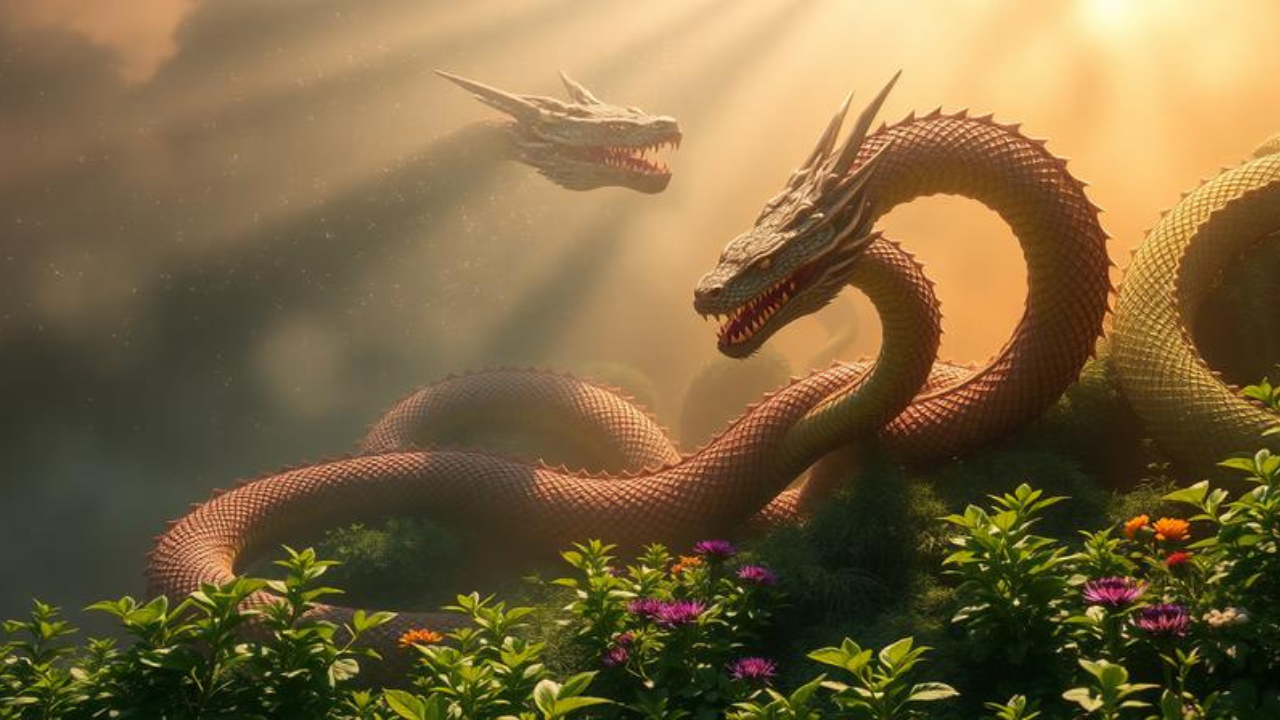
  • From Shesha to Xiuhcoatl: Myths of Creation, Preservation & Destruction by the World’s Serpents

    From Shesha to Xiuhcoatl: Myths of Creation, Preservation & Destruction by the World’s Serpents

    Introduction

    Since the start of human civilizations around 6000 – 8000 years ago, societies have developed myths, folklores, and legends, complementing their arts and cultures. Over the course of evolution, some of those developed into structured, well-defined stories that revolved around their geography, political structures, and metaphysics. One such development was the introduction of mythical serpents, which played important roles in their mythological world-building. Some of those serpents played a role in creation, some in preservation, while some played a role in destruction. In this blog, we discuss 15 such mythical serpents that play important roles concerning creation, preservation, and destruction in mythologies around the world. The list is non-exhaustive, as naturally, there must be hundreds more examples in myths and lore, but they are beyond the scope of a single blog. So, let’s begin.

    Chapter 1: Serpents Associated With Creation

    1. Shesha / Ananta – Ananta, meaning the Endless, acts as the cosmic serpent in Hindu mythology, upon which the entire creation rests. Shesha is described as a colossal, thousand-headed serpent floating upon the Kshira Sagara, or the Ocean of Milk. In Puranic traditions, Shesha remains at the border between cycles of creation, acting as a bridge between the two universes. After each cycle, creation begins from the creator God Brahma, who, in turn, takes birth from a lotus, which emerges from the navel of Lord Vishnu, the God of Preservation, who, in turn, rests upon Shesha, thus making Shesha the ultimate foundation for creation. Shesha embodies order, infinity, and cosmic support to Lord Vishnu, taking birth alongside Vishnu’s avatars several times, whether as Lakshmana with Rama or Balarama with Krishna.
    2. Aido-Hwedo – In the folklore and myths of various Western African cultures, especially the Fon and Ewe people in Benin, Togo, and Ghana, Aido-Hwedo acts as the serpent of creation, working alongside the supreme deity Mawu-Lisa, the twin-aspect creator god representing both the sun and the moon. While the latter conceptualizes the universe, the former shapes it physically. In the creation story, Mawu-Lisa rides upon Aido-Hwedo across the primordial waters, directing the serpent to carve out mountains, plateaus, rivers, and valleys, while the serpent’s excretions form the metals, minerals, and precious stones, enriching the earth. After the creation is complete, Aido-Hwedo descends into the primordial waters, holding the whole world in his back.
    3. The Rainbow Serpent – Among the Aboriginal cultures in Australia, the Rainbow Serpent acts as the living force of creation, fertility, and law. In many Dreamtime stories, the earth was flat, barren, and dry at the beginning. The Rainbow Serpent emerged from under the ground through primordial waterholes and began to make the Earth rich in fertility and prosperity. She created holes in the Earth’s surface, leading to primordial waters coming through the holes and forming the sources of water on the planet. The Rainbow Serpent also acts as a law-giver and protector of sacred lands, especially water. Those who respect nature are blessed by her, but those who exploit nature beyond limits face her wrath and many times punished. Thus, the serpent has a dual nature – nurturing as well as authoritative.
    4. Jörmungandr– The Midgard Serpent of Norse mythology, is one of the awe-inspiring serpents in world traditions. Born from the trickster God Loki and the giantess Angrboda, Jörmungandr is one of their three children, the other being Fenrir the wolf, and Hel, the queen of the dead. As per tradition, Odin, the king of the Gods, banished the serpent to the oceans encircling Midgard (the world of humans). The serpent grew and soon encircled the entire world, and finally bit its own tail. Unlike other creator-serpents, Jörmungandr doesn’t shape the world, but defines its boundary. His circular coils stabilize the oceans, creating a cosmic barrier between the known and the unknown. He will also play a destructive role in Ragnarök, the destruction of the world, where he will release his tail and unleash havoc and calamity, and ultimately will be slain by Thor, the thunder God.
    5. Antaboga – In the Javanese and Balinese mythology, Antaboga is a cosmic serpent associated with the creation of the world. He is neither a destructive nor a guardian spirit, but a quiet, contemplative creator whose actions give rise to Gods, worlds, and the cosmic order. Unlike other creator Gods, he doesn’t create the world by force or command, but by meditation and contemplation. As he coils around the formless chaos, his mind gives birth to the cosmic turtle Bedawang Nala, who supports the entire world on its back. While Bedawang Nala supports the earth, the various gods guard and nurture it, Antaboga keeps creating through deep meditation. According to one tale, his tears gave rise to Dewa Sri, the goddess of rice and fertility, who is responsible for feeding humanity.

    Chapter 2: Serpents Associated With Preservation

    1. Vasuki – He is the king of snakes in Hindu mythology. Unlike destructive serpents, who represent chaos, and primordial serpents, who form the universe’s foundation, Vasuki is the serpent of coordination, endurance, and preservation. His most famous role appears in the Samudra Manthan, the churning of the ocean of milk by the Devas(Gods) and the Asuras(Demons), to obtain amrita, the nectar of immortality. To churn the entire ocean, Mount Mandara was used as the churning rod, but they needed a rope powerful enough to rotate the mountain. Vasuki volunteered and acted as the rope, and thus played a crucial role in obtaining amrita. Vasuki is immortalized in Hindu iconography as he is depicted coiled around the neck of Lord Shiva, the God of destruction.
    2. Ladon – Ladon is a multiple-headed dragon-serpent in Greek Mythology. Traditionally, the Hesperides were nymphs who tended a magical orchard at the western end of the world. The golden apples in this grove granted immortality and divine power. The queen of the Gods, Hera, appointed Ladon as the orchard’s eternal sentinel, preventing minor Gods, heroes, and monsters from attaining immortality. His most famous appearance occurs in the eleventh labor of Heracles, where, according to some versions, he is killed by Heracles with poison arrows, not because he was an evil monster, but because he was preserving order by preventing immortality from mortals.
    3. Python – In Greek Mythology, Python occupies a fascinating space between chaos and order. It is described as a colossal primordial earth serpent born from Gaia, the Earth herself. Its primary role was to guard the  Oracle of Delphi, then known as the sanctuary of Gaia. At that time, Delphi was not the Apollonian shrine it would become much later. After the rise of the Olympian Gods, its fate was sealed as it was killed by Apollo, with his divine arrows, as the solar deity wanted Delphi for himself. The priestess of Apollo, thus, retained the title of “Pythia”, derived from the serpent’s name. The death of Python is not complete destruction, but a transition, the old Gods getting replaced by the new Gods, thus evolving to a new era.
    4. Ba She – In Chinese mythology, Ba She is a powerful, enigmatic serpent associated with droughts, devouring waters, and a balance between danger and protection. It is typically described as an enormous serpent capable of swallowing elephants. Ba’s divine role is to cause drought on the surface by swallowing bodies of water whenever there is an excess of fiery energy (yang). In several stories, Ba She is killed and cut open by several heroes to release the water that it galloped. Ba She is not necessarily evil, but acts as a punishment against those who threaten nature. It also represents the cyclic nature of water, the necessity of balance in preserving life, the relationship between humans and natural forces, and the idea that even destructive beings can be a part of cosmic harmony.
    5. Phaya Naga – Revered across Thailand, Laos, Cambodia, and Myanmar, these are some of the enduring serpent beings of Southeast Asia. Phaya, meaning “King” or “Great”, while Naga, meaning “snake”, Phaya Naga exist as the most powerful snakes in the Mekong River Basin. In their Buddhist traditions, they act as guardians of rivers, lakes, wetlands, etc. Their home is said to be beneath the Mekong, where they maintain the balance between the human world and the mystical underwater kingdom known as Muang Badan. One of the most famous stories is how one of them protected the Buddha from the rain. As the Buddha meditated, the serpent coiled around him seven times and spread its hood to shield him from the rain. In regional folklore, many Lao and Thai chronicles often claim descent from Naga ancestors, symbolizing legitimacy, continuity, and divine favor.

    Chapter 3: Serpents Associated With Destruction

    1. Vṛtra – He is one of the earliest and most powerful serpents in Vedic Hinduism. Appearing prominently in the Rig Veda, Vṛtra is a metaphysical force that holds the world’s water, freezes cosmic motion, and traps creation in a state of unproductive stillness. His myth represents the eternal battle between dynamic order and oppressive inertia. He is described as stealing water from the divine rivers of the world, thereby destroying the essence of life force. Vṛtra is finally slain by the storm God Indra with his thunderbolt Vajra, in the same way, the other Indo-European thunder Gods, Zeus and Thor, slay the mythical serpents, Typhon and Jörmungandr.
    2. Apep / Apophis – Apep, in Egyptian mythology, is a primordial embodiment of chaos (Isfet), forever opposing truth, harmony, and cosmic order (Ma’at). If Ra, the Sun God, represents the steady, eternal renewal of life, then Apep represents the abyss that tries to swallow that very light every single night. Apep is imagined as a large serpent lurking in the deepest darkness of the Duat (the underworld), coiled beneath the horizon where the sun must pass during its night journey. Each night, Ra is attacked by Apep to devour the sun, but Ra battles with valor and skill, thereby forming a daily cosmic event. Unlike other serpents mentioned in the blog, Apep is absolutely evil, not a force of necessary destruction, not a cleanser, not a balancer, but a pure negation.
    3. Typhon – Typhon is a monstrous offspring of Gaia (the Earth) and Tartarus (raw destructive force and chaos). In Greek mythology, it is a fierce dragon-serpent that exists to represent apocalyptic destruction. According to myth, when the Olympian Gods defeated the Titans, Gaia, enraged at her triumph and the imprisonment of her children, birthed Typhon as the final instrument of vengeance. The serpent posed a serious challenge to the Olympians. But Zeus, like Indra and Thor, used his thunderbolt to finally defeat the serpent and bury him beneath Mount Etna or Tartarus. Typhon represents the spirit of vengeance, channelled by the Earth herself, when anyone tries to mess with her offspring.
    4. Azhi Dahaka – Also called Zahhak, he is a legendary serpent-demon in Zoroastrian cosmology. He represents chaos, in opposition to Asha, who represents order and truth. Unlike other destructive serpents, Azhi Dahaka represents the moral decay that destabilizes societies. He is a serpent with three heads, with uncontrollable hunger for human blood. The three heads symbolize uncontrolled desire, greed, and violence. He spreads immorality in human societies. According to the Avesta,  Azhi Dahaka represents a demonic strength whose very existence threatens the cosmic order. In one of the most vivid narratives, he is beaten and captured by the Persian Hero-God Thraetaona (Fereydun), and is chained atop Mount Damavand, although not killed, representing that desire, greed, and violence cannot be eliminated, but can be controlled.
    5. Xiuhcoatl – Also called the “Turquoise Serpent” or “Fire Serpent”, Xiuhcoatl is one of the most terrifying serpents in the Mesoamerican mythology, particularly in the Aztec mythology. Xiuhcoatl is closely associated with the Aztec God of fire and war, Huitzilopochtli, the patron deity of the people of Mexico. According to legend, the serpent serves as Huitzilopochtli’s weapon, a living extension of his divine power. As a destructive force, Xiuhcoatl is not chaotic in the sense of mindless evil; he operates within the cosmic logic of Mesoamerican cosmology. Destruction is necessary for renewal. The Aztecs themselves believed that the sun required conflict and sacrifice to rise each day. In this context, Xiuhcoatl becomes an instrument for cosmic maintenance: he destroys so that life and order can persist.

    Conclusion

    Thus, we see how serpents were represented in cultures all over the world in their mythologies and legends to explain cosmological and metaphysical phenomena. They also played an important role in enriching the classical literature all over the world, from Theogony in Greece, to the Mahabharata in India, to the Avesta in Iran. These limbless reptiles inspired various Bronze and early Iron Age cultures to develop their entire theology and metaphysics around them.

    That is all for this blog. Hope you enjoyed the reading. Please like, comment, share, and subscribe if you find this interesting. Your encouragement will inspire me to create more such blogs, whether in science or philosophy, mythology or history. Finally, thank you all for reading the whole piece.

    Suggested Readings

    Disclosure: This post contains affiliate links. As an Amazon Associate, I earn from qualifying purchases. I only recommend books I truly value.
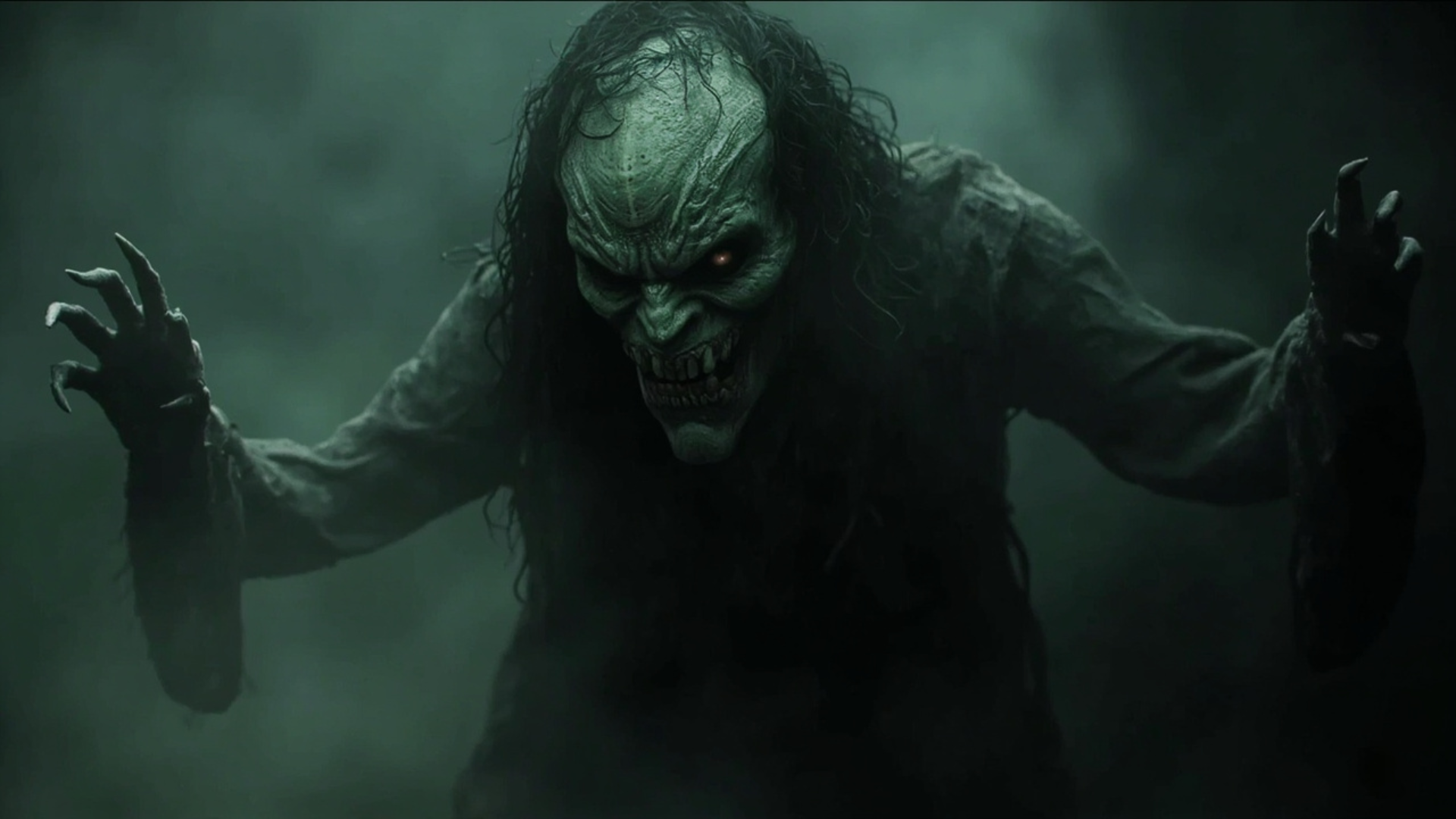


  • Evil Spirits Across Cultures: From Vetalas to Wendigos

    Evil Spirits Across Cultures: From Vetalas to Wendigos

    Introduction

    The Cognitive Revolution was the first of the three revolutions (the others being the Agricultural and the Scientific Revolutions) that separated Homo sapiens from the rest of the members of the Animal Kingdom. Humans, through that revolution, developed the concepts of folklore, including natural spirits and the concept of Gods. Like most abstract concepts that deal in duality, the forces of good were also very soon paired with the forces of evil. In this blog, we discuss some of the most common concepts of evil spirits across major civilizations, i.e., South Asia, East Asia, the Middle East, Europe, and  Africa & Native America.

    South Asia

    1. Preta- Commonly known as hungry ghosts, the Pretas are evil spirits associated with Hinduism, Buddhism & even Taoism. They are associated with eternal cravings and are symbolized by uncontrollable greed and desire. In Classical Sanskrit, the term Preta generally refers to the spirit of a deceased person. They are generally believed to be invisible, but are said to be able to manifest as pale and skinny human figures with long necks and limbs. In Hindu metaphysics, these spirits are generally considered to consist of Maarut (wind) and Vyoma (space) of the 5 classical Indian elements. After the death of a Hindu, rice balls are offered to the spirit of a deceased, as the spirits or the Pretas are considered to have an uncontrollable hunger. The rice balls are offered in three sets of 16 over one year, which is considered to be the time taken by the Preta to transform into the next phase or rebirth. In the first set of 16 rice balls, the ten are generally for the deceased human, and the remaining six are for the nearby spirits. In Buddhism, the Preta is considered to be one of the six paths of existence after a person dies. The six paths are – the Deva or the Godly path, the Manushya or Human path, the Asura or the Demi-Godly path, the Tiryagyoni or Animal path, the Preta or the Hungry Ghost Path, and the Naraka or the Hell-like path. In some sects or cultures of both Hinduism and Buddhism, the spirits continue to live as Preta and delay their reincarnation if they have too much desire and greed.
    2. Pishacha- They are evil spirits in Indian cultures that are said to thrive on the raw flesh of living organisms. They are mentioned in ancient Indian scriptures like the Mahabharata, where it is mentioned that they were created by Lord Brahma, the God of Creation himself. Brahma created them to act as warriors guarding the prohibited places, like the realm of Kubera, the god of wealth and prosperity, and the realm of Lord Shiva, the God of time and destruction. In some other ancient legends, they are said to be the sons of Saint Kashyapa and his wife Krodhavasa. The Pisachas are said to like darkness, and they operate mostly at night. According to some cultures, they are also rumored to possess some human beings, feeding on their energies. Additionally, according to later customs, if proper rituals are not performed after a person’s death, the spirit is said to be unable to transform into a Preta and instead turns into a Pisacha, creating havoc everywhere.
    3. Vetala- They are mythological spirits who are considered to be very intelligent and generally reside in cremation grounds. They are invisible spirits who are said to possess the dead in the cremation ground and cause trouble in the surrounding areas. They are said to be those who are trapped between the living and the dead. They were unable to die completely and still possess qualities, memories, and intelligence that they possessed when they were alive. They are said to possess a huge amount of knowledge on human nature as they are said to have been observing human emotions in the cremation ground through millennia and gained knowledge on various emotions and virtues of human beings. Vetalas are celebrated in Indian Culture through many pieces of literature, the most common being the “Vetala Panchavimshati”, written around the 11th century CE by the Kashmiri author Somadeva Bhatta. In the story, King Vikramaditya is asked by a tantric monk to capture a Vetala who lives in a tree, in a nearby cremation ground, troubling people. When the king captures the Vetala, the spirit tells him that he will tell him a story, and at the end of which he will ask him a question. If the king remains quiet, his head will explode, and if he answers correctly, the spirit will go back to his tree. This leads to numerous philosophical storytelling and discussions, which are considered to be of great value even today. Finally, at the twenty-fifth story, where the king could not answer the question, he accepted defeat, and the vetala, being impressed with the humility, allowed the king to take him to the tantric.
    4. Churel/Chudail- Also called Petni or Shakchunni, the Churel is a female spirit of vengeance. Having died because of cruelty and torture, the spirit became vengeful and thus was unable to progress to the next life. They are said to be extremely ugly, with rotten flesh, but can transform themselves into beautiful, attractive women. With this power, they lure men(especially young boys) into the dark woods and suck their life force. The mythology is said to have developed from the neighbouring nation of Persia, but in India and Bangladesh, it became more popular.

    East Asia

    1. Gui- Guis are restless spirits that did not get proper ancestral rites, according to traditional Chinese culture. They are said to enter human worlds due to unresolved emotions from their mortal lives. They are not necessarily evil, just unsatisfied spirits seeking closure to their past lives. Traditionally, it is believed that when a person dies, their hun (Yang or masculine soul) and po (Yin or feminine soul) separate and ascend on separate paths. If the rituals are not performed accordingly, the hun may ascend peacefully, but the po remains bound to the earth as gui. The Hungry Ghost Festival (Zhongyuan Jie) is celebrated in the seventh lunar month to appease the guis through foods, incense, and rituals.
    2. Onryo- Onryos are the vengeful spirits (mostly women) in the Japanese Culture. They are believed to harm and kill enemies of the person or families that have wronged them in their lifetime. Emperor Sutoku, Taira no Masakado, and Sugawara no Michizane are considered the Three Great Onryos of Japan because they are said to be the most powerful and are worshipped throughout Japanese culture. Various Shrines are built across the nation to appease the resentment and anger that had turned them into Onryos. Onryos are integrated in Japanese culture, especially in the art forms of Kabuki and Rakugo Theatre. The Onryos are generally considered to be formless, but in the Kabuki theatres, they are represented as wearing white burial kimonos, which were worn during Sepuku. The actors also keep long, unkempt black hair and white face paint with colorful designs, giving a dramatic and horrific presence.
    3. Yokai- Also referred to as Ayakashi or Mononoke, they are mysterious, magical spirits in Japanese culture. They are more tied to the tradition and religion of Shinto, and are considered to be the opposite of the beneficial Kamis, although both are said to be of the same class of spirits, coming from the same realm. Yokai are said to have various forms, some having more human-like features, while others have beastly or inanimate features. The most dreaded subclasses of the Yokai are the Oni, the Tengu, and the Kappa, which are considered the major three in Yokai classification. Oni are said to have superhuman strength and are said to live in caves and mountains. They can shape shift and can cause murder and cannibalism by luring people. The Tengu are considered to have bird and monkey-like features, and are said to disrupt and cause chaos in human societies. The Kappa are Yokai associated with rivers, ponds, and other water bodies. They are said to have an ambibious appearance with a turtle-like back and are said to hunt people near the water bodies. Thus, Yokais can have various forms and can use different natural elements to create problems in human lives.

    Middle East

    1. Jinn – Jinns or Djinns are supernatural beings from pre-Islamic Arabic culture, which later got integrated into Islam. Jinns are considered to have invisible bodies composed of subtle elements called asjam and can shape-shift to various forms. They are said to be controlled by charms and artifacts. Many esoteric groups claim to have tamed jinns for their personal ambitions. The name ‘Jinn’ has been theorized by some scholars to have been derived from the Roman ‘Genius’ – a guardian deity with tremendous intelligence. Jinn are also mentioned in Islamic texts like the Holy Quran. Jinns are also mentioned in later literature from the Middle East, the most famous being in the Kitab al-Bulhan, or the Book of Wonders. They are also mentioned in the famous One Thousand and One Nights, in the story of Aladdin and the magic lamp, from which a jinn appears and grants Aladdin three boons.
    2. Ghoul/Ghul – They are monstrous creatures considered to be found in the graveyards, and are said to consume human flesh as their source of energy. Female Ghuls are known as Ghulah. They generally seduce humans of the opposite gender and finally consume their flesh to satisfy their hunger. Although the ideas of Ghoul came from pre-Islamic Arabia, the word ‘Ghoul’ later entered English literature through the likes of authors, including Edgar Allan Poe, and today generally means flesh-eating asexual beings.
    3. Ifrit- Also known as Afreet, they are powerful demons in Islamic theology. They are a very powerful form of Jinns who are seeking rebellion and vengeance. They are said to have come from Jahannam or the Islamic Hell, and are said to reside in remote places and ruins. Ifrits are also mentioned in the Quran, like at a place it is said that an Ifrit offered to carry the throne of Bilqis, the queen of Sheba, to King Solomon. Ifrits are also mentioned in the One Thousand and One Nights in stories like ‘The Porter and the Young Girls’ and ‘The Fisherman and the Jinni’.

    Europe

    1. Dybbuk – In Jewish Mythology, Dybbuks are evil spirits who possess the bodies of others in order to achieve some goals. They are wandering souls of the dead that try to cling to living creatures. Dybbuks are not ferocious, unlike most of the spirits mentioned in this blog, and they try to possess the body only to attain or complete an incomplete duty or action in their lifetime. In Jewish traditions, only a rabbi trained in exorcism can drive the spirit out of the host body, releasing it to its eternal rest.
    2. Incubus/Succubus – An Incubus is a male demon in human form who desires to have sexual intercourse with a Succubus, a demon in female form. They seduce humans in their sleep in order to have sex, resulting in wet dreams and sleep paralysis. This illicit union is said to be the reason for the births of demons, witches, and other supernatural creatures in many European cultures. The legendary wizard Merlin is said to have an Incubus as his father. According to the Jewish treaty – Alphabet of Ben Sira, Lilith, the first wife of Adam, the first mortal in Abrahamic Cosmology, was a Succubus.
    3. Draugr – Draugr are the undead creatures from the Nordic folklore. They are actually corpses who refused to stay buried. They are said to guard the graves in the Nordic regions. They were previously brave warriors who were unable to forget the worldly pleasures and thus could not proceed to the afterlife. They have a zombie-like appearance with rotten skin and thin muscles, who can battle in a fearsome manner and slay any foe. According to some lore, they refused to proceed to the afterlife as they feared becoming insignificant.

    Africa & Native America

    1. Tokoloshe – The Tokoloshe or Tikolose are dwarf life water spirits in the Nguni Mythology. They are mischievous, evil spirits that like playing pranks on people and later become invisible by drinking water. They generally target children for their pranks, but at their full potential, they can cause the deaths of human beings. They are said to have a furry, goblin-like appearance and to assassinate their prey with precision. Any death in Southern Africa with unknown causes is generally connected to the work done by the Tokoloshes.
    2. Obayifo – In the Ashanti culture of Western Africa, the Obayifos are the blood-sucking vampire-like mythological creatures. They are said to blend easily among human beings, targeting their prey after proper investigation. They are said to be very hungry creatures and emit phosphorescent light from their armpits and anus while travelling at night. They are said to be transformed men and women (mostly women) who practised taboo witchcraft and thus later got transformed into these evil creatures.
    3. Wendigo – Wendigos are the mythological spirits associated with the North American Algonquian folklore. They are said to have appearances like human beings with uncontrollable hunger, due to which they are notorious for devouring entire human families alone. They are larger in size with bodies as cold as ice. They are associated with natural phenomena like cold, famine, and starvation. In some cases, these were humans earlier who later became wendigos when they tasted human flesh because of their uncontrollable hunger. There is even a culture-bound psychological phenomenon in North America where people believe they are transforming into a Wendigo. This phenomenon is called Wendigo Psychosis.
    4. La Llorona – La Llorona is a vengeful spirit in Latin American Culture. She is known to roam around water bodies, weeping and mourning the death of her children, whom she drowned herself in an act of rage when she discovered her husband was unfaithful to her. La Llorona is most popular in the regions around Mexico, but is also known in the southern states of the USA.  She is said to be seen in the moonlit streets across the rivers crying, “jAy, mis hijos!” (“Oh, my children!”), which can bring chills in the air. This cry is said to bring misfortune, including death, to the people who had heard it. La Llorona endures a story of feminine rage, guilt, and mourning combined within a single spirit. The tale has travelled from the Aztec legends to the modern Hispanic culture across the centuries.

    Conclusion and Reflection

    The creation of evil spirits in the human myths across civilizations may be due to various causes. Some might be a result of human emotions like fear and sorrow, while some might be created to manage a certain section of the population and restrict them from doing something undesirable. In short, each evil spirit and its characteristics give a clear description of the extent to which human intelligence and imagination can proceed. It tells us how early society formed cultures using emotions like fear and sorrow as useful tools. Thus, the lore and myths of various spirits and mythical creatures can be studied to get a critical view of the evolution of human philosophy, sociology, and psychology. That is all for this blog. Please like, share, and subscribe if you find this useful. Thank you all for reading this post.

    Suggested Readings

    Disclosure: This post contains affiliate links. As an Amazon Associate, I earn from qualifying purchases. I only recommend books I truly value.