Category: Science

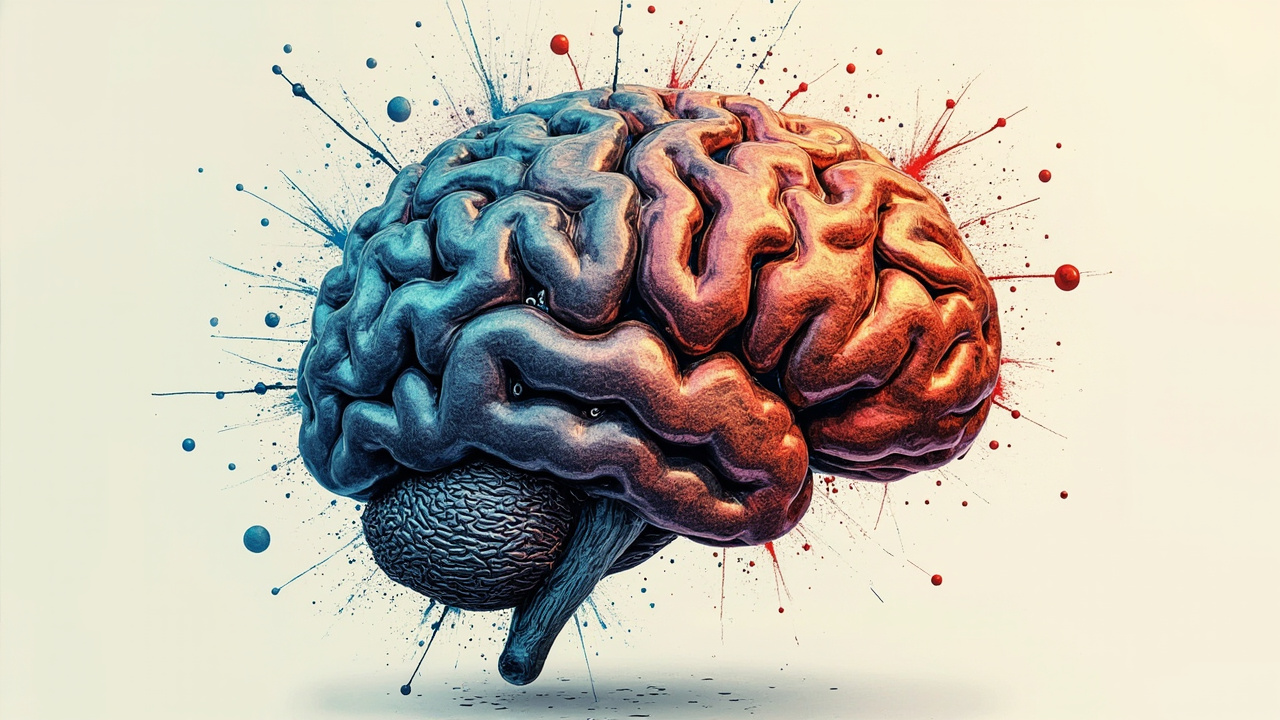
  • Why Smart People Believe Dumb Things: 35 Fallacies and Cognitive Biases That Shape Our Thinking

    Why Smart People Believe Dumb Things: 35 Fallacies and Cognitive Biases That Shape Our Thinking

    Introduction

    Ever wondered why a well-educated, rational person sometimes makes the most illogical and baffling decisions? Why, despite being smart, do they fall into conspiracy theories and bad investments? The answer lies in some hidden glitches of the mind. They take shortcuts, rely on habits, and are constantly influenced by emotions, culture, and beliefs. These shortcuts are known as cognitive biases, and the common errors in reasoning are called logical fallacies, both of which can trick even the smartest brains into believing senseless and irrational ideas and concepts. In this post, we discuss the 35 most common fallacies and biases that shape how we think, decide, and sometimes misjudge the world around us.

    Logical Fallacies (Errors in Reasoning)

    1. Ad Hominem Fallacy- This is the error of attacking the person arguing instead of the argument itself. The fallacy includes the attempt to refute or win an argument by diminishing the intelligence, morals, education, and qualifications of the person in opposition. The major difficulty of identifying an Ad Hominem is to understand whether the personal attack is relevant or not. This fallacy is used by dictators and authoritarians to disintegrate the value of intelligence and motive of the opposing group.
    2. Strawman Fallacy- It is the act of misrepresenting someone’s argument to make it easier to attack. In a Strawman, the person making the argument turns the arguments of their opponent into a laughable parody, thus winning the argument without refuting or even challenging the actual argument. This is a dangerous tool that is used in media, politics, and even domestic arguments.
    3. False Dilemma- This fallacy happens when only two options or solutions are presented when more exist. It mainly happens like this, “……you either have to choose this or that.” Also known as a false dichotomy, where the opponent is led to a dichotomy of choice or preference despite having many more easier choices.
    4. Slippery Slope- It is the argument to claim that one small step will lead to an outstanding outcome. It is rarely included as a logical fallacy because the outcome is mostly action-based. But still, it is very common and is often seen among people who claim extraordinary achievements can be achieved through ordinary efforts and resources.
    5. Circular Reasoning- It is the fallacy of using a conclusion as part of the argument’s premise. It is an argument where A is because of B, and B is because of A. It is also the act of repeating the same argument in different ways by concluding from different directions. This fallacy is very common in people who have a strong tendency to lie in every situation.
    6. Hasty Generalization- It happens when a conclusion is drawn from limited data. In a hasty generalization, the error is in jumping to an outcome without clearly analyzing and interpreting a sizable amount of data to achieve a logical outcome.
    7. Post Hoc Ergo Propter Hoc- It is the act of assuming that because one event followed another, the latter is likely to be the cause of the former. Here, if the event A is followed by the event B, the person making the fallacy argues that A is likely to be the cause of B.
    8. Appeal to Authority- It is the fallacy of believing something is true because an authority says so. Here, the person, in order to win an argument, proclaims that his reasoning is true because it is backed up by some sources of higher authorities, which may or may not know about the topic in question itself. It is a very common fallacy that is commonly seen in political debates and even in academic arguments.
    9. Appeal to Emotion- When a person tries to win an argument by manipulating emotions instead of logical reasoning, the act is known as Appeal to Emotion. Commonly seen in orthodox religious arguments, the debater makes a mistake of using emotion as the primary tool instead of logic or reasoning in an argument. It is also used as a popular weapon by people who specialize in playing the victim in every situation.
    10. Bandwagon Fallacy- It is believing something is true because many people believe it. The person argues that the event or the thing is real, ethical, or logical, as most people follow it. Here, the person making the fallacy joins the bandwagon of the contemporary practice and defends it without presenting any logical argument in favor of it. Most common among normal citizens in political arguments, where they just use the fallacy to defend their political ideology, as their friends and families follow it, without themselves doing their own logic and reasoning.
    11. Red Herring- It is the art of diverting attention from the topic of argument to an irrelevant topic. Red Herring is a smelly fish whose odor can distract even a bloodhound. So the fallacy is named after the fish, as it is used as a method of distraction when unable to present logic, season, fact, or evidence.
    12. No True Scotsman- In this fallacy, the person making a mistake redefines terms in order to protect a generalization. It is a kind of rescue act in which the person reinterprets the event or term in question to escape a refutation of the generalization.
    13. Tu Queue- This mistake occurs when one dismisses criticism by pointing out hypocrisy. It is the act of denying some act as faulty because the opposition has also performed it. It generally involves the phrase, “Preach what you practice,” as a defense mechanism against the argument. The opposition may be hypocritical, but that does not degrade the values of their arguments.
    14. False Equivalence- It is a common fallacy where two different and unlike things are treated as if they are the same. Here, the person evaluates two completely different events, things, or ideas as the ‘different sides of the same coin,’ thereby dismissing the opponent’s argument without using any proper logic or reasoning as a tool.
    15. Begging the Question- It is the act of assuming the opponents’ arguments and intentions even before they are presented. Related to Circular Reasoning, it is a form of dismissing or at least delaying the debate by creating an assumed reason and logic of the opponent. It often leads to a delay of the discussion, with it rarely coming to a definite, logical, and reasonable conclusion.

    Cognitive Biases (Mental Shortcuts That Distort Thinking)

    1. Confirmation Bias- It is the tendency to seek information that supports existing beliefs. Confirmation Bias often happens when we want certain ideas to be true. It results in dismissing facts, arguments, and ideas that go against the common belief. Here, people generally pick and choose information that goes along with their idea or agenda.
    2. Anchoring Bias- This bias happens when we rely on or anchor to the first piece of information to achieve a certain conclusion. As the process continues and new information is gathered, we try to interpret the newer information based on the information we anchored earlier. This results in a skewed or biased conclusion, which heavily depends on the initial information.
    3. Availability Heuristics- It is the bias of overestimating the importance of easily recalled examples. It results from overdependence on the most readily available data. It can also be seen when diagnosing health symptoms using artificial intelligence, where the horrible results are shown mostly because they can be easily recalled.
    4. Dunning-Kruger Effect- It is the typical symptom in which the less someone knows, the more confident they are. Though rarely classified as a cognitive bias, this leads to people overestimating their level of competence in an area where, in reality, they sometimes can have competence of next to none.
    5. Survivorship Bias- It is the bias of focusing on one’s successes while ignoring all the failures. It is a shortcut where the success of a subgroup within a larger group completely masks the failure of the entire group. The bias results in the negligence of failures, which could have been corrected in the beginning, but slowly and steadily, this eventually leads to the downfall of the project or the group.
    6. Negativity Bias- It is the bias of giving more weight to negative experiences. It generally happens when there is already a collection of positive experiences of the same magnitude, but we only focus on the negative experiences while making any decision. This is one of the most common biases that can be seen in everyday life.
    7. Self-Serving Bias- It is the bias in which we give the reason for success to ourselves while blaming the reason for failures on external factors. This is common in most of us, as our natural tendency is to praise our talents and skills and blame our losses to bad luck or influences by others.
    8. Sunk Cost Fallacy- It happens when someone continues a behavior or investment (time, money, or effort) because they have already spent resources on it, even if continuing is irrational or even harmful. It is considered a bias and not a fallacy because it is a mental shortcut that leads one to make decisions based on past investment rather than current or future benefits, similar to other biases.
    9. Halo Effect- It is the tendency to let one positive trait influence perception over other traits. For example, in movies, we generally have an attractive lead, which feeds our assumption that an attractive individual should be good at heart. Many of us assume a not-so-good-looking person to be unfit for playing the lead role in an event.
    10. Ingroup Bias- This is a bias in which we favor people who belong to our own group. It is a type of favoritism that leads us to silly decisions like giving responsibility to an unqualified person only because we fall in the same group, like having the same mother tongue or following the same sports team. We connect to even small similarities, and that clouds our decision-making capabilities because of the Ingroup Bias.
    11. Optimism Bias- It is the tendency to engage in wishful thinking and believe that nothing wrong will happen, even though there are possibilities of negative outcomes. This can lead to poor decision-making without a proper backup if certain unwanted outcomes arise.
    12. Overconfidence Bias- It is the act of overestimating one’s own knowledge or ability. This blurs ones judgement of themselves with respect to various capabilities in different fields.
    13. Status Quo Bias- This tendency leads to a preference for things to remain the same forever. This bias stops people from changing their present status, whether in their personal lives, publicly, or at professional levels. This is seen in many older people, who refuse to change according to the evolution of society, as they prefer to live according to the time of their youth, which has probably passed decades earlier.
    14. Framing Effect- It is the bias of reacting under the influence of how the information is presented to us. The same information can be interpreted in a different way depending on how it is presented. A classic example is whether a glass of water is presented as half-filled or half-empty.
    15. Recency Bias- It is the act of giving more importance to recent events. Sometimes, while making a decision, we only give importance to the recent past and totally neglect the age-old history. This results in some form of silly decisions, which may fail heavily in the far future.
    16. Hindsight Bias- It is the tendency of believing the past events were predictable after they actually happened. After knowing the outcomes, our thinking gets blurred by the idea that the past events were predictable, as we can now see the causes after the effects had already happened.
    17.  Fundamental Attribution Error- It is the tendency to overestimate personal traits and underestimate situations in judging others. In other words,s we believe that personal traits are more important than various situations in determining outcomes. Examples of this include if A and B are at the same distance from point O and if A reaches O earlier than B, we assume A is faster, totally neglecting the transportation cost, terrain, and traffic.
    18. Illusory Correlation- It is the tendency to see connections between two events, although none exist in reality. It is closely linked to memory and perception, as people can find patterns within various events in their memory that were totally unrelated.
    19. Authority Bias- It is the tendency to trust an authority, although they might be wrong. This further leads to Appeal to Authority, which was discussed earlier. Certain examples include trusting a doctor in medical diagnosis and a lawyer in legal matters blindly without a second opinion, although both of them might be wrong.
    20. Cognitive Dissonance- It is the discomfort from holding conflicting beliefs or behaviors. It is a psychological discomfort that we try to reduce by ignoring that both the beliefs contradict and oppose each other. In order to find resemblance in two conflicting views, we tend to distort their true meaning according to our liking.

    Conclusion

    Our minds are powerful, but they are not perfect. Fallacies and biases are invisible strings that tug at our logic, nudging us toward choices that feel right that aren’t always true. The more we learn to spot them in our thoughts, debates, and everyday decisions, the freer we become from those mental traps. True intelligence isn’t about never being wrong; it’s about knowing when our brain is fooling us and daring to question it. That’s all for today. Please like, comment, share, and subscribe if you find this blog helpful. Thank you.

    Suggested Readings

    Disclosure: This post contains affiliate links. As an Amazon Associate, I earn from qualifying purchases. I only recommend books I truly value.

  • A History of Secret Codes: From Mesopotamian Tablets to Modern Encryption

    A History of Secret Codes: From Mesopotamian Tablets to Modern Encryption

    Introduction

    A code can be defined as a set of words, figures, letters, numbers, or symbols generally used to represent a secret message that needs to be conveyed to a specific group of people across a certain distance or time period. The earliest examples of codes can be traced to prehistoric times when our ancestors used sign language to convey messages. In fact, the language that we use regularly or the numerals that we use to do calculations are also codes or patterns recognized only by a certain kind of animal, that is, Homo sapiens or modern human beings. In this blog, we discuss the evolution of codes along with humans across civilizations. We discuss how codes and encryption helped direct human society for nearly 3000 years across cultures, nations, and continents.

    1. The Mesopotamian Tablet (~1500 BCE)

    The Mesopotamians were the first to use some form of codes in known history. They used clay tablets to encrypt codes in cuneiform script. A classic example is that of the clay tablet found from around 1500 BCE. It contains a cryptographic formula for making pottery glaze. The encryption was not an accident; the scribes deliberately altered some signs to preserve knowledge from foreign or unworthy people. It is considered the oldest surviving record of codes. 

    2. The Egyptian Hieroglyphic Cipher (~1500 BCE)

    Hieroglyphs were the ancient Egyptian writing system from 2500 BCE.  The Egyptians combined idiographic, iconographic, syllabic, and alphabetic elements to write religious and political texts on papyrus and wood. In some Hieroglyphic texts found in the tombs of the Pharaohs from the second millennium BCE, it has been seen that the Scribes and Priests used unusual or rare Hieroglyphics to alter or distort the true meaning in order to create a mythical aura. The texts were used to preserve rituals for funerary and other religious purposes that were limited only to the scribes and royals.

    3. The Hebrew Atbash Cipher (~600 BCE)

    The Atbash is a monalphabetic substitutional cipher originally used in the Hebrew alphabet. There, the series was reversed so that the first letter became the last letter, and the second letter became the second to last cipher, and so on.

    OriginalABCDEFGHIJKLMN0PQRSTUVWXYZ
    CipherZYXWVUTSRQPONMLKJIHGFEDCBA

    The name itself is derived from the first, last, second, and second-to-last Hebrew alphabet- Aleph, Taw, Bet, and Shin. Several verses of the Bible, as described by the commentators as being an Atbash, like in the book of Jeremiah, names like Sheshach and Lev-Kamai are written as Atbash for the Hebrew words for Babylon and Chaldeans. It is important because a simple substitution cipher was used in the Bible to hide sensitive references.

    4. The Spartan Scytale (~400 BCE)

    The Ancient Greeks, especially the Spartans, used a tool called a Scytale, where a leather strip was wound around a cylinder, with hidden messages written on the strip. Suppose the cylinder allows writing four letters around in a circle, and five letters downwards. And the message to be sent is “ The soldiers are coming”. It can be written on the strip as

    THESOThe End of The Strip
    The Start of The StripLDIER
    SAREC
    OMING

    Thus, when the strip is unwound, it will read as TLSOHDAMEIRISEENORCG, thus concealing the message if the process is not known.

    5. Kautilya’s Arthashastra (~300 BCE)

    The Indian political genius and the teacher of Emperor Chandragupta Maurya, Vishnugupta Chanakya, also known as Kautilya, in his text on statecraft, “ Arthashastra,” states the art of understanding codes and ciphers as Mlecchita Vikalpa (secret writing). In this form of code, the short and long vowels, the anusvara, and the spirants are interchanged with consonants and the conjunct consonants. They are given in the first and second row in the table below without interchanging.

    aāiīuūeaioauñśsirlu
    khgghchjjhñṭhḍhthddhnphbbhmyrlv

    The Arthashastra is one of the earliest written manuals of statecraft and espionage, and perhaps the earliest manual of the use of cryptography mentioned for spy operations in the world.

    6. Caesar Cipher (~58 BCE)

    The Caesar Cipher, or the Shift Cipher, is one of the most popular encryption techniques named after the great Roman General, Gaius Julius Caesar. It is a type of encryption in which each letter is substituted by another letter of some fixed number of positions down the alphabet. For eg:-if the letters are shifted by a position of 3, A becomes D, B becomes E, and so on. This Cipher is one of the simplest and most widely used ciphers even today.

    7. Al-Kindi’s Cryptoanalysis (~950 CE)

    Abu Yusuf Yaqub ibn Ishaq as-Sabbah al-Kindi was an Arab muslim polymath from Baghdad, active as a mathematician, philosopher, physician, and music theorist. Apart from his contribution in the above-mentioned fields, he was also a pioneer of cryptography. He is credited with developing a method whereby observing the variations in the frequency of the occurrence of letters, ciphers could be analyzed and decoded. In his book, Risala fi Istikhraj al-Kutub al-Mu’ammah (On Extracting Obscure Correspondence), he gave this idea of frequency analysis as an important tool for cryptoanalysis.

    8. Alberti Cipher Disk (~1467 CE)

    The Alberti cipher was created by the Italian architect Jean Battista Alberti around 1467 CE. He constructed a device called Formula, which became the first example of polyalphabetic substitution with mixed alphabets and variable periods. The device consisted of two concentric disks attached to a common pin, and could rotate one disk with respect to another. The outer one, called Stabilis, consisted of uppercase letters for plaintext, and the inner one, called Mobilis, consisted of lowercase letters mixed for cyphertext. The circumferences of both the disks were divided into 24 equal parts. The outer disk also contained numbers from 1 to 4. His device revolutionized encryption, as compared to previous versions, his was very complex and impossible to break without knowledge of the device. It is also considered the birth of modern ciphers.

    9. Vigenere Cipher (~1550 CE)

    The Vigenere Cipher is a method of encrypting alphabetic text where each letter of the plaintext is encoded with a different Caesar Cipher, whose increment is determined by the corresponding letter of another text, known as the key. Suppose the plaintext is “welcome to the blog”, and the key is “hwdnjpweojkdpyjf”. So the first letter “w” becomes “d” because “w” is shifted by 7 positions, as “h” is the eighth letter of the alphabet, and starting from 0, the right number is 7, so “w” becomes “d”. Similarly, the second letter “e” becomes “a”, the third letter “l” becomes “o”, and so on. So the plaintext “welcome to the blog” becomes “daopxba xc crh qnwl”. This type of encryption was first described by Giovan Battista Bellaso around the 1550s and popularised in the 1560s by Friedrich Kasiski. The scheme was misattributed to Blaise de Vigenere in the 19th century and so acquired its present name.

    10. Mughal/ Ottoman Court Codices (~16th – 17th century)

    The courts of the Mughal and the Ottoman Empire used codes in a unique way. The Mughals used Persian-style cyphers in secret poems named “rekhta”. Emperor Akbar and the later emperors had scribes trained in ramz-nigari (“secret writing”). The Ottomans used numbers in ciphers. The scribes kept codebooks to decipher secret messages sent embedded with numbers. Both the empires used cryptography as an essential tool learned by their scribes to store and send messages through poetry and numbers.

    11. Playfair Cipher (~1854 CE)

    The Playfair Cipher, or Playfair Square, or Wheatstone-Playfair Cipher, is the first diagram substitution cipher. It was invented in 1854 by Charles Wheatstone, an English physicist, and promoted by Lord Playfair, an English scientist and politician. It was the first cipher to encrypt pairs of letters in cryptographic history. It was used in telegraphs by the British in the First World War.

    12. The Zimmerman Telegram (~1917 CE)

    The Zimmerman telegram was a secret diplomatic communication between the German Empire and Mexico during the First World War. The German Empire promised support to Mexico to reclaim Texas, Arizona, and New Mexico from the USA. The telegram was intercepted by the British intelligence, which ultimately led to the participation of the USA in World War I.

    13. One Time Pad (OTP) (~1920-present)

    The One-Time Pad (OTP) is an encryption technique that cannot be deciphered. It requires the use of a single-use pre-shared key that should be larger than or equal to the actual message. In this type of encryption, the plaintext is encrypted by combining with the corresponding bit or character from the pad using modular addition. The ciphertext cannot be decoded as long as the key is larger than the actual plaintext, and is totally random, never reused, and never shared with any third party. It is the mathematically unbreakable, even today, if used correctly.

    14. The Enigma Machine (~1920-50)

    The Enigma Machine was a cipher device developed and used in the 1930s and 40s extensively by the Nazi Party. The machine had an electromechanical rotor system that scrambled the 26 letters of the alphabet. In this machine, one person entered texts from the keyboard and the other person wrote down the corresponding illuminated lights. These illuminated letters acted as the cipher text. During the Second World War, Nazi Germany sent messages through the Enigma machine, which was ultimately cracked by the British scientist Alan Turing and his team.

    15. RSA Public-Key Cryptography (1977)

    The Rivest-Shamir-Adleman (RSA) cryptography is a public key system used for secure data transmission. Named after the cryptographers- Ron Rivest, Adi Shamir, and Leonard Adleman, this is the foundation of modern internet security, from ATMs to WhatsApp. The system uses large prime numbers for the key generation used in encryption/decryption. Suppose Mr. A wants to send a message or receive a message from Mr. B, in the RSA system, Mr. A must use Mr. B’s public key to encrypt his messages or verify messages from Mr. B, and the same goes for Mr. B.

    16. Quantum Cryptography (1984-present)

    It is the science of using Quantum mechanical properties like Quantum Entanglement and the no-cloning theorem in cryptography. The most famous application is Quantum Key Distribution (QKD), which allows two parties to share a secret key with guaranteed security. If anyone tries to interfere, the act of measuring quantum particles will destroy them, revealing the spy. This makes quantum cryptography virtually impossible to break by classical computers and even resistant to quantum computers. Countries like China, the USA, and India are experimenting with satellite-based QKD to secure national and governmental information.

    Reflection and Conclusion

    From Mesopotamian Clay Tablets to QKD, codes and cryptography have evolved uniquely. Each code has its own story- sometimes sending important secret information, sometimes preserving valuable information. Codes have always been used both offensively and defensively. The journey of cryptography shows that while the process evolves, the destination always remains the same. Hope you all liked this blog. Thanks for reading it. Please like and share if you find this blog useful.

    Suggested Readings

    Disclosure: This post contains affiliate links. As an Amazon Associate, I earn from qualifying purchases. I only recommend books I truly value.


  • Geography’s Hidden Power: 8 Choke Points that Changed the World

    Geography’s Hidden Power: 8 Choke Points that Changed the World

    Introduction

    Geography plays an important part in the safety of a civilization. Many nations possess natural boundaries that protect them from foreign invasion, like the Himalayas for India and the Gobi Desert for China. But the choke points, also called bottlenecks, are far more important aspects of geography compared to mountains and deserts when it comes to defence, conquests, and power projections. Choke points can allow numerically weaker forces to defeat comparatively larger ones or at least give them the ability to cause significant damage. They can also allow a superior strategic force to dominate an area for years, decades, centuries, or even millennia. This blog lists 8 such important choke points, arranged from west to east, that played an important role in changing history, maintaining power, the fall of civilizations, and the emergence of new powers. 

    Chapter 1 – The Strait of Gibraltar

    The Strait of Gibraltar connects the Atlantic Ocean to the Mediterranean Sea and separates the continents of Africa and Europe. The Strait lies in the territorial waters of Spain, Morocco, and the British Overseas Territory of Gibraltar. This passage was historically under the control of the Carthaginians, the Romans, and later European Colonial Empires. The Carthaginians and the Romans used this strait to dominate the Mediterranean and the naval trade routes. During the Age of Exploration, it was used by the Spanish, the Portuguese, and later the British to dictate their colonial supremacy. Its significance continues in modern times, as used by the European Union and Western European countries for conducting trade and commerce with America and Western Africa.

    Chapter 2 – The English Channel

    The English Channel is the narrow arm of the Atlantic Ocean that separates France and the United Kingdom. In its easternmost side, it links with the North Sea via the Strait of Dover. It has always been a natural defence for England from continental Europe and protected England from invasions from Julius Caesar and Napoleon Bonaparte, to Nazi Germany in World War II. The channel also helped the British economy, enabling the United Kingdom to become the British Empire in the 18th to 20th centuries. This channel is still the busiest shipping area of the world, which is used by the British Isles to trade with the rest of the world.

    Chapter 3 – Bosphorus and Dardanelles Straits

    The Straits of Bosphorus and Dardanelles connect the Black Sea with the Mediterranean Sea via the Sea of Marmara, thus separating Asia from Europe. This region is of great historical significance. From the Trojan War to the conquests by Alexander the Great, to the emergence of the Byzantine and Ottoman Empires as superpowers of the world, these straits have always played important roles. Even in the last century, in World War I, the Dardanelles Campaign highlighted their continued strategic significance even at the age of metal warships and missiles. Presently, the nation of Turkiye controls the strait, thus possessing significant power in the Southeastern European region.

    Chapter 4 – Bab-el-Mandeb

    The Bab-el-Mandeb is the strait between Yemen in the Arabian Peninsula and the nations of Djibouti and Eritrea in the Horn of Africa, connecting the Red Sea to the Gulf of Aden and, in turn, the Indian Ocean. Literally meaning the Gates of Lamentation, Bab-el-Mandeb derives its name from the dangers of navigating through it. In spite of this, the strait acted as an important route for trade between Egypt, Arabia, and India, and after the construction of the Suez Canal, the route became significantly important to the Europeans for trading with India and Southeast Asia. Even today, this strait acts as an important route for commerce between Mediterranean countries and the countries bordering the Indian Ocean.

    Chapter 5 – The Strait of Hormuz

    This is a strait between the Persian Gulf and the Gulf of Oman and historically acted as the gateway to the Persian World. The strait was used by the Achaemenids, the Sassanians, and the Arab Caliphates to trade with East Africa, India, Southeast Asia, and even China. In the later medieval period, the Arabian and Persian traders used to trade with Venetian merchants through the Strait and the Strait of Bab-el-Mandeb. For the last two centuries, the world’s superpowers have fought to gain control of this strait for the high production of oil in the Gulf Countries. As of 2023, about 25% of seaborne oil and 20% of liquified natural gases trade passes through this strait.

    Chapter 6 – The Khyber Pass

    The Khyber Pass is a mountain pass in the Khyber-Pakhtunkhwa province of Pakistan. It acts as the gateway to the Indian Subcontinent from Central Asia. Invading forces like the Persians, Greeks under Alexander, Huns, Turks like Mahmud of Ghazni, and Mohammad Ghori, and finally the Mughal army, entered India through this pass. As it was part of the Silk Route, it connected India with the regions of China, Persia, Greece, and even Egypt. So this region has played an important role in constructing the history of the subcontinent through cultural, economic, and political ways. It is still considered one of the most famous mountain passes in the world.

    Chapter 7 – The Tarim Basin

    The Tarim Basin is a basin formed by the Tarim River in the Uyghur province of Xinjiang in China. It is a mountainous region with ranges like the Kunlun and the Tian Shan with many passes, and it was traditionally used by the Chinese, Mongols, and Tibetans to conduct business with the West for millennia. Empires like the Han, Tang, and later the Mongols controlled the Silk Route trades by controlling the Tarim Basin Area. What the Khyber Pass is to the Indian Subcontinent, the Tarim Basin is the same for the Sinosphere. Both regions are open to Central Asia through these passes, which have resulted in the trade of technology, culture, and religion.

    Chapter 8 – The Straits of Malacca and Sunda

    The Strait of Malacca is a strait that connects the Andaman Sea and the South China Sea. It separates the Malay Peninsula from the Indonesian island of Sumatra. The Strait of Sunda, on the other hand, lies between the Indonesian islands of Sumatra and Java, connecting the Indian Ocean to the Java Sea. Historically, both straits have acted as the naval link between China and India, with Southeast Asia. The Southeast Asian empires of Srivijaya, Majapahit, and the Indian Chola Empire governed and ruled this region alternatively. Later, these straits were used by the Portuguese, the Dutch, and the British to colonize regions of Southeast Asia. Besides empires, these regions also bred pirates who looted ships passing through these regions. Presently, the Strait of Malacca is considered the most important choke point in the world as it connects the Pacific Ocean with the Indian Ocean, resulting in trade and business between the Americas, Asia, and East Africa.

    Conclusion

    Choke Points are naturally (mostly) occurring, important regions of the world that have decided the fate of empires, nations, and civilizations through culture, wisdom, economy, polity, and power. The straits and passes were very crucial for both trade and invasions in ancient, medieval, and early modern times. Even today, Straits like Malacca and the Bosphorus are considered to be some of the most important geographical features of the modern world, which decide the economy and political influence in certain regions. That’s all for this blog. This blog has been intentionally kept short after three longer blogs. I know I have not added important choke points like the Bering Strait, the Cape of Good Hope, the Panama Canal, and the Suez Canal. Wanted the blog to be short, so only included the most important ones historically, culturally, and geopolitically. If you find this blog intriguing and informative, please like, share, and subscribe.  And if you have any suggestions or even criticism, please comment. Thank you for your time.

    Suggested Readings

    Disclosure: This post contains affiliate links. As an Amazon Associate, I earn from qualifying purchases. I only recommend books I truly value.