Introduction
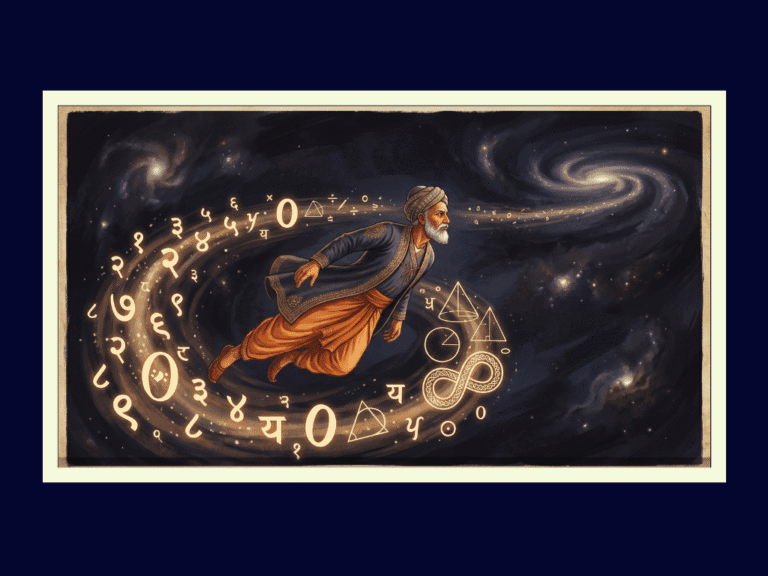
The story of modern Indian science and technology is not just a story of evolution, but a recovery of an ancient legacy that had been systematically eroded over time. During the late medieval and early modern period, India transitioned from the “Golden Bird” to a dark and depressing state. This too affected science and technology, although some sorts of traditions still continued.
From the dawn of the 20th century, Indian scientific understanding began to recover. Indian science embraced Western methods and began its journey towards infrastructure and development. Following independence in 1947, India established a large number of laboratories and institutes that aimed for self-sufficiency.
This modern rise depends on three pillars: the pioneering scientists who proved Indian intellectual calibre to the West, the industrial philanthropists who funded the bedrock of scientific evolution, and the state-led research institutes that served as the base of scientific development.
In this last part of the ongoing series, we discuss all three pillars mentioned above that have made modern Indian science and technology as we see it today.
Table of Contents
The Scientists who Shaped Modern India
The evolution of India from colonial oppression to scientific brilliance was spearheaded by a group of geniuses. They often worked with limited resources to establish a spirit of scientific temper that eventually became one of the fundamental duties of the Indian Constitution.
Sir Jagadish Chandra Bose was one of the foundational figures bridging the gap between Indian and Western science. His work in early radio-wave experiments and plant physiology, proving that plants possess some forms of sensitivity, earned him global acclaim. In 1917, he established the Bose Institute, India’s first independent multidisciplinary research institute, amidst colonial institutional control.
The contribution of Srinivasa Ramanujan, the self-taught mathematical genius, in number theory and infinite series inspired mathematicians worldwide. His works on the partition function, mock theta functions, modular forms, and continued fractions created a renaissance in mathematical academia.
Satyendra Nath Bose played a crucial role in the early 20th-century quantum revolution. His correspondence with Albert Einstein led to the development of Bose-Einstein Statistics, which described a whole new class of subatomic particles, later named Bosons after him. Their theoretical framework also predicted the existence of the Bose-Einstein Condensate, an extremely cold state of matter where particles lose individual identity and act as a single quantum entity. This prediction was experimentally confirmed seven decades later, in 1995.
Sir C.V. Raman, the Nobel laureate in physics, discovered the Raman Effect: the inelastic scattering of light when passing through a transparent material, resulting in a change of its wavelength. He also built numerous institutions and schools in India to ensure world-class research for future generations.
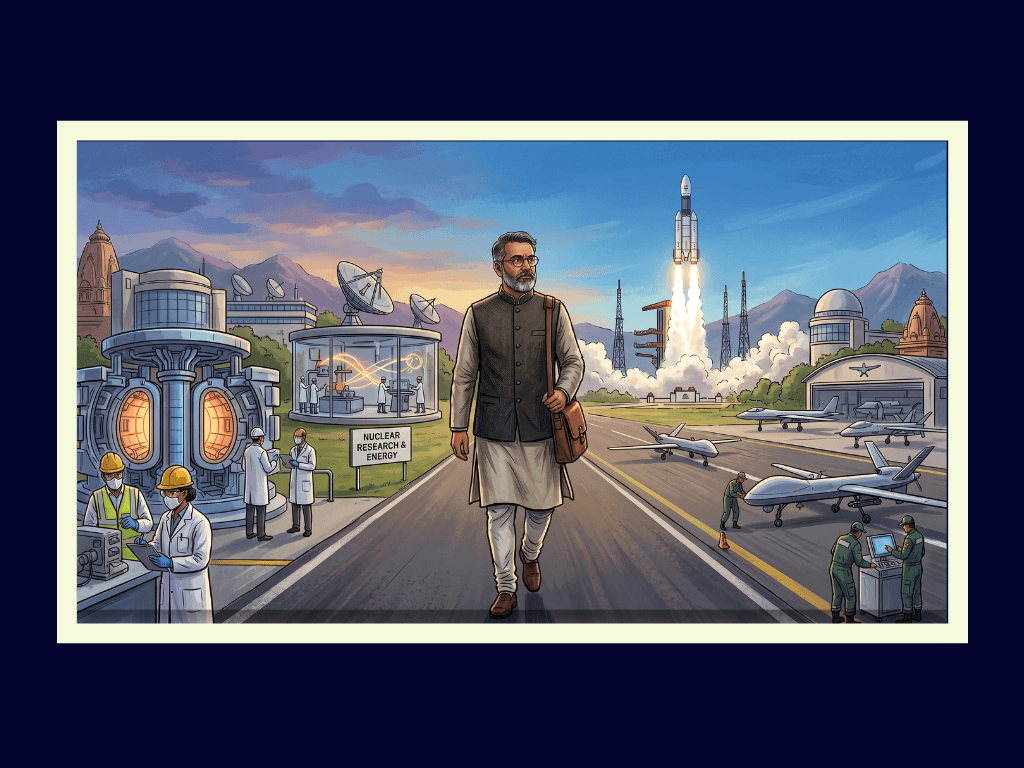
Homi Jehangir Bhabha was the architect of India’s nuclear program and the founder of the Tata Institute of Fundamental Research (TIFR). As the first chairman of the Atomic Energy Commission of India, he built indigenous scientific infrastructure that helped India become an energy-independent nuclear power in the future.
Vikram Sarabhai was the visionary responsible for the space infrastructure in India. He led the creation of the Indian National Committee for Space Research (INCOSPAR), which later evolved into the Indian Space Research Organization (ISRO). His research in cosmic rays and institutional vision helped India become a space superpower.
Dr. A.P.J. Abdul Kalam, also known as the Missile Man of India, helped develop India’s strategic technological power. He led both the Satellite Launch Vehicle Program and the Integrated Guided Missile Development Programme, helping India develop its own surveillance and defence technologies. Besides his scientific achievements, he later became the President of India.
The rise of Indian science and technology was also bolstered by scientists like Meghnad Saha, Shanti Swarup Bhatnagar, and M.S. Swaminathan, the latter of whom led the Green Revolution in India. The development continues into the 21st century, carried forward by a new generation of scientists, engineers, and inventors.
Industrial Patrons and Philanthropists of Indian Science
Modern science and technology require sustainable funding, advanced infrastructure, and significant scholarships. While the state played a major role in arranging these, it was the great business families and the industrialists of India who laid the foundation of scientific philanthropy.
Jamsetji Tata was perhaps the greatest patron of the Indian scientific revolution. Long before independence, he helped establish the Indian Institute of Science (IISc). Through the Tata Trusts, the family provided long-term support for research and the development of India.
The Birla family focused their efforts on engineering and technical education, notably through the development of BITS Pilani. Their support ensured quality technical literacy reached the growing middle class, providing educated human capital for the nation’s development.
The Godrej family helped in promoting indigenous industry and technological innovations, demonstrating the Made-in-India vision. Similarly, the Goenka family contributed to the public knowledge ecosystem through their chain of education and research institutes.
In the 21st century, business families like the Ambanis and Adanis have contributed to creating institutes, organizations, and ecosystems for the further development of India.
Institutions that Built Scientific India
In the modernization of science and technology, institutions play one of the most crucial roles. In India’s development too, certain institutes, organizations, and schools played a very important role. The following are some of the premier institutes and organizations of the country that helped in its scientific progress:
Indian Institute of Science (IISC): IISc grew into a global hub of scientific research and helped make India’s human resources scientific.
Council of Scientific and Industrial Research (CSIR): Established in 1942, the CSIR has become the backbone of India’s industrial and applied research. Its network of national laboratories bridges the gap between innovations and the market. The laboratories work on various disciplines ranging from agri-pesticides to DNA fingerprinting.
Bhabha Atomic Research Centre (BARC): The institute responsible for India’s nuclear age, BARC also helped in developing civilian technologies like radiotherapy isotopes and water purification systems.
Indian Space Research Organization (ISRO): From the Aryabhata satellite in 1975 to the Chandrayaan 3 moon landing in 2023, ISRO has become a global superstar in cost-effective space exploration.
Defence Research and Development Organization (DRDO): Created in 1958, the DRDO focuses on developing India’s military technologies, including its indigenous missile and drone systems.
India also has a chain of diverse technical institutes in the form of the IITs, IISERs, and AIIMSes. These institutes help in creating the next generations of Bhabhas and Sarabhais, or even Āryabhaṭas and Suśrutas.
Conclusion: The Continuing Story of Indian Science
From the Vedāṇga Jyotiṣa to Chandrayaan-3, Indian science has come a long way. The journey was not instantaneous but took nearly four millennia. India’s achievements in the seven decades after independence are vast. India is one of the top countries of the world when it comes to space technology, vaccine production, agricultural engineering, and nuclear power generation.
Although the series has ended, the journey of Indian scientific progress is far from over. With advancements in the internet and AI, a significant acceleration in development is expected in the coming decades.
If you found this piece interesting or educational, please share it and leave your thoughts in the comments. You can also subscribe to the newsletter below to stay updated on future posts. And thank you for reading.