Introduction: India under Foreign Rule
Indian Subcontinent has always been a crossroads for millennia. India exchanged ideas with Babylonians, Egyptians, Persians, Greeks, and Romans through both land and sea routes. The interactions always resulted in healthy intermingling and exchange of culture, including Indian science and technology.
But since the second half of the first millennium BCE, India saw aggressive conquests from the west: especially from the Turks and the European colonizers. They took control of the land they could and imposed their culture upon it. This produced a unique blend of Indian and foreign customs in Indian society. This shaped education, thought processes, philosophy, and eventually science and technology.
In this part of the series, we discuss the scientific developments of India under foreign rule, especially under the Mughals and the British. We will consider the period between 1500 and 1900 CE, which served as a bridge between historical and modern India.
Table of Contents
Astronomy and Mathematics: From the Kerala School to the Jantar Mantar
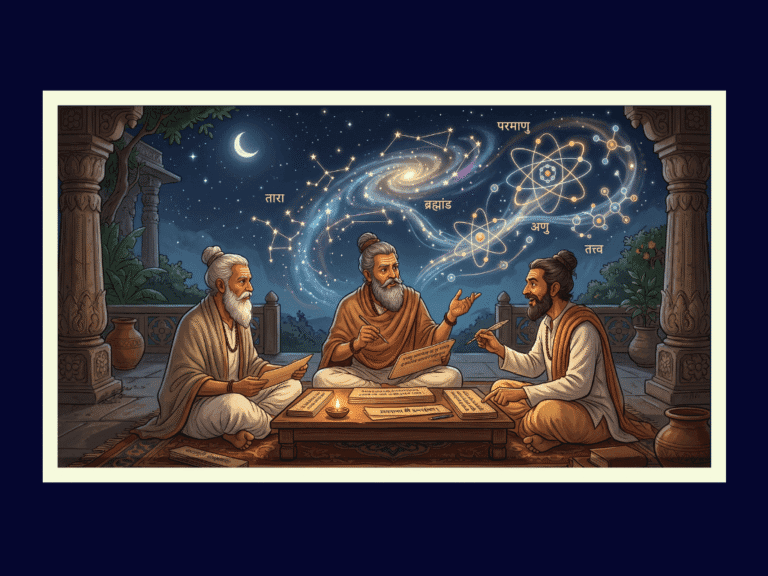
In the first half of the second millennium CE, the Kerala School of Mathematics and Astronomy carried forward Indian mathematics and astronomy. Scholars like Mādhava of Sangamagrāma, Parameśvara, Nīlakaṇṭha Somayāji, and Jyeṣṭhadeva developed trigonometric infinite series and advanced algorithms involving proto-calculus.
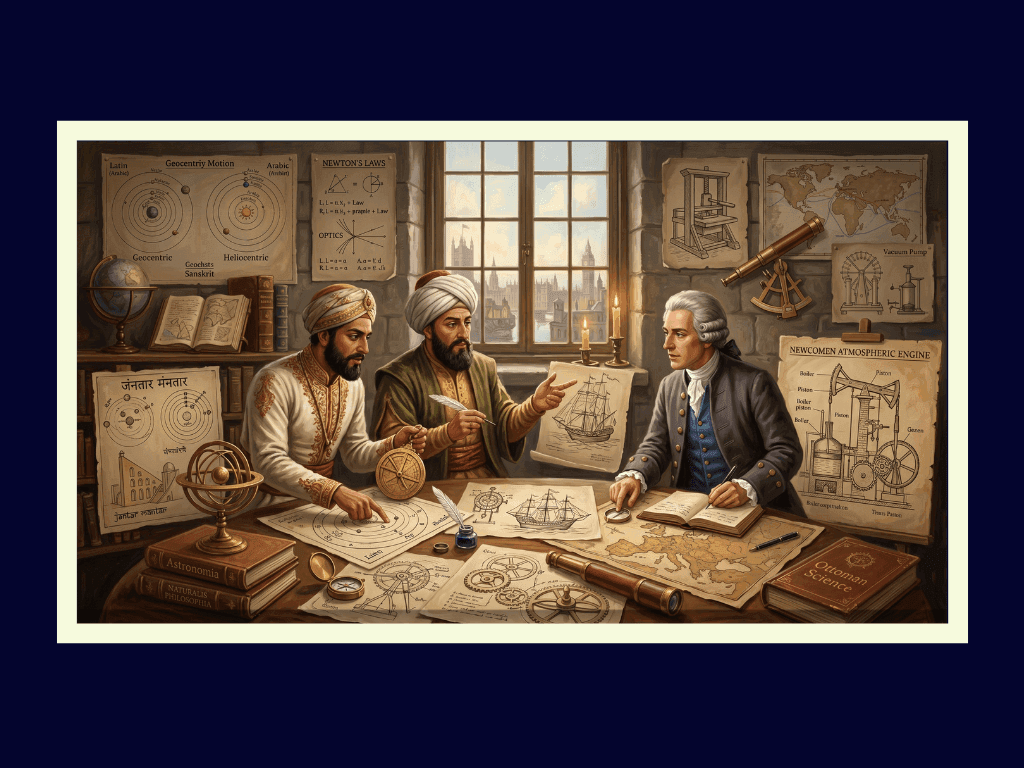
Under the Mughals, especially in the royal courts of Akbar and Shah Jahan, there were significant cross-cultural scientific exchanges. Between the 16th and the 17th centuries CE, Sanskrit intellectuals integrated substantial Persian thought into their work, including astronomical tables (zij).
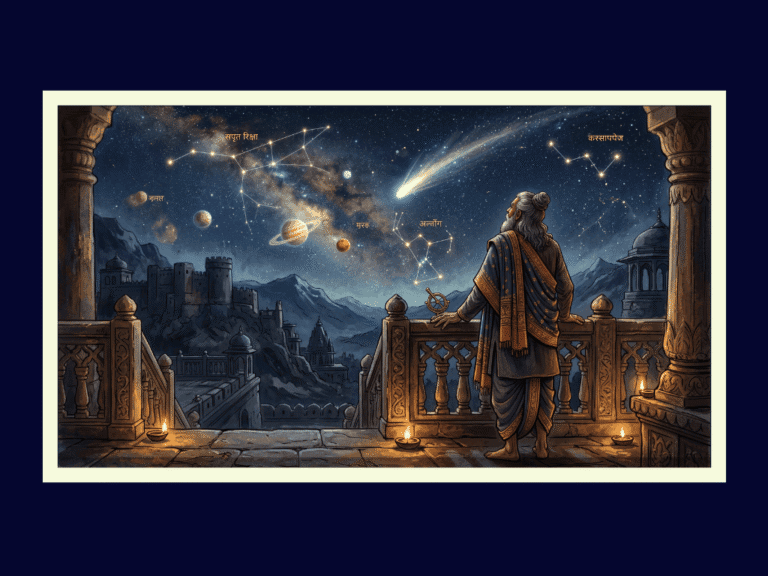
The synthesis reached its peak during the reign of Sawai Jai Singh II, who established a royal society of astronomy in Jaipur. He also built the Jantar Mantars, a group of stone astronomical observatories in Delhi, Jaipur, Ujjain, Varanasi, and Mathura. These had various scientific and astronomical instruments for study and observation.
The Jantar Mantar in Jaipur is the largest and houses instruments like the Samrat Yantra (the world’s largest stone sundial), the Jai Prakash Yantra, and the Ram Yantra. These stone observatories produced more precise and stable readings than their smaller brass counterparts in Europe.
By the 18th century, the arrival of European telescopes and modern observation techniques began to displace these older traditions. The observatory built by the British East India Company in Madras primarily served navigational and surveying needs, marking a shift towards institutional and administrative astronomy.
Architecture and Hydraulic Engineering
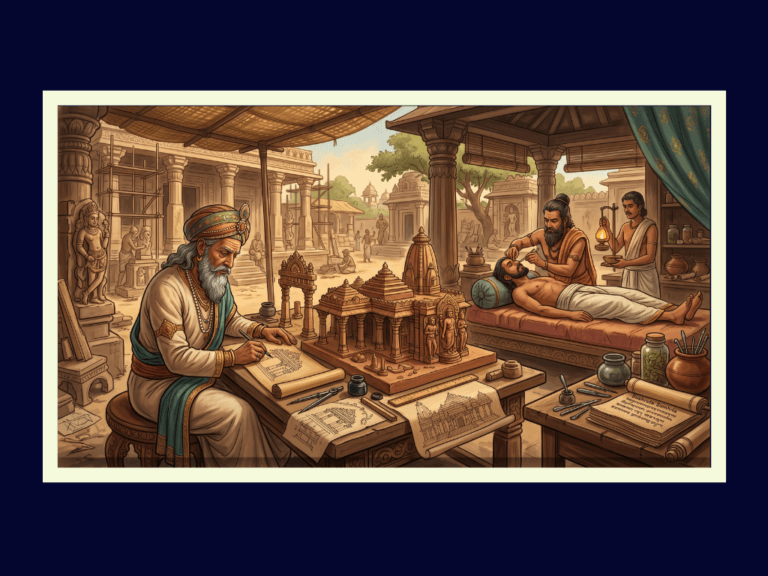
Mughal influence was perhaps most visible in the architecture and water systems of that time. The Mughals introduced Chaharbagh (fourfold garden) designs, which used geometric symmetry. Construction materials ranged from red sandstone in the Red Fort to white marble in the Taj Mahal.
A major engineering feature was the waterfront gardens with raised platforms alongside rivers like the Yamuna. In arid regions, subterranean canals called qanat were introduced for water transportation, inspired by Persian technology.
Surveying, Mapping, and Earth Sciences
In the 19th century, the British Raj introduced institutionalized surveying as a tool for political and military dominance. The Great Trigonometrical Survey (GTS), established in 1802, utilized efficient and precise instruments like theodolites to map the subcontinent with a level of accuracy considered one of the most advanced in the world at that time. This survey served as an ideological tool to add legitimacy to colonial rule in the name of “scientific progress.”
Geology followed a similar path with the establishment of the Geological Survey of India (GSI) in 1851. Its main purpose was to discover coal and iron resources to fuel British steam navigation and railways. The GSI’s surveys directly served the empire’s industrial and infrastructural expansion.
The period also produced Indian scientists who challenged the colonial mandate. Pramatha Nath Bose, the first Indian to hold a graded post in the GSI, discovered high-quality hematite deposits in Mayurbhanj. He eventually left the GSI and joined the Tata family to lay the foundation for Tata Iron and Steel Company (TISCO).
Medicine and Botanical Studies
Before the 19th century, indigenous medical systems like Āyurveda and Unani were practiced in localized tols and mādrāsās. The British established the Calcutta Medical and Physical Society in 1823, initially with the idea to study these medical traditions, and even elected members like Radhakant Deb for his expertise in indigenous drugs. However, the focus shifted to Western medicine after the establishment of Calcutta Medical College in 1835.
Indian flora and fauna were also of great interest to British naturalists. A staggering amount of data on Indian flora and fauna, including specimens, is preserved in the Honourable East India Company’s Museum in London. They also established various botanical gardens and zoological parks in India, including the famous Botanical Garden in Calcutta (now Kolkata).
The Rise of Scientific Institutions and Communication
The modern institutionalization of Indian science was pioneered by the Asiatic Society in Calcutta, established in 1784. Scientific communications were further accelerated by the arrival of the printing press in India, along with various scientific journals.
Despite the infrastructure, the British Raj was very restrictive, with officials like GSI Director Henry Medlicott often arguing that Indians were “incapable of original research.” In response to this intellectual racism, Indian intellectuals like Mahendranath Sircar founded the Indian Association for the Cultivation of Science (IACS) in 1876. The IACS became a direct challenge to the British institutional monopoly on scientific authority, providing a platform for independent Indian researchers.
Conclusion: Tradition to Modernity
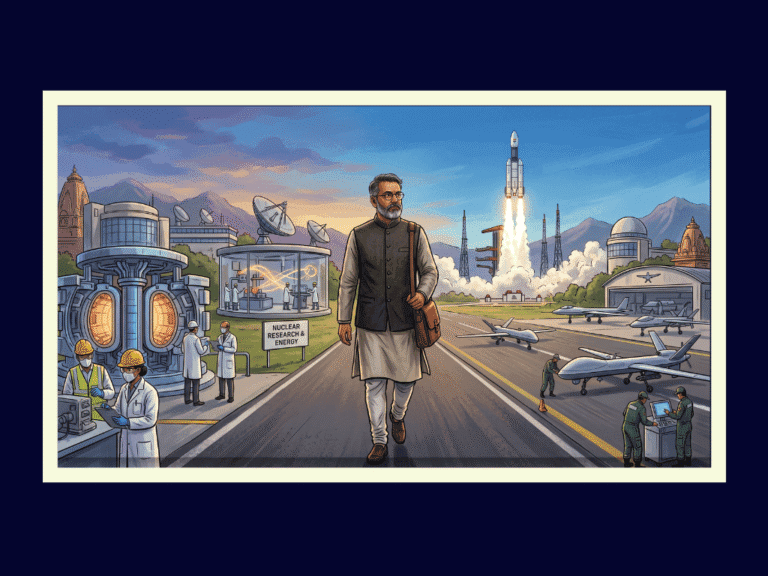
The colonial rule finally opened the way to the modern age of Indian science, with intellectuals like S.N. Bose, J.C. Bose, Srinivasa Ramanujan, C.V. Raman, Homi Jahangir Bhabha, Vikram Sarabhai, and Dr. A.P.J. Abdul Kalam in the 20th century. Industrialization also took an accelerated pace through the hands of rising Indian business families like Tata, Birla, Godrej, and Goenka.
If you found this piece interesting or educational, please share it and leave your thoughts in the comments. You can also subscribe to the newsletter below to stay updated on future posts. And thank you for reading this.