Introduction
The history of Indian civilization is about six millennia old. The civilization has a rich cultural, societal, and intellectual history. In this blog series, we are going to dive deep into the evolution and history of Indian science. We begin from the Vedic period and journey through the classical age, medieval period, and finally to the modern era.
Table of Contents
The Timeline of the Evolution
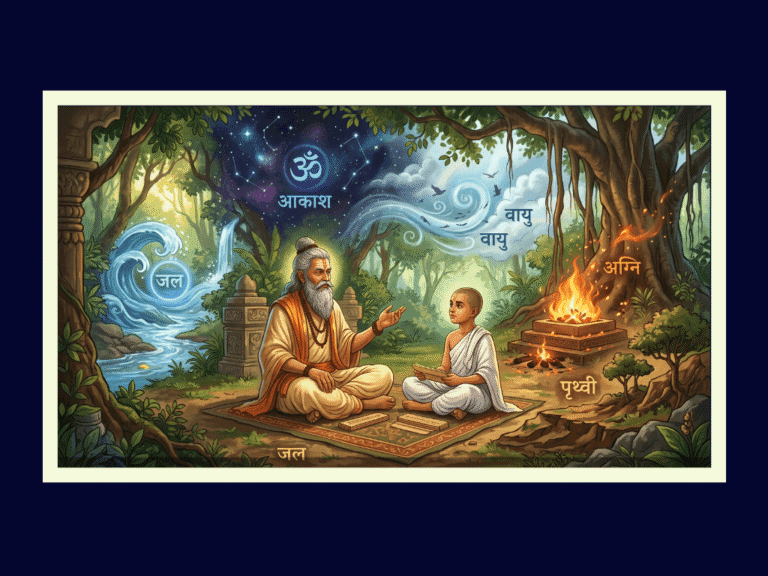
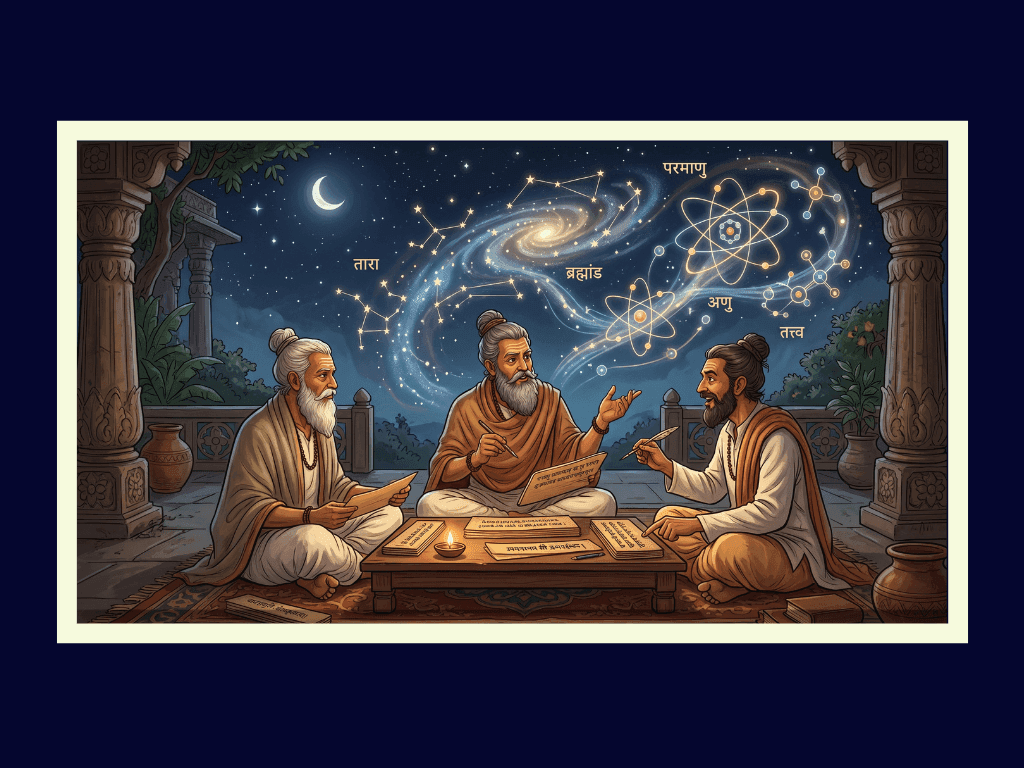
The journey of Indian science began with Vedic astronomy and timekeeping, which conceptualized the early astronomical patterns like Nakṣatras, necessary for ritual calendars. In the later Vedic age, natural philosophy emerged along with an understanding of concepts like space (ākāṣa) and sound (ṣabda).
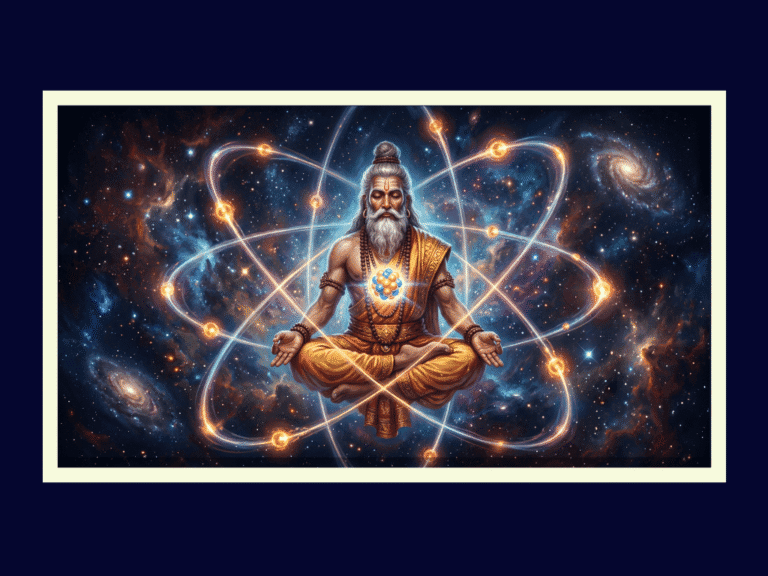
India also developed its own school of atomism, Vaiśeśika, and introduced the concept of the atom (anu). Later, the intellectual exchanges with the Greeks led to parallel developments in science and philosophy in both cultures.
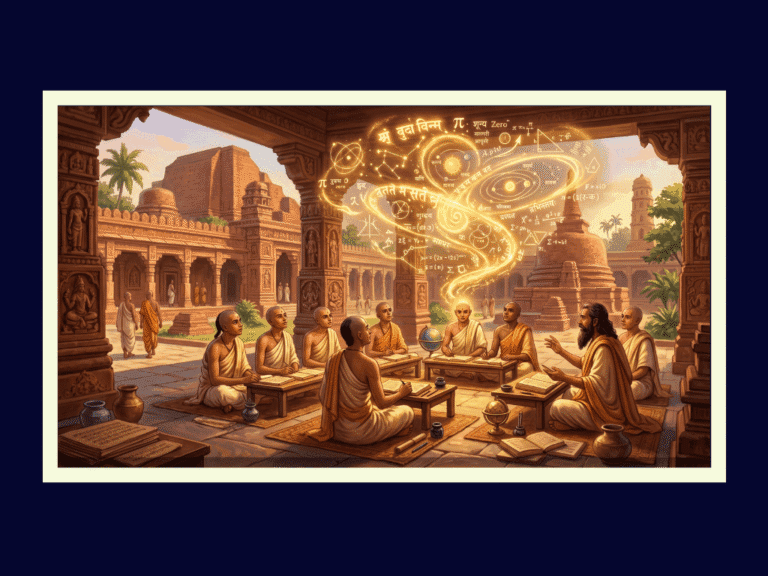
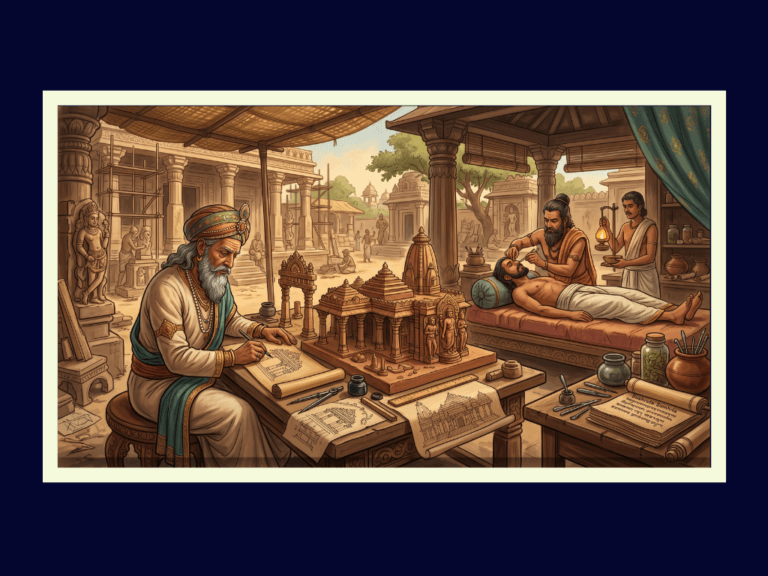
The history of Indian science was at its peak during the Gupta period, when scientists like Āryabhaṭa and Varāhamihira introduced new theories like trigonometric functions, calculation of eclipses, and the rotation of the Earth, leading to a golden age. The golden age also saw developments in spectacular architecture, metallurgy, medical science, and textile technology.
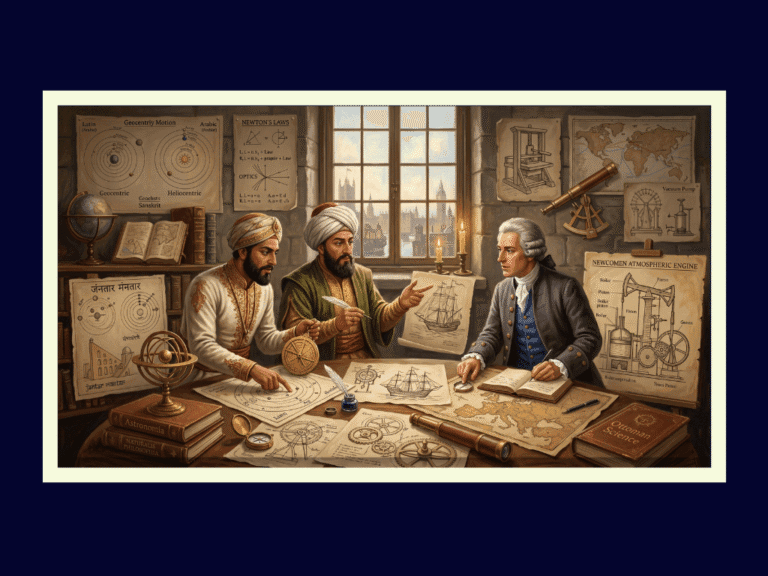
In the Mughal and Colonial Period, Indian science was heavily influenced by Islamic and Western science and technology, thereby leading to the establishment of Western-style institutions. In the 20th and 21st centuries, Indian science amalgamated Western rationality and scientific spirit to create technological wonders in independent India.
Conclusion
This was a small introduction to the history of Indian science, and the successive blog posts will cover its various important phases. I hope you will appreciate the series and reflect on the evolving nature of the Indian scientific spirit.
That is all. Please comment, share, and subscribe to my newsletter below if you find this project interesting and want to be notified in the future. Thank you.